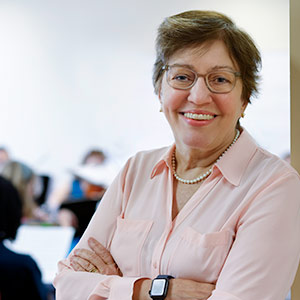
Owen Connelly is one of the Universitys senior faculty members whose longevity seems to fuel his scholarly pursuits as the Caroline McKissick Dial Professor of History.
Connelly continues to quietly go about his teaching and writing books on Napoleon-related topics and military history that have drawn a worldwide following since his first title came out in 1965.
I think anybody who writes has got to be sort of compulsive because theres not much profit in itnot if you write history, anyway, he said. But its become what I do.
This fall he will publish his 10th book, Wars of the French Revolution and Napoleon (Routledge, Oxford), along with new editions of two previously published books, On War and Leadership: The Words of Combat Commanders from Frederick the Great to Norman Schwarzkopf, coming out in paperback, and Blundering To Glory: Napoleons Military Campaigns.
Four of Connellys books have gone through multiple editions and all of his books are still in print except one, a biography of Napoleons older brother, though it is still available used from Barnes & Noble.
On War and Leadership is a behind-the-scenes look at wars over the past 250 years from commanders like Frederick the Great, Erwin Romell, and George S. Patton who share remarkably similar commentary regardless of their nationalities or ideologies.
When he isnt working on a book or teaching undergraduate and graduate courses in European historiography (the history of historical writing from the ancient Greeks to the present), the French Revolution, Napoleonic Era, or the Napoleonic wars, Connelly is apt to be involved in some other scholarly pursuit.
Most recently, he presented a paper on the Vendée (peasant) Rebellion of 17931794 at the Consortium on Revolutionary Europe and chaired a session at the annual meeting of the Society for Military History.
Napoleon has always intrigued him because he sees the French leader as probably the greatest general of all time, in part because, paradoxically, he never really made any plans that he stuck to.
That lack of planning would appear to be disastrous for anyone else. But for Napoleon it marked him as one of the most remarkable military leaders in history, Connelly said. He made plans so that he would have special men and supplies in the right places, but made everything else up as he went along. This equates to genius by him.
Of all his books, Connellys first, Napoleons Satellite Kingdoms is his favorite. When he wrote it, very little had been published on the Napoleonic Empire. Almost everyone who has written on the topic since has footnoted the book, which remains in print and is the only book by Connelly on file at the Institute for Advanced Studies at Princeton, a leading center for theoretical research and intellectual inquiry.
Connellys textbook, The French Revolution and Napoleonic Era, is in its third edition and still used in college classes nationwide. The title of his biography of Napoleons elder brother, Joseph, The Gentle Bonaparte, found its way into the lingo of Napoleonic scholars who now routinely refer to Joseph by the title of the book.
Connelly is probably more appreciative of Napoleons strategic and tactical skills as a result of his own military background.
The Morganton, N.C., native once served as a captain in the U.S. Army Rangers and was executive officer of the Rangers Amphibious and Jungle Warfare Training Camp in Florida before getting his Ph.D. in history from the University of North Carolina at Chapel Hill.
What would Connellys advice be for the American generals who are fighting the war on terror in the Middle East?
Give the enemy no quarter, he said, adding that he believes commanders on the ground are doing the best they can under difficult circumstances. Its hard to understand a lot of things that are going on in the Middle East.
I wish we werent in there, he said. And I think we ought to get out of both countries as soon as we can. The longer we stay there the rougher its going to be.
8/05
|