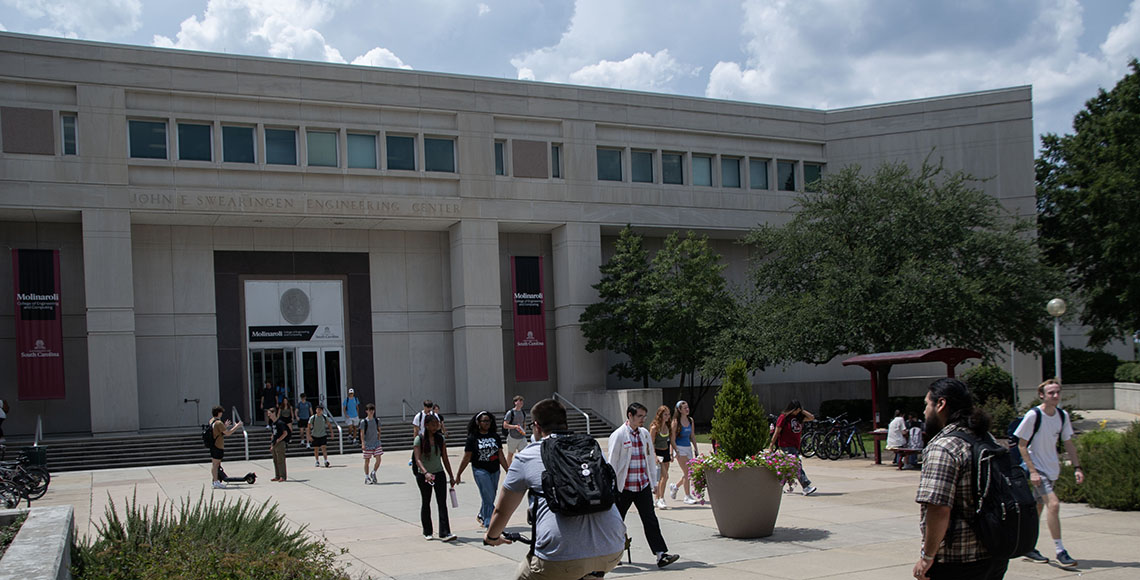
The Molinaroli College of Engineering and Computing (MCEC) is welcoming new faculty in chemical, electrical, industrial, and mechanical engineering, and integrated information technology for the 2026-27 academic year. The new faculty bring expertise spanning artificial intelligence, cybersecurity, advanced manufacturing, materials science, human-machine interaction and other areas of engineering and computing.
“Our new colleagues exemplify the trajectory of the Molinaroli College of Engineering and Computing,” said Dean Hossein Haj-Hariri. “Their expertise spans many of the technologies that will define the coming decades. And they share MCEC’s core commitment to educating students, fostering collaboration across disciplines and conducting impactful research that addresses real-world challenges.”
According to Haj-Hariri, the 10 new faculty speaks to the confidence the college has in the future and investments currently being made to achieve it.
“We are continuing to grow, recruit top talent across ranks and build capacity in strategic areas,” he says. “This momentum reflects the remarkable support we receive from the university, our partners and our state, and it positions us for continued expansion in the years ahead.”
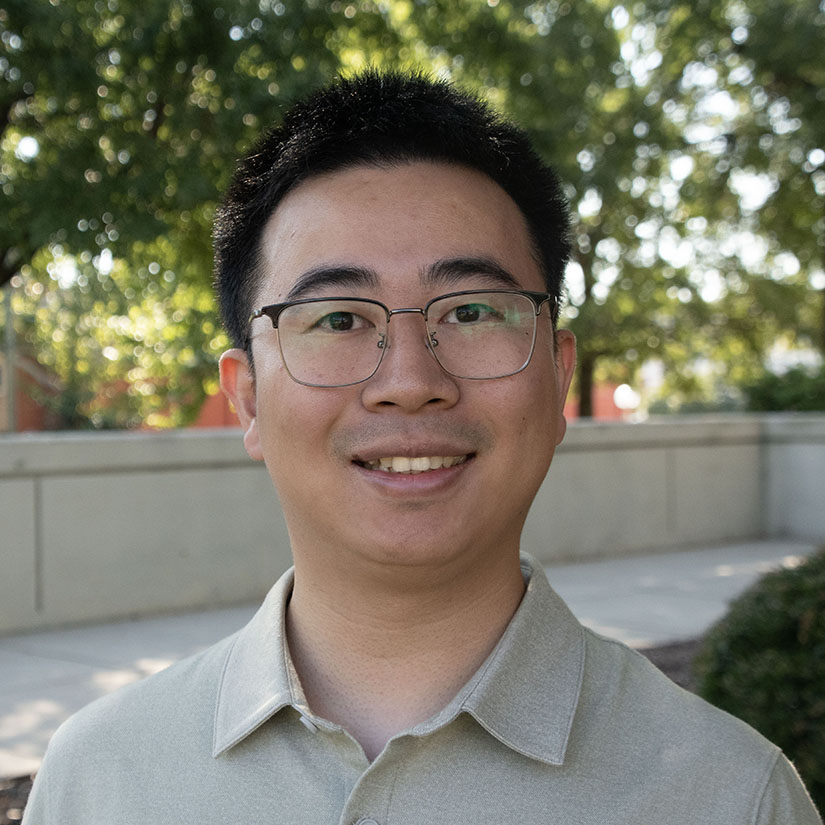
Assistant Professor Shengli “Bruce” Jiang joins the University of South Carolina after spending the past three years as a postdoctoral associate at Princeton University.
His research focus includes computational materials science, soft materials, and data science. Jiang aims to develop physics-informed machine learning and AI methods that integrate with molecular simulation to design soft materials and chemical products for energy and sustainability.
Jiang earned his bachelor’s degree in chemical engineering from the University of California, San Diego and his doctorate in chemical engineering from the University of Wisconsin-Madison.
“I am excited about the collaborative community at the MCEC and the opportunity to work across engineering, computing, and data science. I look forward to working with students and colleagues to advance AI-driven soft materials research.” – Shengli “Bruce” Jiang
Todd Perkins
Todd Perkins joins the Department of Electrical Engineering as an instructor and will lead the two-semester Senior Capstone Design course sequence.
Perkins brings 35 years of professional engineering experience in the broadcast, telecommunications and automotive industries. Most recently, he served as a project engineer and technical trainer at ZF Automotive in Michigan, where he provide engineering support and technical training for active braking systems used across Ford and General Motors global vehicle portfolios for full-size trucks and SUVs. He also served as an adjunct professor at Wayne County Community College District, teaching undergraduate mathematics and physics.
A Detroit native, Perkins earned his bachelor’s degree in electrical engineering from Howard University, followed by a master’s degree and doctorate in electrical and computer engineering from Oakland University.
“I am thrilled to coach and inspire our graduating seniors through their Capstone Design projects, bridging the gap between rigorous classroom theory and real-world execution. My goal is to empower the next generation of engineers with the technical acumen, leadership skills and executive confidence needed to excel in the next phase of their journey.” – Todd Perkins
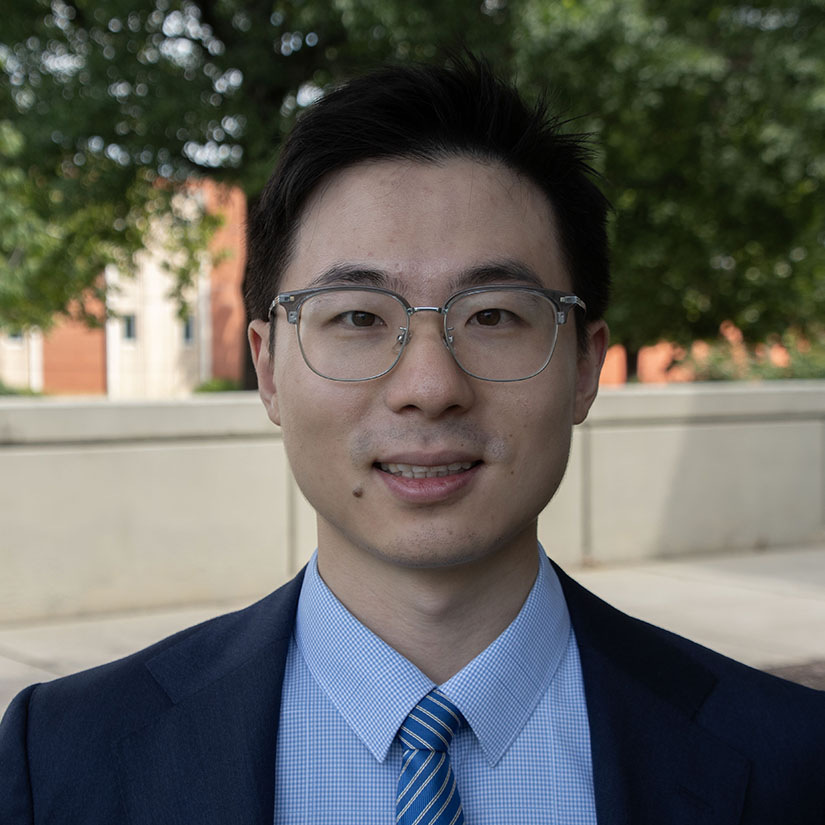
Zhuoli Yin
Assistant Professor Zhuoli Yin begins his academic career after earning his doctorate from the Edwardson School of Industrial Engineering at Purdue University earlier this year.
His research combines operations research and AI to develop sustainable optimization intelligence systems, with applications in urban transportation, logistics and energy-efficient AI computing. During his doctoral studies, Yin worked on learning-based optimization systems design and deployment, spanning shared mobility rebalancing, middle-mile network design, and last-mile delivery.
Yin also received his master’s degree in industrial engineering from Purdue University.
“I am excited by the Molinaroli College’s commitment to advancing applied research that serves the needs of South Carolina and also fostering a welcoming environment for new faculty.” – Zhuoli Yin
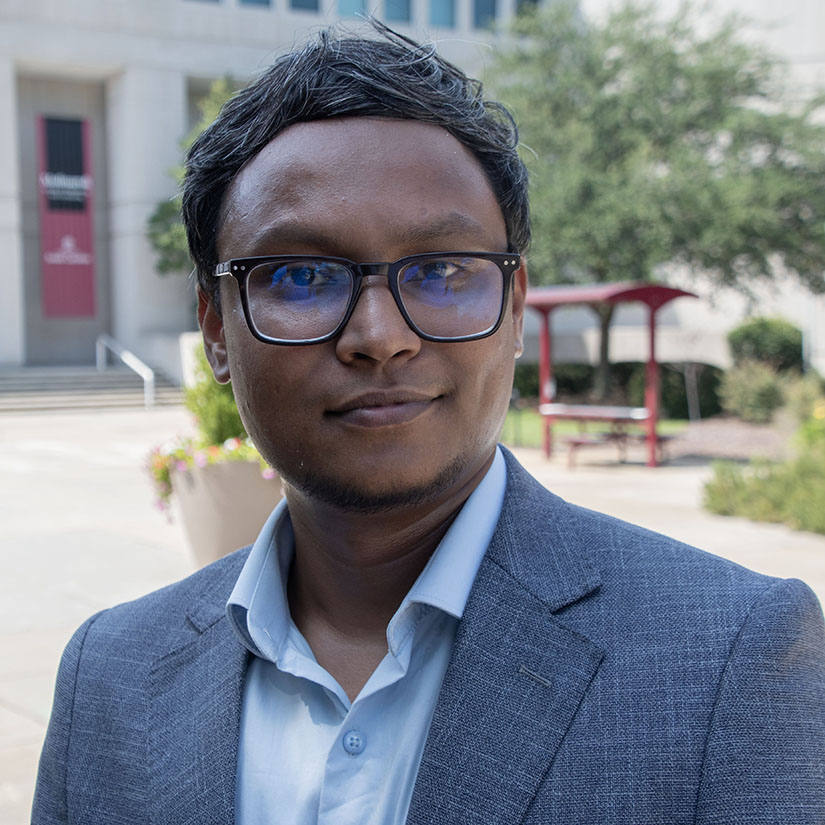
Md Habibor Rahman
Assistant Professor Md Habibor Rahman joins the University of South Carolina after serving as an assistant professor of mechanical engineering at the University of Massachusetts Dartmouth.
His research interests include cyber-physical systems security, advanced manufacturing and data analytics. Rahman’s research focuses on developing secure, intelligent and resilient manufacturing systems through security-aware system design and operations, process monitoring, diagnosis, control and optimization. His work has applications in discrete manufacturing and water treatment systems.
His research has been published in leading journals, including the Journal of Manufacturing Systems, Journal of Manufacturing Processes and ASME Journal of Computing and Information Science in Engineering.
Rahman earned his master’s degree in industrial engineering and doctorate in systems and industrial engineering from the University of Arizona.
“What excites me most is the college’s welcoming and collaborative environment, together with the strong potential for interdisciplinary research. The breadth of expertise and resources available across the college and USC’s research centers creates significant opportunities to develop impactful research partnerships, and I am also encouraged by the leadership’s vision for continued growth and innovation.” – MD Habibor Rahman
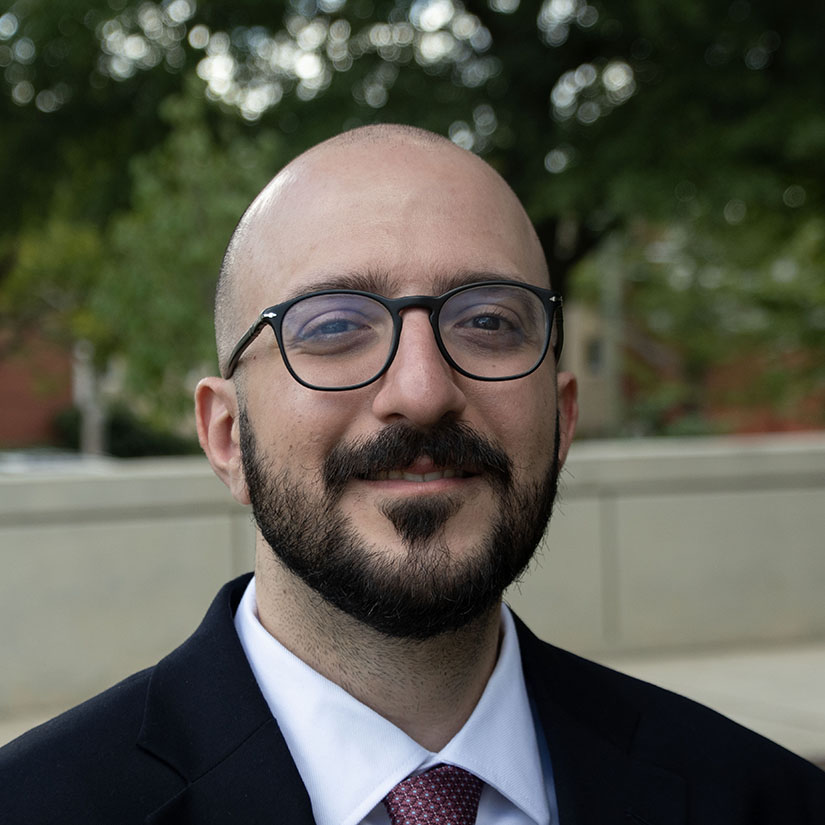
Michail Katsigiannis
Assistant Professor Michail Katsigiannis begins his academic career after recently earning his doctorate in industrial and systems engineering from Auburn University.
His primary research area is AI-enabled digital twin systems for advanced manufacturing. Katsigiannis’s work combines modeling and simulation, AI and Industry 4.0 technologies to develop manufacturing intelligence systems that can be deployed in real-world environments. His recent research has focused on developing and applying a multi-agent digital twin architecture to model systems at multiple levels and enable applications that leverage emerging technologies.
Katsigiannis earned an integrated master’s degree in electrical and computer engineering from the Technical University of Crete in Greece and a master’s degree in industrial and systems engineering from Auburn University.
“I’m excited to join the Molinaroli College of Engineering and Computing because of its strong interdisciplinary research environment and emphasis on real-world impact. South Carolina’s growing manufacturing ecosystem makes this an especially exciting place to pursue my work in smart manufacturing and to involve students in developing technologies that can shape the future of industry.” – Michail Katsigiannis
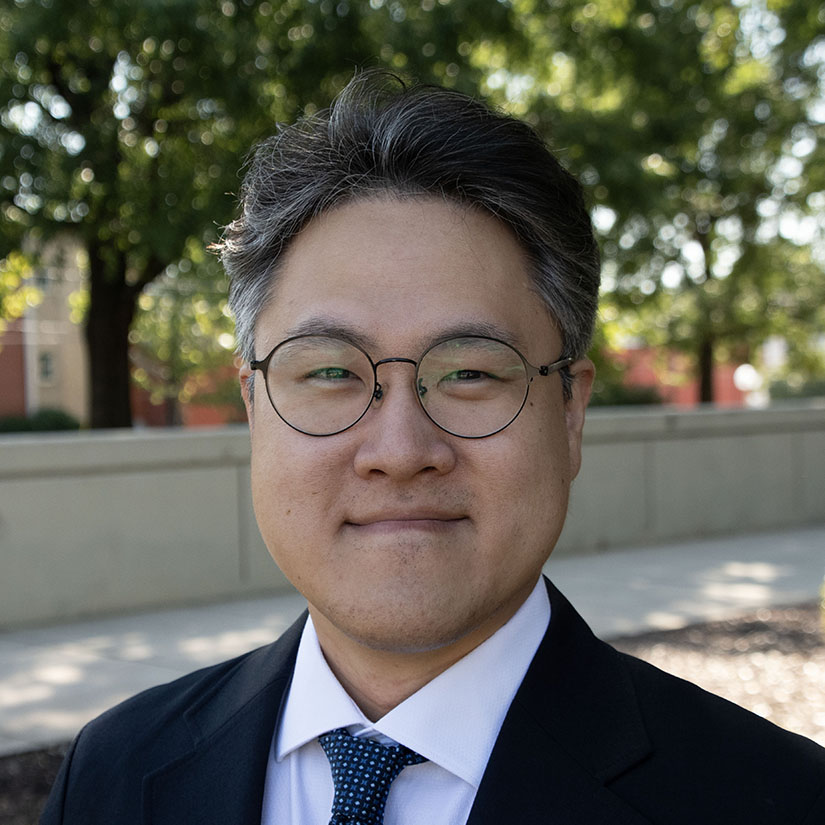
Jangwoon Park
Associate Professor Jangwoon Park joins the Molinaroli College of Engineering and Computing from Texas A&M University-Corpus Christi, where he served as coordinator of the industrial engineering program.
Park’s research centers on human-machine interaction, user-centered design, human modeling, and automotive ergonomics. His work includes AI-driven predictive modeling that uses machine learning and statistical techniques to optimize ergonomic designs, including heated seats and thermal comfort systems. He also has experience developing human-centered designs for special populations, creating inclusive and performance-enhancing solutions tailored to diverse user needs.
Park earned his doctorate in industrial engineering from Pohang University of Science and Technology in South Korea. He also spent two years as a postdoctoral fellow at the University of Michigan Transportation Research Institute.
“Time is one of the most valuable resources we have. I encourage our students to value their time, set goals both large and small, and think about how they can use the resources and opportunities around them to grow as engineers and ultimately find meaningful ways to contribute to humanity.” – Jangwoon Park
Integrated Information Technology (IIT)
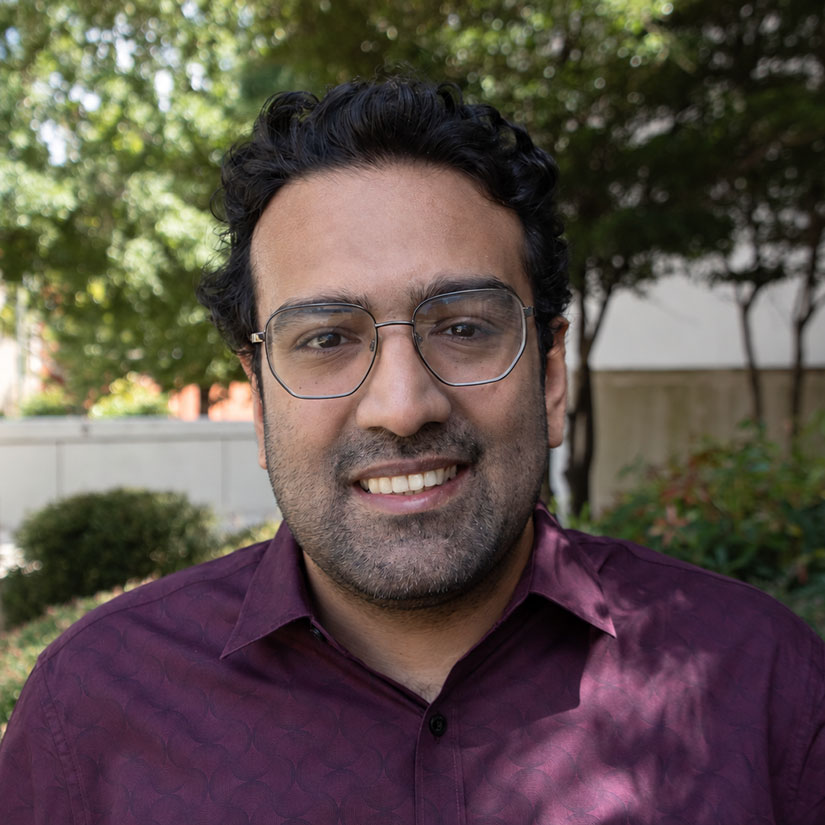
Prashant Anantharaman
Prashant Anantharaman joins the Department of IIT as assistant professor after working the last four years as a senior security researcher at Narf Industries.
At Narf, Anantharaman led cybersecurity research programs supported by the Defense Advanced Research Projects Agency, the Advanced Research Projects Agency for Health and the Department of Energy.
His research includes securing critical infrastructure by identifying advanced persistent threats and ransomware and identifying discrepancies between network implementations. At the Molinaroli College of Engineering and Computing, he will direct a research group focused on improving the security of critical systems and AI infrastructure.
Anantharaman earned his master’s degree and Ph.D. in computer science from Dartmouth College.
“I am excited about being surrounded by some of the brightest minds in the engineering world. Cybersecurity is not a siloed problem: every engineering field faces real-world cyber challenges. I came to USC to join a college with deep roots and serious ambitions, and this is the exact kind of interdisciplinary environment where impactful cybersecurity research gets done.” - Prashant Anantharaman
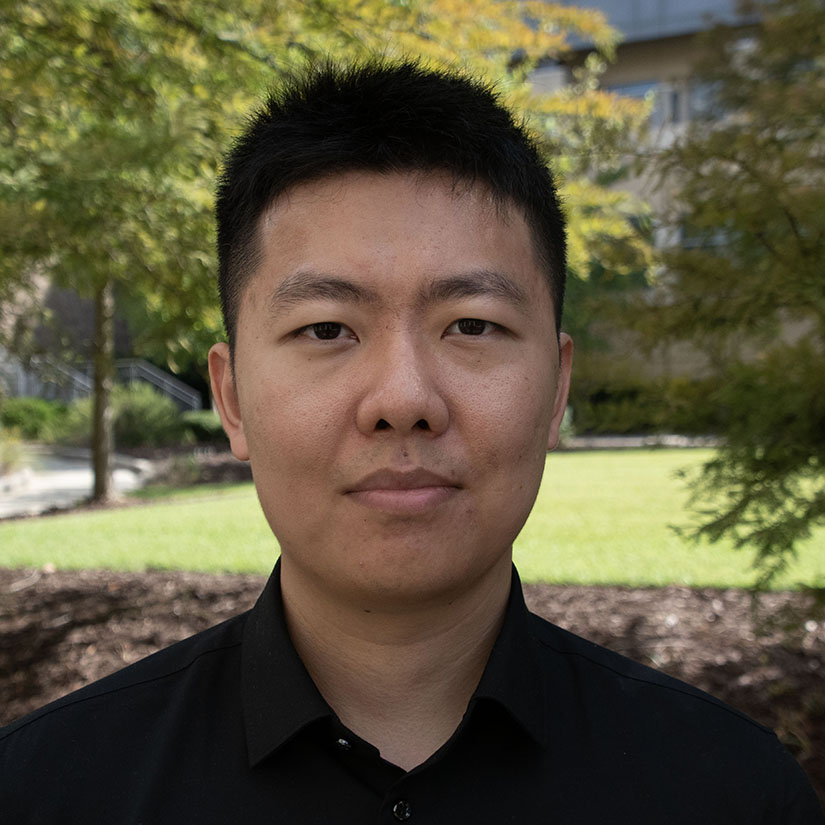
Lingzhi Wang
Lingzhi Wang joins the Department of IIT as an assistant professor.
His research sits at the intersection of AI and operational cybersecurity. Wang’s work explores how large language models (LLMs) and other AI methods can be integrated into the security and network systems, as well as how organizations can identify and mitigate new risks introduced by LLMs and autonomous agents.
Wang has worked on real-world challenges at Obsidian Security and the University of Southern California Information Sciences Institute, ranging from monitoring and governance for multi-agent AI systems to provisioning infrastructure for a national cybersecurity testbed.
He earned his doctorate in computer science from Northwestern University in June and his bachelor’s degree in electronic information science and technology from Tsinghua University.
“With AI advancing so quickly, it's easy to feel anxious about keeping up. My advice [to students] is to focus on fundamentals: master the core principles and the reasoning behind them rather than chasing every new tool. Embrace change but stay grounded in the basics. That's what lets you adapt and succeed in any era.” – Lingzhi Wang
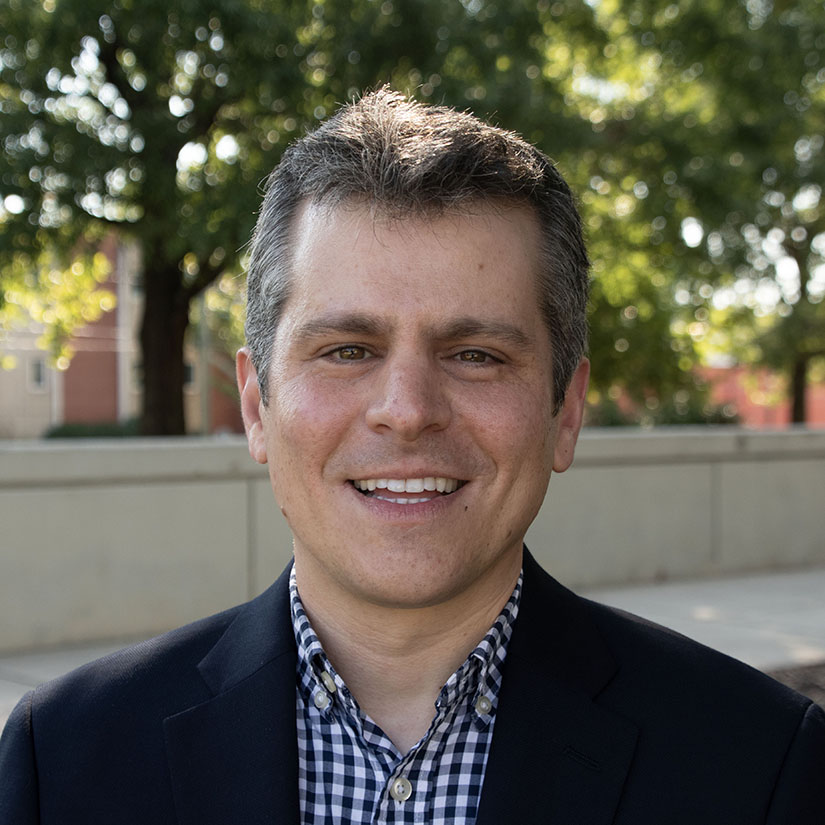
Stephen Peluso
Stephen Peluso joins the college as an instructor for mechanical and aerospace engineering courses. He previously served as a mechanical engineering assistant professor at Manhattan University.
At Manhattan, Peluso taught undergraduate and graduate courses, including applied thermodynamics, senior design, instrumentation and data acquisition, and combustion systems. He also managed the department’s thermal and fluids, manufacturing, material science, computer and biomechanics laboratories.
Peluso earned his bachelor’s degree in mechanical engineering from The Cooper Union for the Advancement of Science and Art, and his doctorate from Penn State University.
“Mechanical and aerospace engineering are becoming increasingly relevant to addressing critical challenges, and I'm excited to help prepare our students to contribute to impacting the world in a meaningful way.” – Stephen Peluso
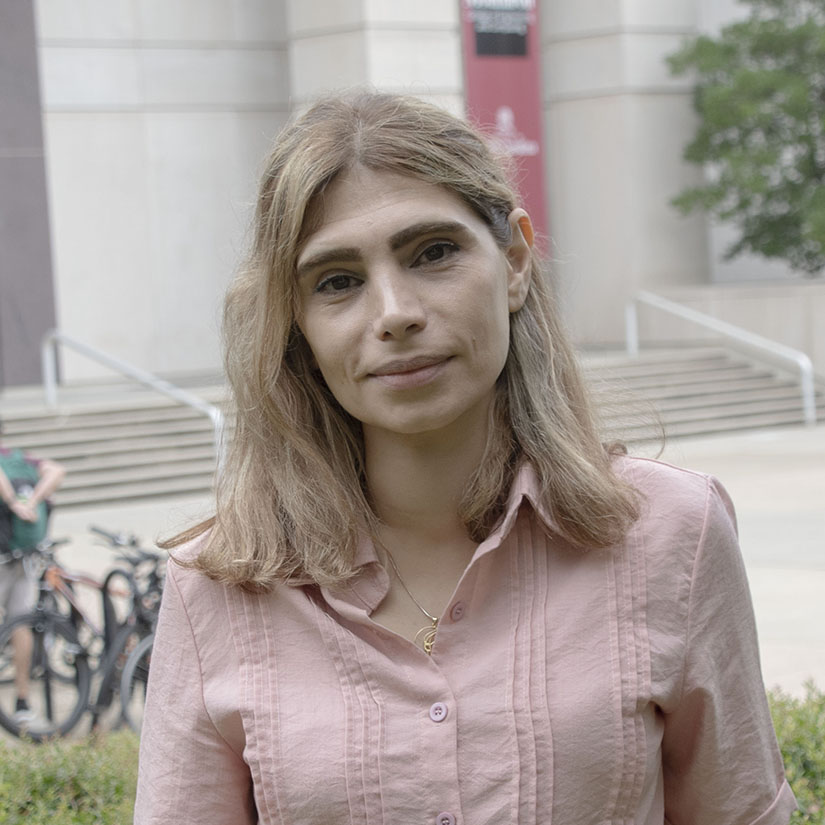
Azadeh Sepahvandi
Azadeh Sepahvandi was promoted to full-time instructor, effective August 16, 2026. Since 2020, she has taught courses in computer aided drafting, thermodynamics, mechanical engineering lab and project management in engineering to more than 150 undergraduate students each semester.
After working as a research specialist at Amirkabir University of Technology – Tehran Polytechnic for one year, Sepahvandi arrived at the University of South Carolina as a postdoctoral researcher in the Department of Chemical Engineering and biomedical engineering program at the Molinaroli College of Engineering and Computing. Her research focused on cartilage tissue engineering and 3D cell culture and cell behavior.
Sepahvandi earned her bachelor’s, master’s and Ph.D. in biomedical engineering from Amirkabir University of Technology – Tehran Polytechnic.
"We should never stop learning, and that’s the mindset I aim to instill in my students. The goal is not just to teach content but to inspire students to think creatively and solve problems." – Azadeh Sepahvandi