Stories for Faculty and Staff

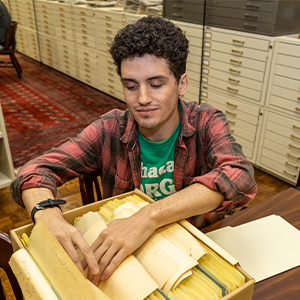
A man standing in front of a bookcase

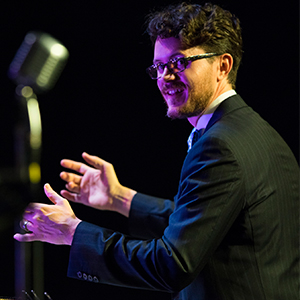
USC Rice Law professor David Sella-Villa studies cause and effect of modern privacy policy

December 19, 2025, Kristine Hartvigsen

No area of government, business, industry or law goes untouched by the latest technologies, whose benefits also come with risk. David Sella-Villa, assistant professor at the Joseph F. Rice School of Law, says the current system of privacy laws demands that a sense of “caveat emptor” accompany the choices we make with our data.

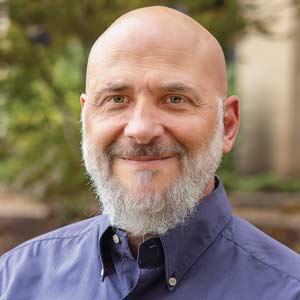
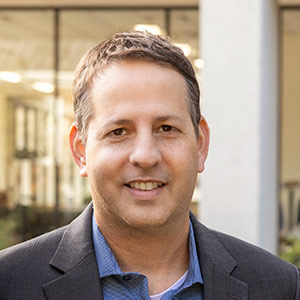
man stands outside with trees and a building in the background

Marshall Scholarship finalist Michael Pitre studies the circuitry of the brain -- and plans a future in neurosurgery

December 08, 2025, Page Ivey

South Carolina Honors College student Michael Pitre likes to get up around 3 a.m. on Tuesday and Thursday mornings to make the two-hour drive to Folly Beach to surf at the Washout before heading back to Columbia and his 11:40 a.m. class. It’s a regimen that aligns nicely with the Marshall Scholar finalist’s jam-packed schedule that includes earning his BARSC-MD degree in just three years, working as an emergency medical technician, and researching the circuitry of the brain on his way to becoming a neurosurgeon.

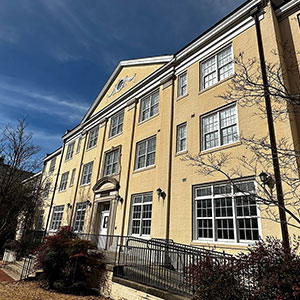
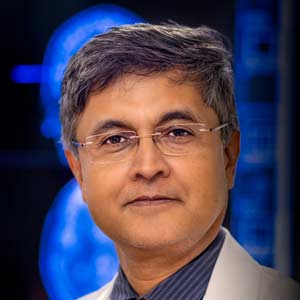
Head shot of Guoan Wang in his engineering lab

Engineering prof named university's third-ever National Academy of Inventors fellow

December 05, 2025, Chris Horn

Electrical engineering professor Guoan Wang got his first U.S. patent while in graduate school and now has more than 60 patents and more than 50 additional patents pending. He was elected to the National Academy of Inventors’ 2024 Class of Fellows, the highest professional distinction awarded to inventors.

An image from NASA’s James Webb Space Telescope shows the dense galaxy cluster SMACS 0723, filled with thousands of galaxies—from bright ellipticals to faint red spirals—with gravitational lensing stretching distant background galaxies into curved streaks of light.

When darkness shines: How dark stars could illuminate the early universe

November 26, 2025, Alexey A. Petrov

Scientists working with the James Webb Space Telescope discovered three unusual astronomical objects in early 2025, which may be examples of dark stars. Alexey Petrov, a USC endowed chair in physics, writes for The Conversation on how this could alter scientists’ understanding of how ordinary stars form.

A pile of sulfur sits near a crane at a seaport

Sulfur-based batteries could offer electric vehicles a greener, longer-range option

November 18, 2025, Golareh Jalilvand

Imagine an electric car that could go 600, 700 or even 1,000 miles on a single charge. Golareh Jalilvand, an assistant professor of chemical engineering at USC's Molinaroli College of Engineering and Computing, writes for The Conversation on how battery researchers are seeking options to lithium-ion batteries that have better performance, improved environmental sustainability and lower cost.

A student works with a model of the heart.

Innovative cardiac teaching tool earns recognition for nursing faculty

November 18, 2025, Laura Erskine

Heart defects affect about 1 percent of all babies born in the United States each year, making the cardiovascular system an important part of the nursing curriculum. To help students master this material, assistant professor Stephanie Schaller invented a new tool that lets students learn heart defects through hands-on activities.

A health care provider greets a mother and her infant.

Community health centers provide care for 1 in 10 Americans, but funding cuts threaten their survival

November 13, 2025, Jennifer Springhart

Many Americans who lack or have insufficient health insurance seek health care from a network of safety net clinics called community health centers. Dr. Jennifer Springhart of USC's School of Medicine Greenville writes for The Conversation about how decreasing their capacity could destabilize other elements of local health care delivery systems.

Man standing in medical research lab
Future physician-scientist selected as Marshall Scholarship finalist

November 11, 2025, Valerie Weingart

South Carolina Honors College student Michael Pitre has been named a finalist for the 2026 Marshall Scholarships. If selected, he plans to pursue an MPhil in biological sciences to develop novel treatments for Parkinson's disease before returning to USC for medical school.

Young woman checks her blood pressure with a monitoring cuff.

Why your late teens and early 20s are crucial times for lifelong heart health

October 24, 2025, Jewel Scott

Emerging adulthood is a life stage where behaviors that diminish heart health—such as spending more time sitting, consuming more fast food and using more tobacco and alcohol—become more common. Jewel Scott, assistant professor of nursing science in USC's College of Nursing, writes for The Conversation about the power of habits on our behavior.

Illustration of nurses' gloved hands piled on top of one another.

A Culture of Caring

October 08, 2025, Rebekah Friedman

From improving outcomes for premature babies to nurturing research advancements in chronic illness to strengthening the next generation of nursing leadership, University of South Carolina faculty members Robin Dail, Cindy Corbett and Jeanne Cavanaugh have had careers worth celebrating. While these three center directors are retiring this year, their legacies will endure through their centers’ continued impact at USC and beyond.

Asian man standing on dock in foreground with ship visible behind him

Unsung ocean fungi have 'superpower' to aid healthy marine environments

October 03, 2025, Kristine Hartvigsen

Little-known ocean fungi are microscopic in size but make a gargantuan impact on subterranean life. Their superpower? They are the heavy lifters of carbon and nitrogen cycling, processes essential for life on earth. Nick Peng, assistant professor in the School of the Earth, Ocean and Environment, would like unsung ocean fungi finally to get the recognition they deserve.

Crop of hand unrolling yoga mat for a workout

Most of your actions are driven by habit, not thought

October 03, 2025, Amanda Rebar, co-author

A new study shows that the majority of actions people take in a day are carried out on autopilot. Habitual behavior is made up of the things that we do without thinking, prompted by our environment and learned through repeated enactment. Public Health professor Amanda Rebar writes for The Conversation about the power of habits on our behavior.

Flood waters in Columbia fill street and business

Researchers and former students recall harsh lessons from historic 2015 Midlands flood

September 30, 2025, Chris Horn

It happened a decade ago, but lessons learned from the catastrophic flooding of Oct. 1-5, 2015, in the Midlands of South Carolina are still being reckoned by University of South Carolina researchers and former students who were involved in the flood’s aftermath.

Curing Kids Cancer founders Clay and Grainne Owen present a check to Michael Wyatt from the USC College of Pharmacy

Curing Kids Cancer pledge fuels USC, Prisma Health pediatric cancer research partnership
September 24, 2025, Laura Morris

The University of South Carolina College of Pharmacy and Prisma Health Children’s Hospital announced a research collaboration on Sept. 24 aimed at redefining pediatric oncology care in South Carolina. The $5 million pledge from Curing Kids Cancer will fund research aimed at developing and providing access to innovative therapeutics for children with cancer.
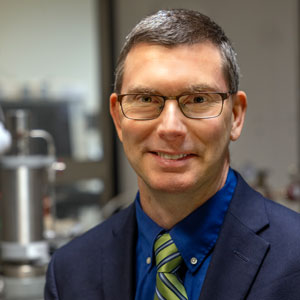
woman wearing safety goggles stands in a lab

Chemical engineering faculty member demonstrates breakthrough technology for blue phase liquid crystals

September 10, 2025, Chris Horn

Since they first appeared on wristwatches in the early 1970s, liquid crystal displays have made the leap to TVs, smartphones, household appliances and automobile dashboards. Now an even more responsive type of LCD technology, called blue phase liquid crystals, is getting closer to commercial use, and a USC chemical engineering professor’s research in that field is attracting notice.
An abstract, cubist illustration of a human brain.

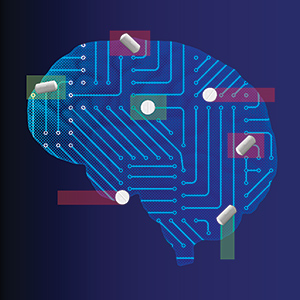
Brain Trust: USC has prioritized its efforts to improve brain health across the Palmetto State

September 08, 2025, Rebekah Friedman

Cognitive decline is a significant problem for South Carolina’s aging population. That’s one reason the University of South Carolina has prioritized its efforts to improve brain health across the Palmetto State. In USC’s Arnold School of Public Health, researchers are leading the charge to better understand how diet, exercise and intervention factor into the solution.

Hand holding small brown shrimp

Video: Snapping shrimp could hold the key to protecting human brains from shockwaves

September 05, 2025, Hadley McCollester

Snapping shrimp can create shockwaves strong enough to stun prey. But how do they survive each other’s blasts? USC biologist Dan Speiser and his team discovered that a special “orbital hood” — a helmet-like shield around the shrimp’s eyes and brain — protects them from these powerful shockwaves. Collaborating with biomedical researchers at the Molinaroli College of Engineering and Computing, the team is now studying the hood’s structure to design next-generation helmets that could protect human brains from shock waves and even reduce the risk of PTSD in military personnel.

Researchers in field examine data collected

Kazakhstan studies affirm imperative to secure nuclear storage solutions

September 03, 2025, Kristine Hartvigsen

The pleasing pastoral landscapes across the former Semipalatinsk Nuclear Test Site in Kazakhstan hardly reflect its dark history. Generations of locals have lived near the site since it opened in 1949, and many remain today. USC researchers Timothy Mousseau and Magdalena Stawkowski are studying the impact of radioactive isotopes on the people, animals and plants of Semipalantinsk.

Researchers lower nets into coastal waters.

Baruch researchers investigate impacts of warming waters on shrimp populations

September 03, 2025, Kristine Hartvigsen

Project investigators from USC’s Baruch Marine Field Lab have been collaborating on a study into the impacts of warming coastal ocean waters on shrimp populations. They found that shrimp populations have been largely stable, and warmer water temperatures have led to longer seasons for shrimpers, often through January.

Two college-aged athletes run in competition in an open field in the heat.

Health Watch: 6 Dangerous Heat Stroke Myths That Could Put Your Health at Risk

August 20, 2025, Gregory Hardy

Rising temperatures are making heat stroke a serious risk in South Carolina and beyond, especially during outdoor activities such as youth sports, yardwork, recreation and even work. At USC’s Arnold School of Public Health, associate professor of athletic training Susan Yeargin debunks dangerous myths about treating this life-threatening condition.

AI-created image of a comet hurtling toward Earth, with some pieces making impact

Researchers find evidence for Younger Dryas comet-impact theory in ocean cores

August 13, 2025, Kristine Hartvigsen

Christopher Moore, research professor with the Institute for Archaeology and Anthropology at the University of South Carolina, recently led a team that analyzed sediment from the ocean floor in Baffin Bay, Greenland. Their efforts produced the first evidence — sourced directly from ocean cores — that a comet impact could have triggered an abrupt cooling of the atmosphere during a period known as the Younger Dryas 13,000 years ago.

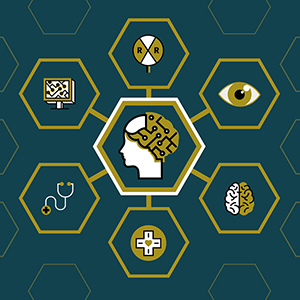
Icon of how an artificial intelligence brain connects to concepts of technology, transportation, vision, the brain, ideas and health care.

2025 artificial intelligence faculty experts list

July 31, 2025, Gregory Hardy

University of South Carolina researchers explore how artificial intelligence can be used for advancements in health care, education, manufacturing, energy, disaster management and transportation. They are also helping shape and inform the ethics and policies surrounding these emergent solutions.

Woman lifts kettle bell in a gym setting.

Brain Health Fitness program uses exercise to fight cognitive decline

July 30, 2025, Nicole Carrico

Integrating physical movement into a patient’s daily routine is an essential strategy to combat chronic illness and ensure a healthier future for South Carolinians. A new collaborative research study from USC Brain Health and the Arnold School of Public Health goes one step further by examining how consistent, physical exercise can also help combat cognitive decline and improve overall neurological health.

Baby hand in adult hand

Study finds many women who give birth at home feel empowered

July 24, 2025, Kristine Hartvigsen

As the birth of their baby approaches, women often turn to their mothers, sisters or close female friends for comfort and advice — a trusted and time-honored support system. Recent research conducted through the Women’s and Gender Studies Department at the University of South Carolina views this phenomenon through an anthropological lens, confirming the relevance of this bonded group and examining childbirth choices women typically face.

Gloved hands working with batteries and wires

Phase 1 construction of Battery Center set to begin

July 09, 2025, Chris Horn

In about 18 months, the Carolina Institute for Battery Innovation at the University of South Carolina plans to open the first phase of its Battery Center, a research, manufacturing and teaching facility in partnership with several commercial battery manufacturers.