SCATP Fact Sheets
An assistive technology (AT) device is any item, piece of equipment, or product system, whether acquired commercially, off the shelf, modified or customized, that is used to increase, maintain, or improve functional capacities of individuals with disabilities.
AT can help people learn, compete in the work environment, achieve independence, or improve quality of life. Although, the use of assistive technology is not an end in itself, it is part of an ongoing therapeutic process to improve functional capabilities. Devices can replace a missing limb, help prevent the worsening of a condition, help improve physical functioning, help improve a person's capacity to learn, or strengthen a physical or other weakness.
Types of AT
Aids for Daily Living: Devices that help in daily living and independence. Examples include modified eating utensils, adapted books, pencil holders, page turners, dressing aids, adapted personal hygiene aids. [online resources]
Augmentative Communication: Devices that help persons with speech and/or hearing disabilities communicate: communication boards, speech synthesizers, modified typewriters, head pointers, text to voice software. [online resources]
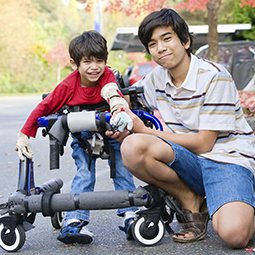
Mobility Aids: Devices that help people move within their environments: electric or manual wheelchairs, modifications of vehicles for travel, scooters, crutches, canes and walkers. [online resources]
Seating and Positioning: Adapted seating, cushions, standing tables, positioning belts, braces, cushions and wedges to maintain posture, and devices that provide body support to help people perform a range of daily tasks. [online resources]
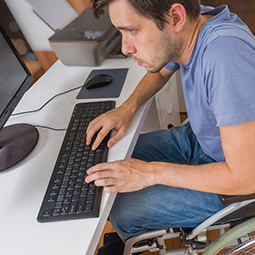
Computer Access Aids: Headsticks, light pointers, modified or alternate keyboards, switches activated by pressure, sound or voice, touch screens, special software, voice to text software. [online resources]
Environmental Controls: Electronic systems that help people control various appliances, switches for telephone, TV, or other appliances which are activated by pressure, eyebrows or breath. [online resources]
Home/Workplace Modifications: Structural adaptations that remove or reduce physical barriers: ramps, lifts, bathroom changes, automatic door openers, expanded doorways. [online resources]
Prosthetics and Orthotics: Replacement or augmentation of body parts with artificial limbs or other orthotic aids such as splints or braces. [online resources]
Sensory Aids for Vision/Hearing Impaired: Aids such as magnifiers, Braille and speech output devices, large print screens, hearing aids, visual alerting systems, telecommunication devices. [online resources]
Recreation: Devices to enable participation in sports, social, cultural events. Examples include audio description for movies, adaptive controls for video games, adaptive fishing rods, cuffs for grasping paddles or racquets, seating systems for boats. [online resources]
Assistivetech.net is a resource for assistive technology and a link to a wide variety of AT and disability-related information. Their searchable database of AT is designed to help target solutions, determine costs and link to vendors that sell products. The link to Assistivetech.net is http://www.assistivetech.net/