Investigator Highlight
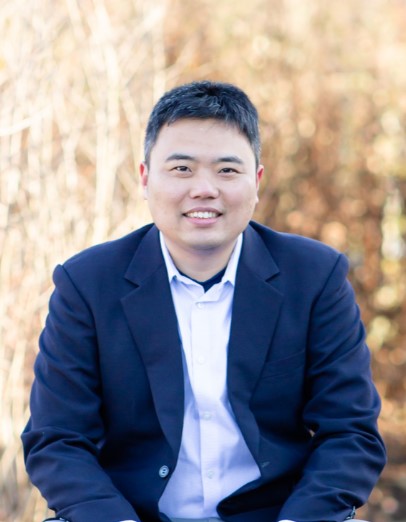
Dr. Yang is a researcher focused on the intersection of physical activity, technology, and brain health. His work examines how everyday movement behaviors, such as walking, influence cognitive function and mental health across the lifespan. He leads multiple NIH-funded studies aimed at developing real-world, scalable strategies to promote healthy aging and reduce the risk of cognitive decline.
Research Team
- Principal Investigator: Chih-Hsiang Yang, PhD, Associate Professor, Arnold School of Public Health, University of South Carolina
- Clinical Collaborator: Rachelle Gajadhar, MD, Geriatric Medicine, Prisma Health, Columbia
- Co-Investigator: Xiaoxue Fu, PhD, Assistant Professor, Department of Psychology, University of South Carolina
The Project
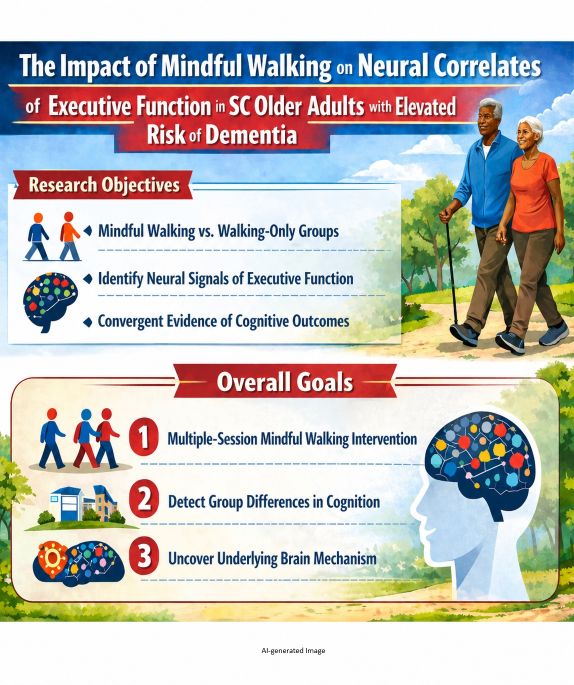
This project investigates whether mindful walking can improve brain function and cognitive health in older adults at risk for Alzheimer’s disease and related dementias. As the aging population grows, there is an urgent need for accessible, non-pharmacological strategies to prevent cognitive decline. The study will use a randomized controlled trial to compare mindful walking with standard walking, measuring brain activity using a non-invasive imaging technique (fNIRS). By examining both cognitive performance and neural activation, the research aims to better understand how simple lifestyle interventions can support executive function. This approach has the potential to provide a scalable, low-cost strategy to promote brain health and improve quality of life for older adults in South Carolina.
Why This Research Matters
Alzheimer’s disease and related dementias are increasing rapidly, particularly in aging populations. This project explores a simple, accessible intervention that could help maintain cognitive function and reduce dementia risk, especially in underserved communities.
Interested in Learning More?
For additional information about this study or to get involved, please contact: Dr. Yang - (803)777-1088; email: uscecholab@mailbox.sc.edu