After 25 years at University of South Carolina Libraries, including seven years as the Libraries’ inaugural Associate Dean for Special Collections, Elizabeth Sudduth is retiring – and leaving behind collections and a university community both greatly enriched by her vision and dedication.
“Our special collections are among the best in the country,” notes David Banush, Dean of Libraries. “But Elizabeth’s incredible knowledge, professionalism, and commitment have made them even more impressive. We will be forever in her debt and will miss her tremendously.”
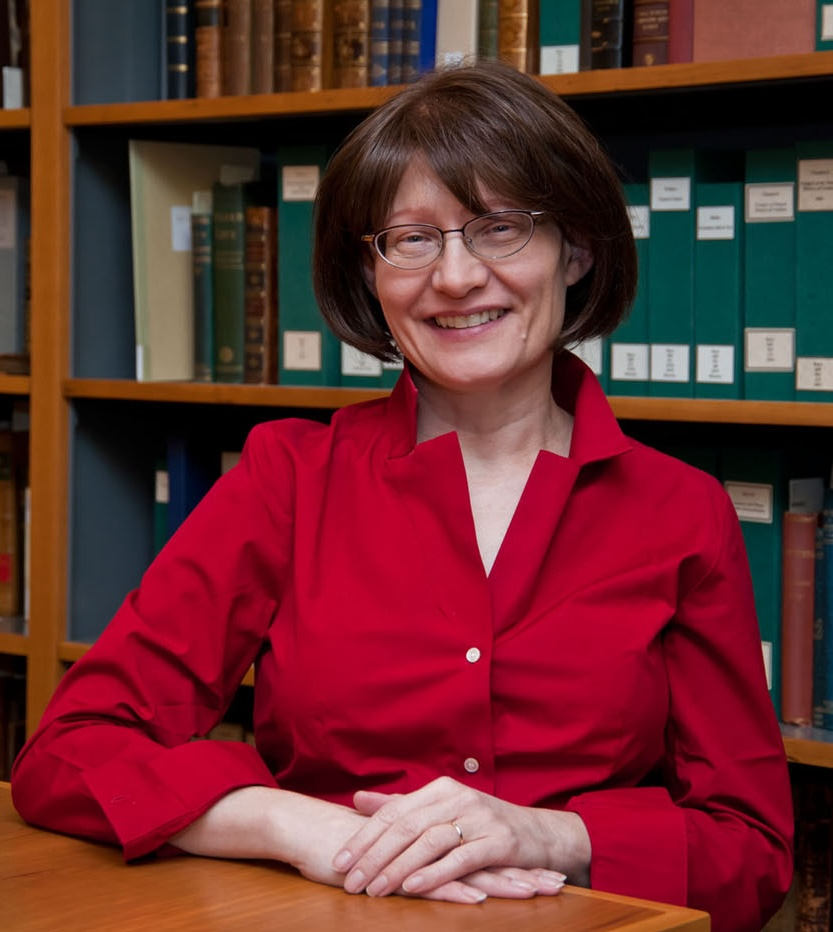
Sudduth began her career in smaller libraries at Williams College and Randolph Macon College, where she gained broad experience across a range of fields including special collections. When her husband, Bill Sudduth, was offered a position heading up the regional repository of government documents at USC Libraries in 2000, a well-timed cataloging vacancy in Rare Books brought Elizabeth into special collections shortly thereafter.
The match was fortuitous. “Elizabeth came to the University of South Carolina at a time of transition and tremendous growth. Rare books and special collections as a field was changing, moving away from a tradition of antiquarian treasure rooms and toward a more inclusive and public facing model,” says Michael Weisenburg, Director of the Irvin Department of Rare Books. “Throughout her time here, Elizabeth had an increasingly influential role in the department's mission and vision while also allowing for greater access and outreach.”
Nina Levine, Associate Dean of Arts, Humanities and Social Sciences in the McCausland College of Arts and Sciences, agrees. “Elizabeth is always thinking about impact—and her thinking is large and inclusive and creative, and dedicated, always, to making community with books.”
In her 25 years with USC, Sudduth held several positions of increasing responsibility. In 2007, she became Associate Director of Rare Books. Four years later, upon the retirement of Dr. Patrick Scott, she succeeded him as Director of Rare Books. In 2018, she was appointed to the newly created position of Associate Dean of Special Collections, overseeing not only Rare Books but also the South Caroliniana Library, South Carolina Political Collections, Oral History and the Moving Image Research Collections.
As Director of Rare Books, Sudduth oversaw the acquisition of significant collections which, as Weisenburg notes, “fundamentally changed the size and scope of the department,” including Speiser and Grissom's Hemingway Collections, the Graham-Kennett Collection of Award Winning Children's Literature and the Little-Myerson Collection of Multi-Cultural Children's Literature, Robert Ariail's Astronomy Collection, and Gary Watson's Comic Book Collection. While Sudduth is quick to note that building those collections was a collaborative effort, she did at times play a more active role in their acquisition than might be expected of a department head, including driving one of the 26-foot moving trucks that brought the Watson Comic Book collection from Ohio to USC.
Sudduth was also instrumental in settling Rare Books into its new space in Hollings Library, which opened in 2010, just a year before she became the department’s director. That included a considerable capacity to roll with the punches. After years of conversations about the department’s need for new space, which culminated in plans for two new wings to be built on the front of Thomas Cooper Library, Sudduth recalls, “on the day of the groundbreaking ceremony for that project, cost estimates came in that were far too high, so Michael Watson, whose architecture firm was working on the project, came up with the plan for the current building literally on the back of an envelope. It’s smaller but more consolidated.”
Hollings also provided enhanced exhibit space, and Sudduth took full advantage, helping to curate major exhibits there, including a 400th anniversary celebration of Shakespeare’s First Folio, a display of the Robert Ariail collection of historical astronomy, an exhibit of material from the C. Edgar and Julie Grissom Collection of Ernest Hemingway, and the libraries’ Dashiell Hammett exhibit. Sudduth’s work on the Shakespeare exhibit, says Levine, “was phenomenal. Thanks to Elizabeth, we secured the exhibit (the only venue in South Carolina) as well as a major national grant to fund a series of first-class events. The planning was extraordinary, and the results were spectacular.”
Levine likewise credits Sudduth for the ongoing success of the Fall Literary Festival, jointly sponsored by the English department and the libraries; it brings notable writers to campus each year. “Elizabeth’s support for the Fall Literary Festival has been absolutely vital to more than a decade of fabulous programming. Our university has been privileged to host an amazing array of writers, thanks in large part to Elizabeth’s behind-the-scenes expertise. And it’s only because of her dogged determination that the Festival ran through the Covid year, and we all got to share Zoom-rooms with some spectacular literary visionaries.”
Sudduth’s scholarship is also likely to have a lasting impact, says Weisenburg. Her illustrated catalogs of the Joseph M. Bruccoli Great War Collection and the G. Ross Roy Collection of Robert Burns and Burnsiana, as well as her articles on the Myerson Collection of Emerson for the journal Manuscripts, he notes, “not only showcase her skill as bibliographer and book historian but also helped to communicate to the scholarly world the growing importance of the University of South Carolina Libraries as a global research destination.”
Even as she oversaw the elevation of USC special collections into an increasingly valuable resource for scholars from around the world, Sudduth remained remarkably hands-on and collaborative in her dealings with everyone from colleagues to scholars to donors. As Dr. Anne Hardin, who donated a large collection of Ray Bradbury materials to the Irvin Department of Rare Books, puts it, “Elizabeth Sudduth is the kind of person I wish I’d known when I was four or five and had grown up with her as best friends. She became a best friend and shepherded my Bradbury collection with kid gloves.”
Sudduth’s support of the researchers who used USC’s special collections has also been remarkable, says Weisenburg: “During her tenure here, Elizabeth has assisted countless scholars from students and visiting researchers to enthusiastic amateurs. A list of all the ‘Thank Yous’ written to her in the acknowledgements pages of academic monographs, journal articles, and pop culture books amounts to a most flattering and durable recognition of her commitment to the mission of academic librarianship: fostering of world-class research by connecting people, comprehensive information resources, and expert services at the point of need.”
Sudduth herself cites building a strong and collaborative team as one of her proudest achievements. “As Associate Dean, my goal was to break down the silos between the special collection units,” she says. “While there is more to be done, we are a much more collaborative group than we were in the past. And I am very proud of the hires and promotions that have been made in my time as Irvin Department Director and Associate Dean. I’ve been so impressed by the people we’ve been able to recruit and hire lately. A lot of very talented people have chosen to come here, which bodes very well for the libraries’ future.”
Weisenburg, whom Sudduth recently promoted into his current role, attributes much of his professional development to her. “I would not now be Director of Rare Books if it were not for Elizabeth,” he says. “She gave me my second job in the libraries, and she continued to give me increasingly interesting projects as they became available. I could not have asked for a better person to learn from, and I am forever grateful for her trust and confidence.”
Distinguished Professor Emeritus of English Don Greiner speaks to the impact Sudduth has had on the lives and work of countless others when he says, “I confessed to a university colleague the other day that, after Elizabeth revealed her pending retirement plans, I vowed to lock my office door, deny the fact of her absence, and just sit in the gloom. For the last ten years, Elizabeth Sudduth has been THAT important to me and my research. She always knew the answers. She always found the funds. She always had time to discuss. She always smiled. Working with Elizabeth for a decade was always a pleasure.”