Types of Experiential Education
There are many ways to gain professional experience beyond internships and co-ops. Explore opportunities ranging from research and fellowships to clinical experiences and apprenticeships.
View the Gamecock's Guide to Experiential Education.
Internships can open a path to full-time work.
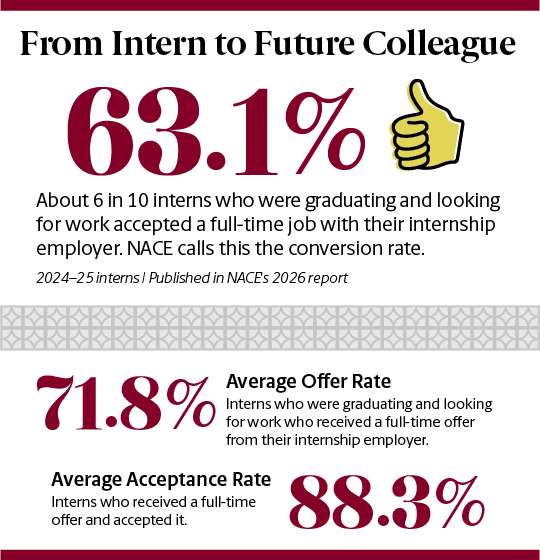
Each rate answers a different question:
- Offer rate: How many graduating interns received a full-time job offer?
- Acceptance rate: Of those offered a job, how many said yes?
- Conversion rate: Of all graduating interns looking for work, how many accepted a job with their internship employer?
These national averages focus on interns who were finishing school and looking for work. They describe jobs with the internship employer, rather than every job an intern might find.
The figures are from NACE’s employer survey. They are not USC results or a promise of a job offer.
Explore the Possibilities:
Where USC Students Gain Experience
These are just a few of the employers where USC students have gained internship experience.
Explore opportunities on Handshake.
Choose Your Experience: Internship or Co-op?
Both connect classroom learning with work. The main difference is the length and structure of the experience.
Check out the Gamecock's Guide to Internships vs. Co-ops.
Carolina Internship Program
Already accepted an offer? The Carolina Internship Program (CIP) allows you to step away from the university to complete your experiential education opportunity while maintaining your enrollment. Review the enrollment steps now.
South Carolina Internship Program (SCIP)

SCIP offers USC system students a chance to receive a $3,000 stipend when they complete internships and co-ops that support South Carolina’s high-demand industries.
View SCIP requirements and application updates.
Awards are first-come, first-served and depend on eligibility and available funds, and are not guaranteed. Questions? Contact SCIntern@sc.edu.