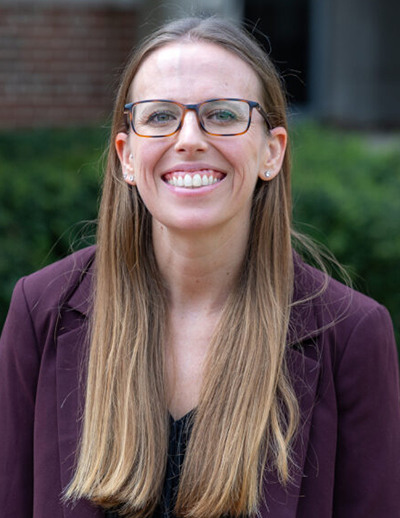
Paige Vaughn joins USC’s Department of Criminology and Criminal Justice with expertise in police crime-solving, gun violence prevention and criminal justice reform. She has worked closely with agencies and communities in Missouri, Alabama, and beyond, bringing both research insight and practitioner-focused collaboration to her work. Before arriving at USC, she taught at Spring Hill College and served as a postdoctoral research fellow at Yale Law School.
She spoke with us and shared her insight on teaching, research and her love for Justin Bieber.
Where do you call home? What brought you to USC? Tell us about your academic and professional journey so far.
I was born and raised in Los Angeles, but I’ve also lived in St. Louis, Missouri, and Mobile, Alabama — places that all feel like home. My career path began with an internship in the Los Angeles District Attorney’s Victim-Witness Assistance Program, where I discovered I enjoyed working directly with practitioners and survivors. After a year of service with the Jesuit Volunteer Corps in Mobile, I earned my Ph.D. in Criminology and Criminal Justice at the University of Missouri–St. Louis, then completed a postdoctoral fellowship at Yale Law School studying police reform. Most recently, I taught for four years at Spring Hill College before joining USC.
What first drew you to your main area of expertise? What do you love about it?
I became interested in police crime-solving after reading Jill Leovy’s book Ghettoside while working with police agencies. It highlighted how criminologists often focus on over-punishment while disregarding victims’ experiences of neglect. I enjoy tackling underexplored issues in our field and working toward a fuller understanding of what true justice might look like.
How would you describe your research to someone who hasn’t studied this field before? What do you hope the impact of your research will be?
My research focuses on criminal justice policy, violent crime prevention and public perceptions of safety and justice. I study police investigations, gun violence prevention and how victims and perpetrators experience criminal case processing, particularly around racial disparities. I hope to advance evidence-based policy that is informed by and accountable to the communities most affected by crime and justice.
Tell us about your approach to teaching. Do you have a favorite topic or class to teach? What do you hope your students will take away from your classes?
My teaching philosophy emphasizes critical thinking and connecting research to real-world practice. I encourage students to question assumptions, engage with community organizations and design projects that matter to them. I’ve especially enjoyed teaching courses on the sociology of punishment and deviance, though I also love teaching introductory classes that debunk myths about crime and justice.
How are you finding the USC community so far? What is something new you’ve discovered about life as a Gamecock or here in the Columbia area?
I’ve found USC to be incredibly resourceful and full of opportunities. I’m looking forward to collaborating with colleagues in the department and the Excellence in Policing and Public Services initiative at the law school. I’m also excited to explore Columbia’s outdoor spaces.
Tell us a bit more about you! What do you enjoy doing in your free time? What’s one fun or unexpected fact about you?
I love spending time outdoors and with my cat, Jiji. I also enjoy volunteering, reading and dancing to Justin Bieber.