Obesity is an increasing concern worldwide. In 2018, one-third of all adults in the US were considered obese, and this rate is projected to increase to around 50% by 2030. Adults and children with obesity are at a higher risk of developing type 2 diabetes, cardiovascular disease, and several cancers. With obesity, the imbalance between energy uptake (overeating) and expenditure (reduced activity) causes increased lipid storage in adipose tissues and lipid accumulation in non-adipose tissues. While the link between adipose tissue dysfunction and other pathologies including diabetes, chronic inflammation, and infertility, is clear, the molecular mechanisms that underlie these associations have not been fully described. In particular, we do not fully understand how perturbations in the adipose tissue disrupt the metabolism and function of other organs.
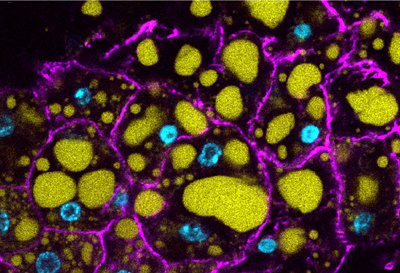
In their new study titled "Adipocyte-Derived CCHamide-1, Eiger, Growth-Blocking Peptide 3, and Unpaired 2 Regulate Drosophila melanogaster Oogenesis", graduate student Chad Simmons, his mentor Dr. Alissa Armstrong, and his labmates Isaiah Williams (graduate student) and Dr. Tancia Bradshaw (former doctoral student), used the model organism Drosophila melanogaster to uncover how the adipose tissue communicates to the ovary. During development in Drosophila, the fat body secretes a variety of adipokines that control overall growth and developmental timing, similar to human adipocyte signaling. Interestingly, Chad and his collaborators found that the adult fat body expresses five of these “larval” adipokines named CCHamide-1, CCHamide-2, eiger, Growth-blocking peptide 3, and unpaired 2. While the maintenance of ovarian germline stem cells does not require these adipokines, adipocyte-derived CCHamide-1, eiger, Growth-blocking peptide 3, and unpaired 2 influence early and late germline survival as well as ovulation. Thus, results from this work uncovered several adipokines that mediate fat-to-ovary communication.