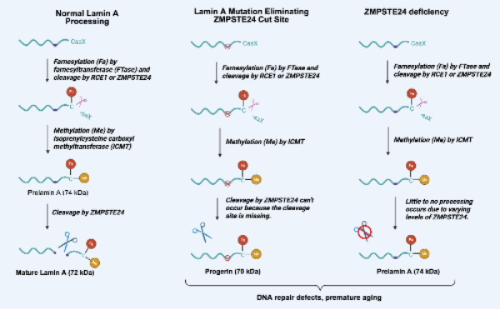
The blueprints containing the instructions for all biological functions of a cell, and hence all biological functions of an individual, are coded within the DNA contained in our chromosomes. On a daily basis, our DNA suffers various forms of damage. It is imperative that DNA damage is repaired rapidly and accurately to avoid changes to the coded information which, in turn, may cause detrimental disruptions to important functions. Changes to the information coded in our DNA are referred to as mutations. Fortunately, the cells of healthy individuals are equipped with effective DNA repair processes that usually do an excellent job at preventing mutations. Unfortunately, nothing is foolproof. Occasionally DNA repair does not succeed at preventing the occurrence of a mutation, and so over time mutations may accumulate within a cell. It appears that our cells’ ability to effectively repair DNA damage gradually diminishes as we age. Our understanding of the complicated biology of aging is very far from complete, but scientists have accrued a body of knowledge about cellular changes that occur with age. One such change is a decrease in the levels of a protein known as ZMPSTE24. ZMPSTE24 plays an important role in the synthesis of another protein named lamin A which, in turn, plays critical roles in maintaining the appropriate structure and function of the cell nucleus, the cellular compartment that houses our chromosomes. Individuals with inherited alterations in lamin A are known to have highly damaged DNA and display premature aging. The natural drop in ZMPSTE24 levels with age in healthy people, which impacts the synthesis of lamin A, may therefore cause a disruption of DNA repair which may contribute to normal aging. Dr. Waldman's lab studies how alterations in lamin A may affect the nature of chromosomal DNA repair. They recently published a review article on the role played by lamin A in maintaining the genome.
"Our long-term goal is to contribute to the development of strategies for mitigating the effects of aging and extending health span." - Dr. Alan Waldman