Adaptive radiation is the rapid evolution of ecologically diverse species within a lineage and is an important driver of biological diversity. Examples of adaptive radiation are ubiquitous across the tree of life, including many examples described in plants. Since Darwin described his observations of the finches on the Galapagos Islands in 1859, biologists have sought to characterize the features that promote adaptive radiation, including ecological opportunity, patterns of geographic dispersal to new habitats, and genetic mechanisms for phenotypic and species diversification. With the increasing availability of quality genomic resources, an area of considerable current interest is the source of genetic variation that enables the emergence of rapid trait divergence and speciation on a short evolutionary timescale.
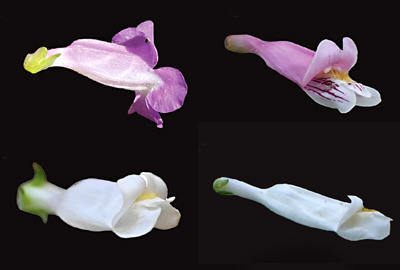
Adaptive radiation in ecologically and morphologically diverse plant lineages presents an opportunity to investigate the rapid evolution of novel floral traits. While some types of floral traits, such as flower color, are well characterized, other types of complex morphologies remain understudied. One example is occluded personate flowers, which are dorsoventrally compressed flowers with obstructed floral passageways that have evolved in multiple genera but have only been characterized from snapdragon. In their new study titled "The unique morphological basis and repeated evolutionary origins of personate flowers in Penstemon", graduate student Trinity Depatie and her mentor Dr. Carrie Wessinger examined the morphological basis and evolutionary history of personate flowers in a clade of Penstemon species that includes three personate-flowered species. Using detailed characterization of floral morphology and inferred phylogenetic relationships for 13 species in this group, they found that personate flowers in Penstemon have a different morphological basis than those in snapdragon, and that personate flowers have evolved multiple times in Penstemon on a rapid evolutionary timescale. These studies will shed light on potential pollinator-mediated selection pressures that may have favored the unique floral shape in Penstemon.