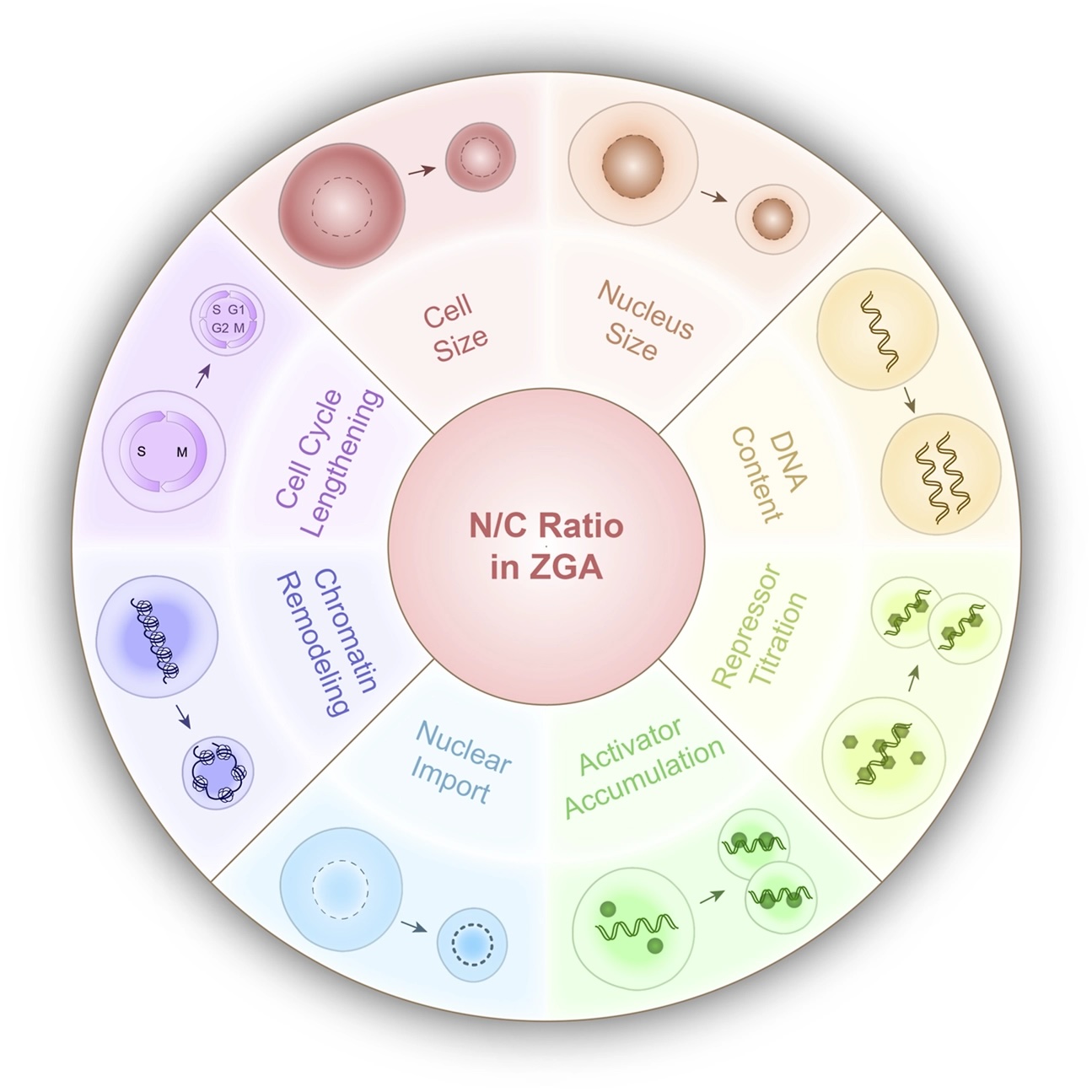
During early development, embryos undergo the maternal-to-zygotic transition (MZT), when control of development shifts from maternal factors to the newly activated zygotic genome. Decades of studies in various model organisms suggest that the nucleocytoplasmic (N/C) ratio is a key regulator of zygotic genome activation (ZGA), though this relationship is more nuanced in some organisms than others. Changing the nuclear content, nucleus size or cell size has been shown to shift the timing of ZGA. Mechanistically, the N/C ratio is linked to fundamental cellular processes that regulate genome activities, including nuclear import, repressor titration, activator accumulation, cell cycle lengthening, and chromatin remodeling. In this review, they summarize the experimental evidence supporting the N/C ratio as a regulator of ZGA and describe the associated molecular mechanisms. Also discussed are the limitations of the N/C ratio model, highlight species-specific differences, and examine outstanding questions.