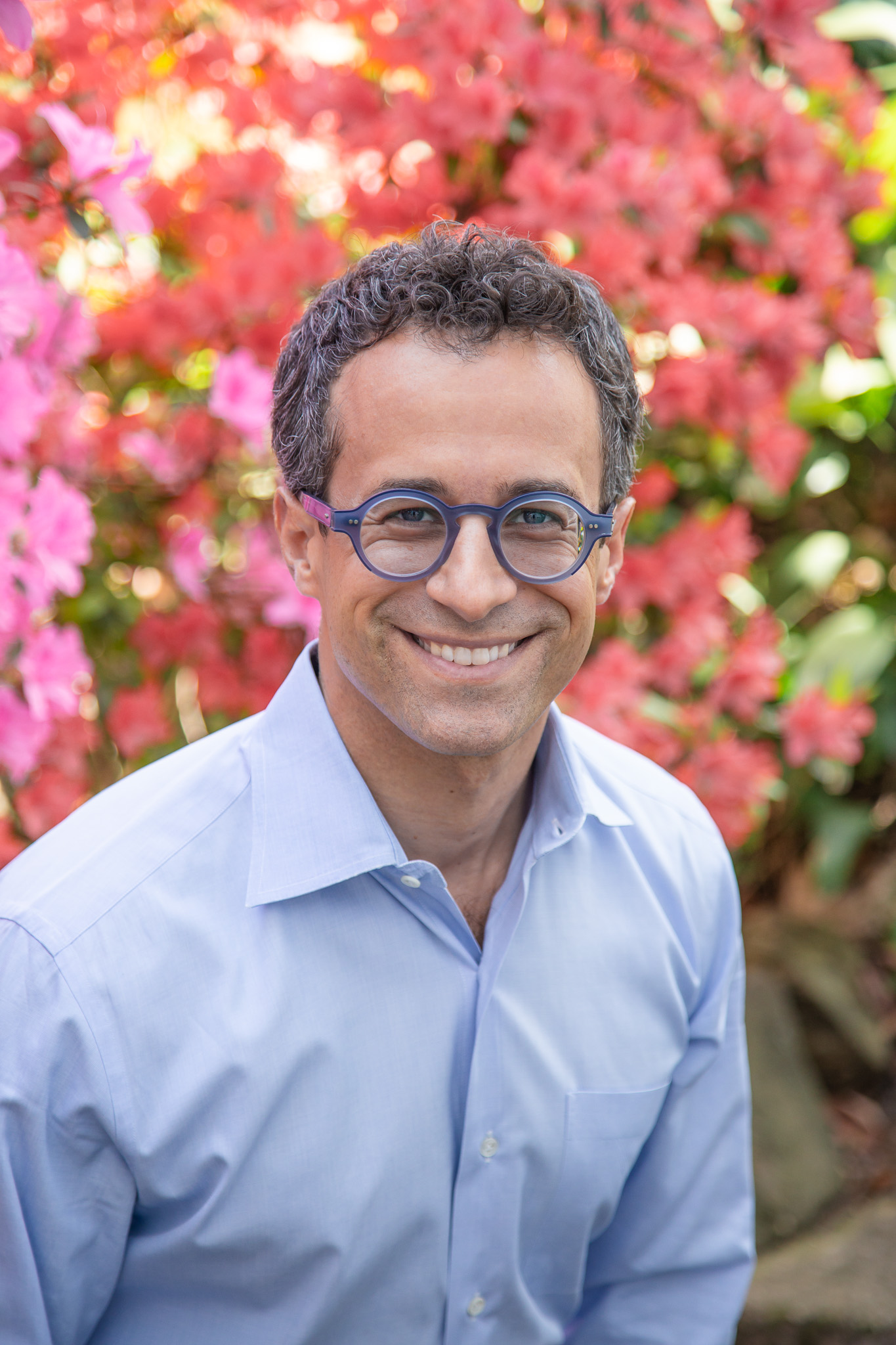
Professor Andrew Berns is headed to Rome. The USC historian has been awarded the prestigious Paul Mellon Rome Prize, a yearlong fellowship at the American Academy in Rome. The fellowship brings together leading thinkers and creators from around the world for a year of research and collaboration.
Berns, whose work connects history, religion and the arts, will study rarely seen Renaissance manuscripts by Jewish physicians whose patients included popes and princes and whose writing changed the way scholars applied medical knowledge in interpreting the Bible. The same doctors also challenged a stereotype that considered Jewish culture as unrooted and perpetually migrating.
“What motivates my work is the search for themes of universal significance across disparate cultures, especially the relationship of language to land,” Berns wrote in his Rome Prize proposal.
Beginning in fall 2026, Berns will join a cohort of fellows living and working at the academy’s Janiculum Hill campus in Rome. He'll conduct research for his project titled “Jews and the Land in Early Modern Italy: Exegesis, Medicine, Environment,” which examines how Jewish thinkers in Renaissance and early modern Italy understood the relationship between people, place, health and the natural world.
“Between the fifteenth and seventeenth centuries, Jewish authors on the Italian peninsula, in particular in Rome and its environs, lavished unprecedented attention on agriculture, geography, and the effects of environment on human health and culture,” Berns wrote.
Drawing on manuscripts housed in Roman and Florentine libraries, Berns will study how Jewish physicians and scholars connected medicine, geography and biblical interpretation between years 1400-1700.
At a moment when scholars are rethinking the relationship between humans and environments, this project provides historical perspective on how people have turned to land and nature to make sense of identity, belonging and the human condition.
— Andrew Berns
The central question: How does environment shape identity, culture and the way people understand themselves and their sacred texts?
“At a moment when scholars are rethinking the relationship between humans and environments, this project provides historical perspective on how people have turned to land and nature to make sense of identity, belonging, and the human condition,” Berns wrote.
Why his research matters: The project challenges long-standing stereotypes that portray pre-modern Jewish culture as detached from place or inherently “rootless.” Berns aims to elucidate a tradition deeply engaged with the physical landscapes of diaspora life.
Why physicians matter: Jewish doctors influenced far more than medicine. Their writings shaped biblical interpretation, legal reasoning and broader intellectual debates about geography, wellness and daily life.
He will study Biblical commentaries, medical texts, letters and legal writings produced in Greek, Hebrew, Italian and Latin during the Renaissance and early modern period. Many of the manuscripts Berns plans to study remain underexamined and can only be consulted in person in Roman and Florentine archives.
The broader impact: His work also expands how historians understand Renaissance science and medicine, showing how medical ideas influenced theology, law and intellectual culture well beyond hospitals and universities. At a moment when scholars across disciplines are rethinking humanity’s relationship to land, migration and identity, Berns’ research offers a historical perspective on questions that remain relevant today.
That interdisciplinary exchange is also part of what drew Berns to the Rome Prize. The fellowship places scholars alongside artists, writers and performers in a shared creative and intellectual community that mirrors his own approach to scholarship. His recent collaboration with photographer Kate Joyce on a translation of Ovid’s “Metamorphoses,” with co-writer André Megerdichian in the theatre department, evolved into a theatrical production that debuted at Drayton Hall in 2026, the first project of its kind between a USC history professor and the university’s Department of Theatre and Dance.
Additionally, Berns is the second USC professor to receive the Rome Prize in recent memory. Carol Harrison received the award in 2024 and spent a year there studying the role of women in the first Vatican council.