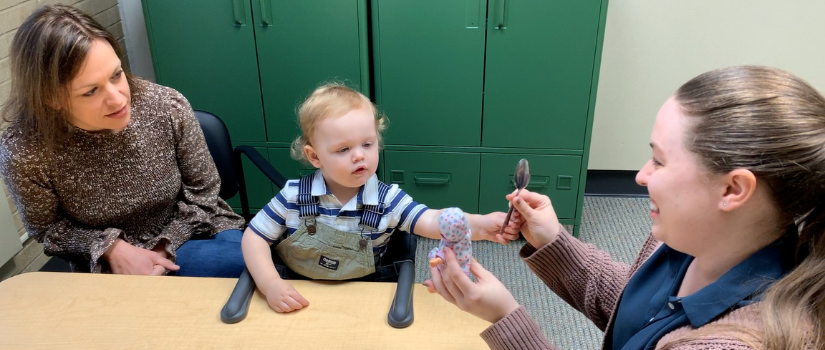
A new program at the University of South Carolina will help autistic youth throughout the state receive better mental health support thanks to a grant received from The Duke Endowment. The grant will enable researchers with the Carolina Autism and Neurodevelopment (CAN) Research Center to train mental health clinicians to better work with autistic children and youth.
The CAN Research Center conducts research and provides support, education and other resources that help families navigate challenges related to neurodevelopment. Lindsay McCary, CAN clinical director and licensed psychologist, is leading the new project, called Strengthening Mental Health Services for Autistic Children and Youth.
“Mental illness such as anxiety and depression are elevated in autistic populations, making access to skilled providers a critical public health concern,” McCary has said. She explained that 70-95 percent of autistic children have at least one mental health condition and are at higher risk of suicidal ideation. South Carolina ranks low on access to mental health services across the nation. This is exacerbated for high-risk populations, including those with autism.
The CAN initiative addresses these challenges by establishing a statewide education program to provide training, consultation and mentorship to mental health providers who serve or wish to serve autistic youth ages 4-18.
“By investing in provider training and capacity building, we address an urgent and growing need for sustainable, autism-competent mental health services across South Carolina,” McCary said.
McCary partnered on the project with Sarah Edmunds, an assistant professor in USC’s Department of Psychology and a licensed psychologist with CAN. Edmunds supports the project through her lab’s research, which focuses on making autism-related interventions widely available. Her doctoral and undergraduate trainees have surveyed mental health clinicians to find what works and what needs improving. This work will support the planning and training content of the CAN program.
Graduate trainees will also train in the project to build a pipeline of professionals with advanced expertise in autism and mental health.
“I have seen the powerful impact that neurodiversity-affirming mental healthcare can have for members of my family and my past clients, and I want that for all autistic youth. This project is a step in that direction for South Carolinians,” Edmunds said.
The CAN researchers aim to have a sustainable state-wide training model to support mental health clinicians in working with autistic children and youth supported by community collaborations. McCary and Edmunds will partner with Emily Lowell, a licensed psychologist with the Prisma Health Midlands Developmental Pediatrics clinic, along with Upstate Carolina Autism Associates, the Office of Mental Health and the Office of Intellectual and Developmental Disabilities to engage mental health clinicians working in underserved areas.
The Duke Endowment grant will provide $630,000 over three years and allow McCary and her team to develop online learning modules, launch in-personconsultations with clinicians and launch the Extension for Community Healthcare Outcomes project, a virtual learning model designed to expand expertise about autism into communities.
“More than 70 percent of autistic youth in S.C. have challenges with mental health, yet mental health clinicians often do not know how to support them,” Edmunds said. “We have to change that, to protect and promote the quality of life and overall well-being of autistic youth and their families.”