Sometimes babies are born with a hole between the lower chambers of the heart, called a ventricular septal defect. Sometimes the baby clearly needs surgery to correct the defect, or often it closes on its own. But other times — when the defect is a medium size — the need is unclear.
Mitchel Colebank, an assistant professor of mathematics at the University of South Carolina, is asking whether math can help doctors better understand those possibilities and what a child’s heart might look like months or years down the road.
With support from a three-year American Heart Association Career Development Award, Colebank is developing computer models that will help predict how the hearts of children with ventricular septal defects will develop from birth to age 2. The goal is to give doctors another tool for evaluating cases where the best course of treatment may be uncertain.
A ventricular septal defect is a hole in the wall separating the heart’s two lower chambers, or ventricles. When the opening is large, the higher pressure on the left side of the heart can push blood toward the right side and into the lungs. This increased blood flow can strain the developing heart and lungs, making it harder for a baby to breathe, feed and grow normally. Over time, severe cases can have lasting damage to the blood vessels in the lungs or even lead to heart failure.
Colebank hopes to better understand those changes by creating what engineers call a “digital twin.”
To understand how a digital twin model works, Colebank says to imagine an airplane. Engineers can collect measurements from the physical aircraft — how much its wings are moving or how much strain its components are experiencing — and use mathematical equations to create a digital representation of how the airplane is behaving. These equations, when simulated on a computer, can help engineers assess the health of the plane and determine whether it might need repairs or servicing.
“The digital twin part is our way of describing that physical object through mathematical equations that describe the physics,” Colebank said. A similar process can be used to understand the heart.
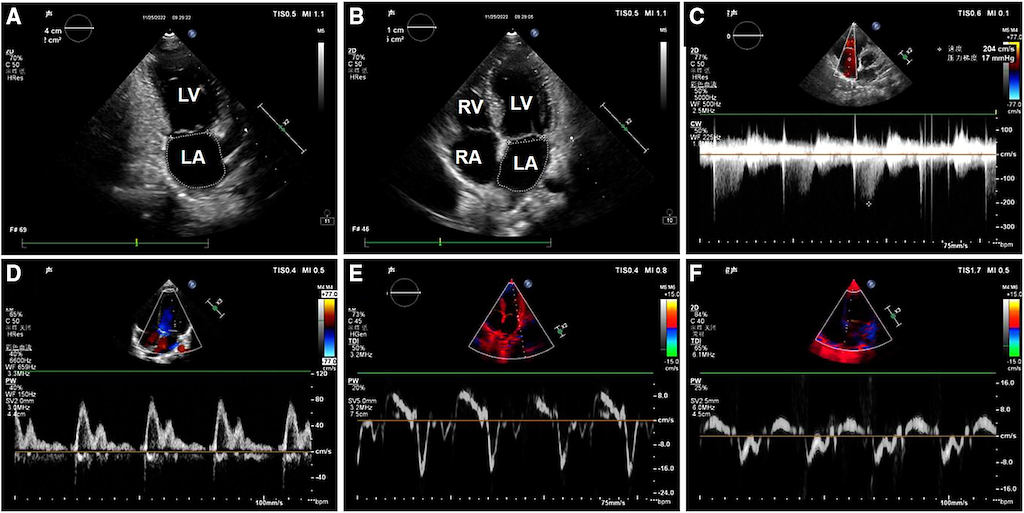
Doctors already use echocardiograms, or ultrasounds of the heart, to find defects, measure the size of the heart’s chambers and assess how well it is functioning. Colebank’s team aims to use those measurements to personalize a mathematical model of an individual child’s heart — its digital twin.
The model could then simulate how researchers think the heart will develop. At the child’s next appointment, new measurements could be compared with those predictions. If reality doesn’t match the forecast, the model could be updated, creating a feedback loop between the real heart and its digital counterpart.
Machine learning and data science will help make that process possible. “Machine learning tools can process ultrasound images and turn them into data the mathematical model can use for making digital twin patient specific,” Colebank said.
That doesn’t mean the model will know exactly what comes next. Colebank knows uncertainty is unavoidable in both clinical measurements and mathematical models. An ultrasound cannot measure a heart with perfect precision, and even the best model cannot capture every complexity of human biology.
With that in mind, Colebank’s project also explores how to acknowledge uncertainties. He compares the idea to the cone of uncertainty used in hurricane forecasts; meteorologists cannot say exactly where a storm will travel days in advance, but they can provide a range of possible paths and explain how confident they are in the forecast. In addition to measuring uncertainty, Colebank’s model will allow clinicians to know how the algorithm reached its determination by explicitly expressing clinical knowledge in the mathematical equations.
“We never want to be certain about the wrong conclusion,” he said.
To test the approach, Colebank is collaborating with pediatric cardiologist, Dr. Hamilton Baker, at MUSC who also does research in artificial intelligence and digital twins at the Medical University of South Carolina. The partnership gives his team access to clinical expertise and echocardiogram data consisting of ultrasounds from children with developmentally-typical hearts and those with small, moderate and large ventricular septal defects.
Ideally, a cardiologist could eventually perform the same echocardiogram they already use, while machine learning automatically extracts the information needed to update the child’s digital twin. The model could then provide possible growth trajectories showing how the heart and blood vessels might develop over the next months or years.
For families whose children fall into that uncertain middle ground, those forecasts could provide doctors with additional information when deciding whether to continue monitoring or consider treatment. It would also provide a new way of quantifying the unknown, and give parents a better idea of the outcome of their child’s defect based on the digital twin.
Explore mathematics at USC
Discover how mathematics helps us understand complex problems, from human health to the world around us.