Healing from nervous system injuries is a game of millimeters — in fact, just three millimeters at most per day. That slow nerve growth means thousands of injured military veterans, athletes and accident survivors struggle for years with the pain and mobility issues that nerve damage can cause.
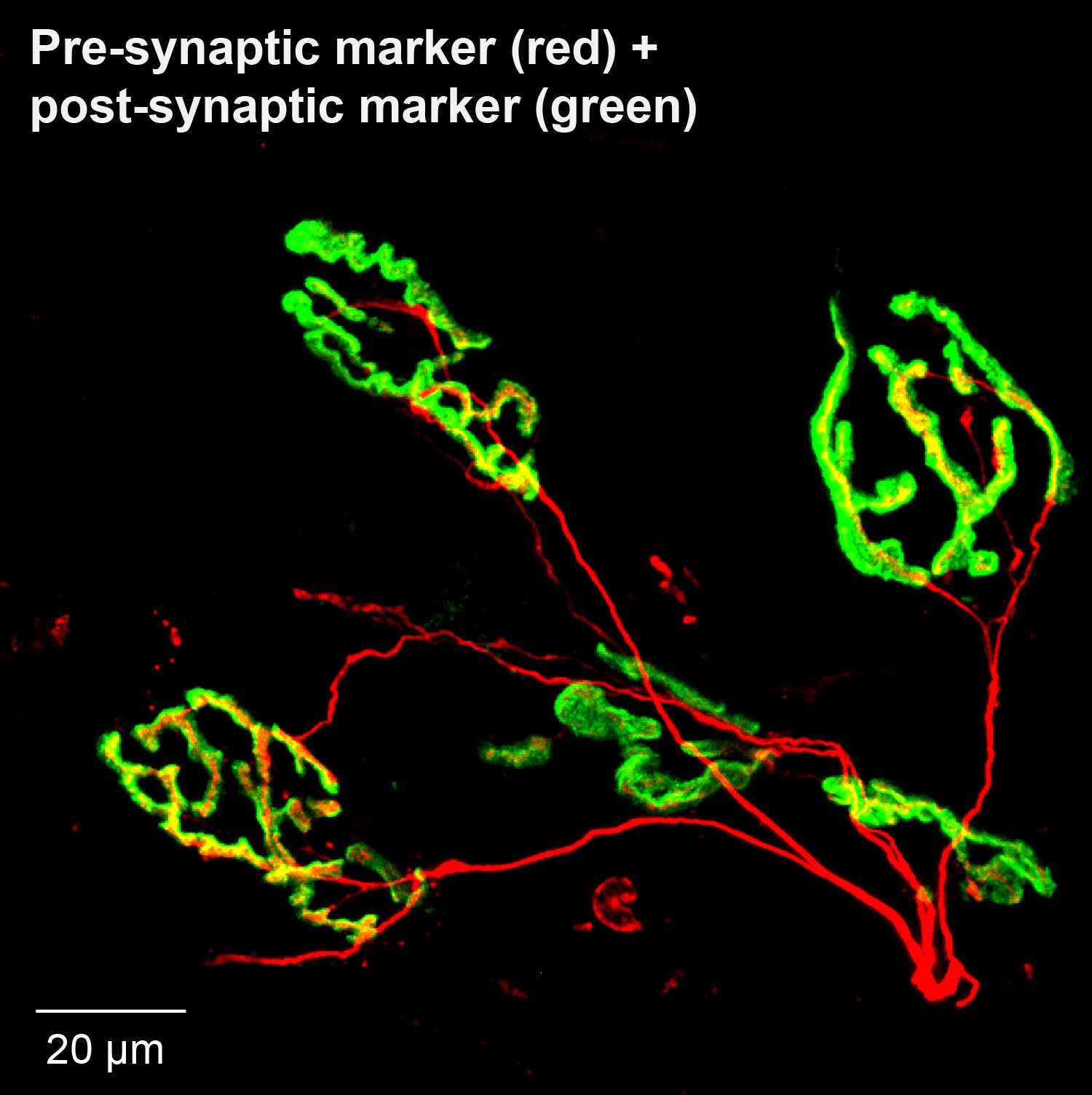
But the search for faster healing took a tiny leap forward in a new discovery made by University of South Carolina alumni, faculty and students in studies funded by the grants from National Institutes of Health and the Dr. Miriam and Sheldon G. Adelson Medical Research Foundation.
Their research published in “Science Advances” found that damaged nerves create proteins that slow down their healing process. The scientists found a way to stop the creation of those proteins and therefore speed up the nerve growth. They have much more research to do before this could be turned into a medical treatment, but every bit of progress helps.
“This discovery provides a new perspective on how we approach nerve regeneration,” said Courtney Buchanan, the lead author on the paper. “For many years, the focus has been on identifying ways to promote nerve growth, but understanding the mechanisms that naturally limit regeneration is equally important.”
Buchanan became interested in this line of research after seeing how nervous system injuries affected people close to her. While attending USC’s Floyd School of Medicine, the Integrated Biomedical Sciences program allowed her to work in the biology lab of Jeff Twiss, the SmartState Chair in Childhood Neurotherapeutics in the McCausland College of Arts and Sciences. The lab studies the biochemical processes surrounding nervous system repair, including finding what makes it more and less likely for a nerve cell to grow faster, slower or not at all.
Twiss explained that when a nerve is cut or crushed, it has to grow again and reattach to the tissues it previously connected to the nervous system. But while the nerve slowly makes progress, it misses a narrow window of opportunity for healing.
"With slow regrowth of nerves, the body loses its growth-promoting qualities, and the target tissues become less receptive for neural reconnections," he said. "So nerve regeneration is rarely successful over distances more than about 2 inches (5 cm). Speeding up the growth of injured nerves could allow the nerve to extend through a growth-promoting environment and restore function before those changes in the environment and tissues occur."
More than a decade ago, Twiss’s lab discovered that the protein REG3A is generated locally in regenerating nerves. In the latest research, Twiss, Buchanan and their collaborators, who include several other current and former USC students, found that REG3A kickstarts biochemical reactions that slow down nerve cell repair.
“It was surprising to discover that the nerve was also using this protein to slow its own growth after injury,” said Buchanan.
The idea of the injured nervous system slowing down its own healing sounds counterintuitive, but Twiss said it may reflect how the nerves are programmed to develop, slowing down their growth to prepare for a fine-tuned connection. It's like the way a driver brakes a car when pulling up to a narrow parking spot — but an injured patient needs the nerve to recover like it’s on the freeway.
"We suspect that this reflects a process that nerves use to connect to target tissues like muscle and skin during initial development," Twiss said. "Specifically, nerves grow slower so they can branch and not overshoot their connections. Unfortunately for injury recovery, that takes the foot off the gas just when it is most needed."
“This discovery highlights the complexity of biological systems,” Buchanan said. “The processes that regulate nerve growth are not inherently good or bad, but rather carefully controlled mechanisms that serve important functions under normal conditions. The challenge is that after injury, the needs of the nerve change. Pathways that normally help maintain proper nerve development and organization may become a barrier when the goal is rapid regeneration."
Not content to just understand what slows the healing process, the scientists also tested a way to block REG3A production. They were able to block the protein and speed up nerve regrowth, but it's far from being a cure. They need to learn more about how REG3A causes the slowdown and explore safe ways to stop REG3A's production in humans.
It's slow progress. But it's also what prompts scientists in Twiss's lab, and many others around the country, to keep conducting experiments in search of a solution.
"From the results in this paper, we now know that natural growth-slowing pathways can be blocked to speed up nerve growth," Twiss said. "This is a critical advance that was made possible by many years of work in our lab and others that may be leveraged for developing clinical interventions in the future."
Buchanan, now a postdoctoral researcher at Johns Hopkins, is excited by the potential for future progress. “While work is still needed before this discovery can be translated into a therapy, understanding these mechanisms is an important step towards developing strategies that improve recovery and quality of life for individuals affected by nerve injuries," she said.