Maybe you’ve had an Instagram post flagged for removal for unclear reasons. Or perhaps you’ve had an off-the-cuff LinkedIn post go viral, while one you worked hard on languished with 20 views and no comments.
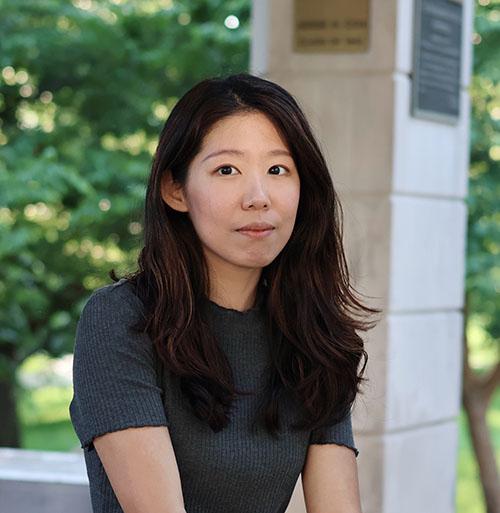
You might wonder how algorithms and other code decide what to do with your online content. Zhaodi Chen wonders too.
Chen, a new sociology professor at the University of South Carolina, explores how technology platforms influence what online speech gets amplified and what gets buried, or even removed. In one study, she reviewed data on 20,000 online disclosures in which people shared that they’d experienced violence such as domestic abuse or stalking. She explored why some stories got elevated as public concerns while others remained relatively unseen. In another, she looked at how social media and other online platforms protect people from harmful content unequally. By aggregating people's judgments about what is harmful, these sites protect some groups of people while leaving others vulnerable.
She recently shared her experience of getting started at USC and how this research question caught her interest.
Q: How are you settling in at USC and in Columbia?
I have been settling in really well! My colleagues have been incredibly welcoming, and I have really enjoyed getting to know people and taking part in activities like research and writing groups. It has also been exciting to finally meet students and get into the classroom. Outside the campus, I have enjoyed exploring Columbia. I especially love the Soda City Market and the vibrant energy it brings!
Q: What first sparked your interest in your research area?
What first drew me to my research was a tension I kept noticing in digital life. Online platforms can give ordinary people unprecedented opportunities to speak publicly, yet visibility and influence remain deeply unequal. I became interested in the gap between having the ability to speak and actually being heard, and by the broader question of how technologies that appear to expand participation can also reproduce existing social inequalities.
Q: How would you describe your research to someone new to the field?
My research looks at how new technologies are changing the way power and inequality operate in everyday life. I am particularly interested in what happens as technologies begin to mediate processes that we often think of as deeply social, such as how personal experiences come to be recognized as public issues, and how participation in public life is structured. My work examines these dynamics in contexts where individuals bring experiences of gender-based violence into public view, navigate online toxicity and platform governance, and respond to systems of information control. Increasingly, I am also interested in how AI is becoming part of these processes. Using computational and other social science methods, I try to make these often hard-to-see dynamics visible and understand how new technologies can reproduce existing inequalities while also creating new possibilities for voice and participation.
Q: What is your approach to teaching and/or doing research?
My approach to both teaching and research is question-oriented and evidence-based. In the classroom, I try to start with questions that help students look at familiar experiences in a new way and then use sociological concepts and evidence to work through different explanations. For example, in my Introductory Sociology class, my students participate in a simulated village-building activity where they negotiate how resources and responsibilities should be distributed. Through the activity, they naturally encounter questions about how society creates order and what shapes the distribution of social outcomes before we introduce social theories that help explain these patterns. I approach research similarly. The work often moves back and forth between questions and evidence. The questions that interest me frequently go beyond what existing data can answer, so a large part of my research involves building the evidence needed to answer them. That data construction work, such as deciding what counts, what gets measured, and whose experiences end up in the data, is where much of the sociological thinking actually happens.
Q: What is your favorite thing about USC or the McCausland College of Arts and Sciences so far?
I would say the people! From the moment I arrived, my colleagues have made me feel very welcome and have been incredibly generous in sharing advice, answering questions, and helping me get settled. I’ve collected a long list of local favorites and fun things to do. It has been exciting to join a community that is intellectually stimulating while also genuinely interested in supporting one another. At the same time, a very rewarding part of starting at USC has been meeting my students and seeing their engagement in the classroom. They bring their own experiences into our discussions and ask great questions, which really energized me and makes teaching feel like a two-way exchange.
Q: What do you enjoy outside of work?
I enjoy climbing outside of work. It has always been a great way for me to relax and focus on something completely different from my day-to-day work. Since moving to Columbia, I have also been enjoying exploring the local communities, especially trying new restaurants and visiting antique shops.
Interested in sociology?
Explore how society, technology and inequality shape people's lives while building skills in research, communication and data analysis. USC offers both Bachelor of Arts and Bachelor of Science degrees in sociology.