Dr. Magdalena E. Stawkowski (Anthropology) and Dr. Robert A. Kopack (Geography), both at the University of South Carolina have published a co-authored article in the Journal of Disaster Studies on the long afterlife of Soviet industrial and nuclear development in Kazakhstan.
Titled “Governing by Fragments: Soviet Ruins and the Architecture of Unaccountability in Kazakhstan,” the article draws on years of fieldwork and archival research in two places built by the Soviet war machine: Stepnogorsk, a former Soviet uranium-processing city and bioweapons complex, and the Semipalatinsk Test Site, where the USSR detonated more than 450 nuclear weapons tests between 1949 and 1989.
The central puzzle the authors address is why do people living with industrial and radioactive contamination rarely get protection and no straight answers? Kopack and Stawkowski trace it back to the Soviet-era institutions. Agencies monitor contamination but can’t restrict land use, health officials are responsible for public health but have no jurisdiction over contaminated sites, while companies buy mining rights without the obligation to clean up the mess already there. Nobody is in charge, so no one can be held responsible. The authors call this “functional nonreform,” a system that keeps working badly on purpose, because its disfunction is profitable.
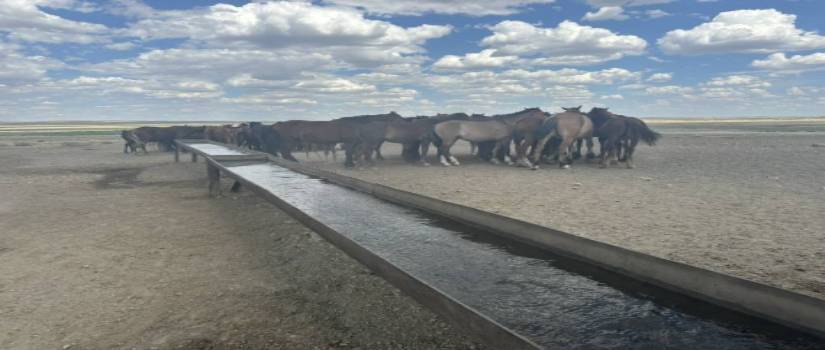
On the Semipalatinsk Test Site, the danger is on the plate. Livestock graze on land polluted with tritium, a radioisotope that moves wherever water moves, through soil, plants, and food. Yet residents get little information, and the meat they eat or send to the market is unchecked. Herders have developed real expertise by reading the health of their herds for warning signs and moving pastures where animals graze. This “toxic habitus” helps people manage a polluted environment, but it also lets institutions off the hook.
The bigger point of the article is that disasters aren’t always events that happened, leaving contaminated land behind. Sometimes, they’re conditions being actively maintained and most vulnerable communities are the ones left at risk.
This article is available in the Journal of Disaster Studies 3(1): 113-142, 2026.