What is the purpose of civic education centers popping up on university campuses? How do we get people to discuss and debate ideas even across strong disagreement? And what should you read to celebrate America’s 250th birthday?
Chris Tollefsen, interim director of the Center for American Civic Leadership and Public Discourse, answered these questions and more in an interview on Speech Matters, a podcast focused on free speech and higher education. Tollefsen shared his vision for the growing interest in civic education and the center’s mission at the University of South Carolina.
Listen to the podcast here or find it on Spotify or Apple Podcasts.
We are trying to provide resources that we think would be helpful for people of any political persuasion to be able to make their case better, to hear the case of their political opponents better, to be able to think of them not just as political opponents, but also fellow citizens.
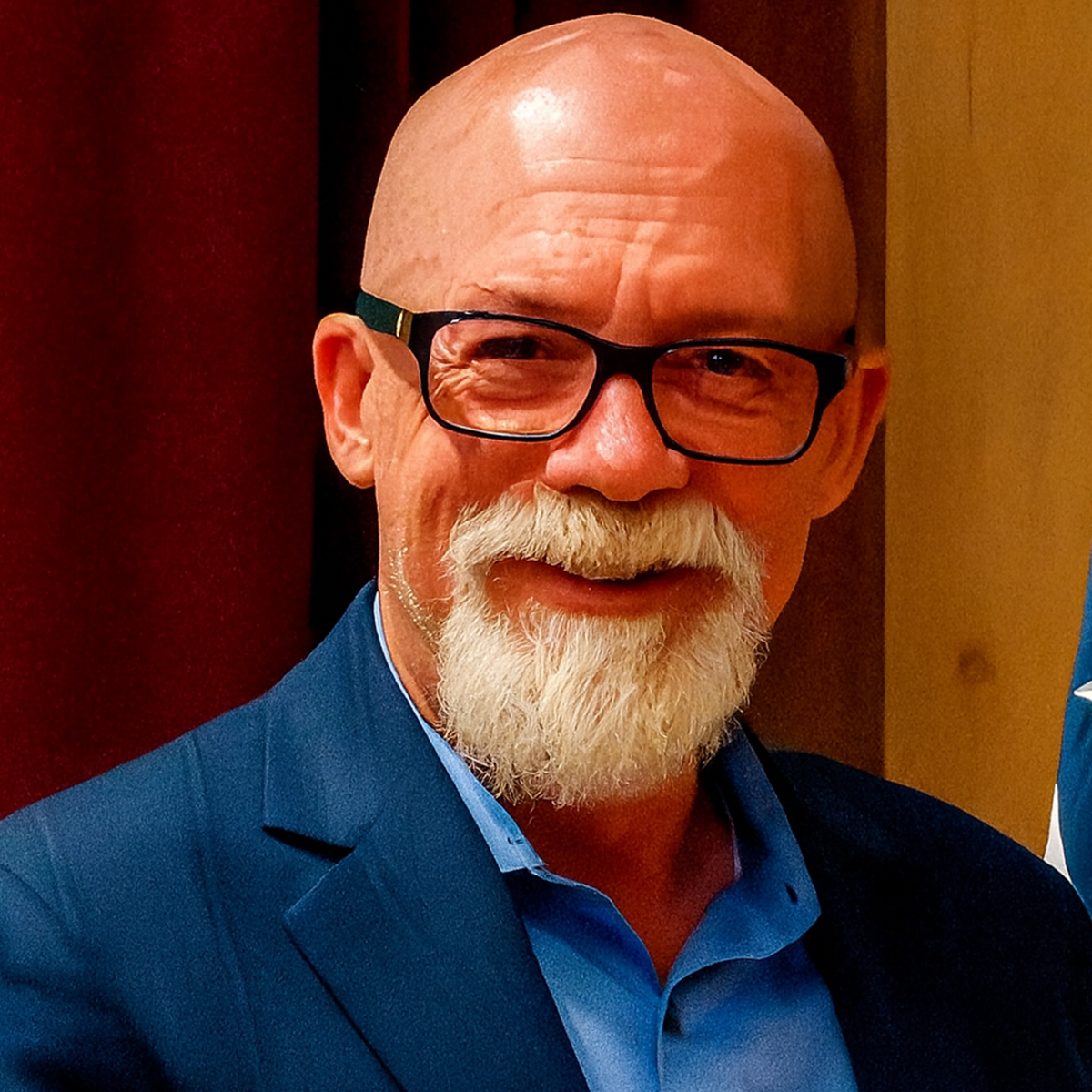
“Civic thought is the attempt to think systematically about … that question: What does it mean to be a good citizen? What are the responsibilities and tasks of good citizenship?” Tollefsen said. “Right from the start, if universities are doing what they’re supposed to be doing and they’re in the business of providing education for their students, then there’s already a natural fit between being in university and the project of civic thought.”
“Speech Matters” is produced by the University of California National Center for Free Speech and Civic Engagement, so Michelle Deutchman, UC center director and podcast host, asked Tollefsen several questions about free speech, the USC center's mission to support public discourse and how he encourages students to speak openly in class discussions.
Tollefsen said that the center recognizes several prominent challenges — “public discourse is broken down, that it's beset by intense polarization, that there's been a degradation of our ability to communicate with one another as citizens” — but that the solution is not to erase differences between opinions.
“We don't think, certainly, that the problem is disagreement as such,” he said. “That's always been a part of the American experiment.” He quoted Yuval Levin, one of the center’s guest speakers, who said, “The problem isn't that we disagree, but that we've forgotten how to disagree productively.”
“Part of what we're responding to is that polarization, and part of how we want to respond to that is by reinvigorating the skills of public discourse,” Tollefsen added.
Tollefsen said university centers focused on discourse and civics must serve broad interests that can support people without regard to particular political agendas. He suggested a “pre-political” approach, looking past partisan specifics to address fundamental questions about how people work together in society.
“We are trying to provide resources that we think would be helpful for people of any political persuasion to be able to make their case better, to hear the case of their political opponents better, to be able to think of them not just as political opponents, but also fellow citizens that are engaged in a common project together and are pursuing a common good together,” Tollefsen said.
Tollefsen said his work in the center has prompted him to read more American history, especially as the center supports efforts to celebrate the 250th anniversary of the Declaration of Independence. He specifically mentioned “John Adams” by David McCullough and “Founding Father — Rediscovering George Washington” by Richard Brookhiser.
Tollefsen said he hopes the center will help USC become known as a civic resource for South Carolina.
The problem isn’t that we disagree, but that we’ve forgotten how to disagree productively.
“I would like it to be the case that 20 years from now, people are entering the State House, they’re working in the legislature, or they’re working in some other way in the political or legal context of the state, having gained something from this center and bring it into public life,” he said, naming particular attributes such as intellectual humility, thoughtfulness and the ability to work across political divides.
He also hopes the center impacts students who work outside of politics.
— Yuval Levin, quoted by Chris Tollefsen in an interview on Speech Matters
“I would like students to emerge from their time in the center, in the university, more broadly committed to the idea that good work is centrally important for a world of human life. And so if students go out into their smaller communities and they're good citizens of those communities, in part because they're doing good work … that also, it seems to me, is going to be a metric of our success.”