This story includes discussions on military-related trauma, PTSD and alcohol use.
A Calling to Serve
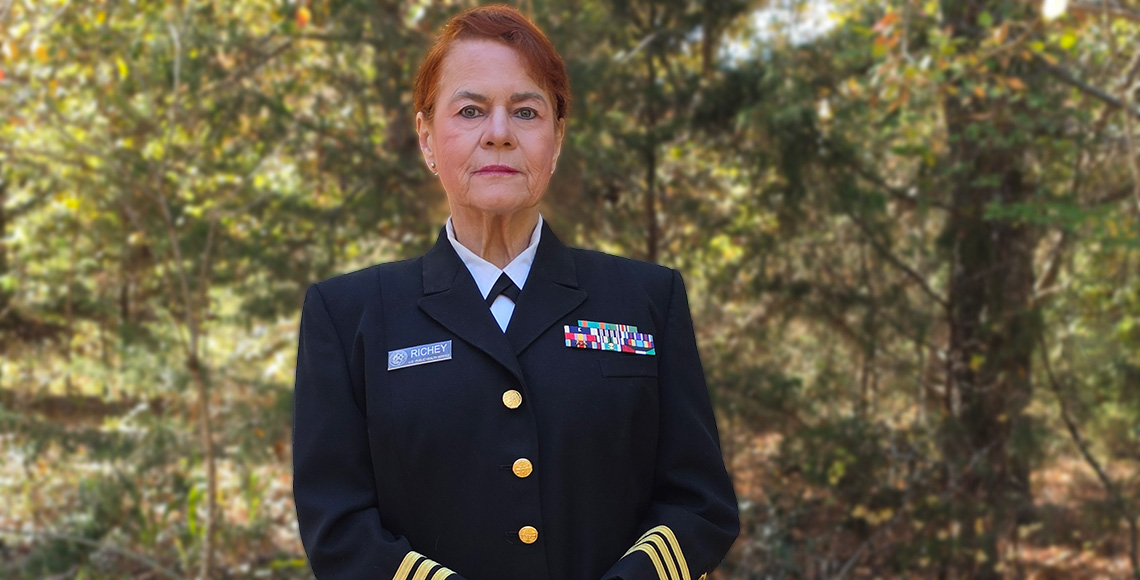
Growing up in a military family, Roxie Merritt (‘80 BSN) always looked up to her father, a chief petty officer in the U.S. Navy. Inspired by his dedication to serve his country, Merritt wanted to follow in his footsteps.
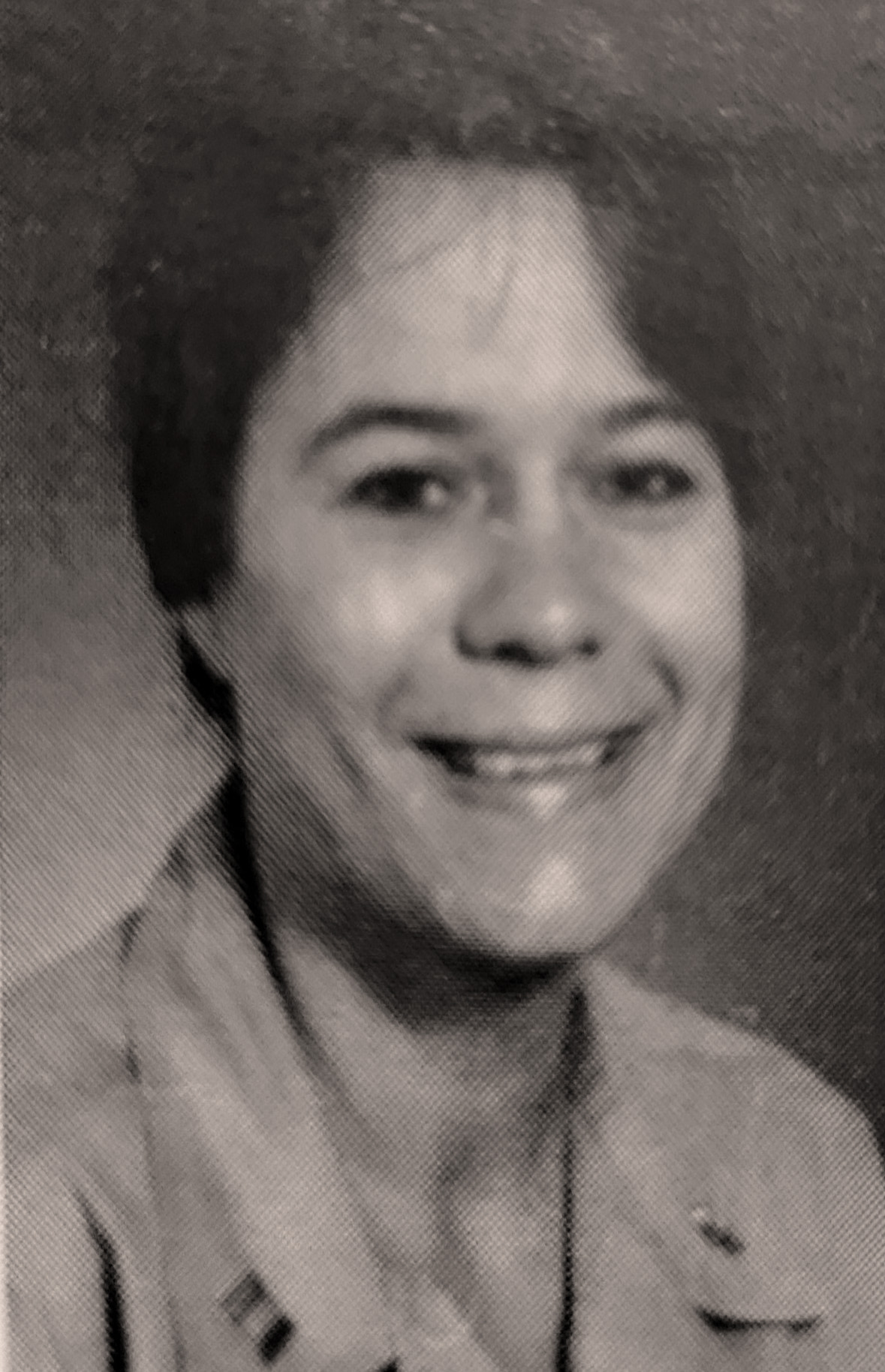
In 1981, then known as Roxie Leslie, Merritt became the first commissioned naval officer in her family. As a Navy nurse, she provided medical care to service members on numerous bases before being stationed at Marine Corps Base Quantico in Virginia. There, she worked in education and training, preparing medical personnel to respond to emergencies and strengthening their clinical skills, while also providing care to personnel and their families.
While Merritt prepared others to provide care in difficult situations, she soon faced the possibility of needing that care herself.
On August 2, 1990, Merritt learned of Saddam Hussein’s invasion of Kuwait – she was immediately placed on high alert. She prepared for the possibility of deployment at any moment.
“Your heart drops and you just think oh my God, this is real,” says Merritt. “I was scared.”
While watching a movie at the theater on base, Merritt noticed the room fall silent as Marines entered. “Lieutenant Leslie,” said the Marine. Hearing the sighs of relief from those not called, Merritt stood up, left the theater and immediately knew she was being activated.
The Sacrifices of Service
Leaving her three young daughters at home, Merritt boarded the USNS Comfort, a hospital ship stationed in the Persian Gulf. She endured temperatures exceeding 100 degrees and air thick with sand and dust.
Aboard the USNS Comfort, Merritt felt vulnerable. Due to the Geneva Convention, the hospital ship carried no defensive weapons, and the nearest battleship capable of providing protection was more than three miles away. If an attack came, she knew the crew would have few options to defend themselves.
The medical team remained ready to receive patients. “It was a very smart war, but hard for us medical [personnel] because [in the beginning] all we did was wait and wait and wait,” says Merritt. “We were just a show of force.”
With few patients arriving in the early days, Merritt used the downtime to keep herself, and the corpsmen trained and ready, exercising, checking crash cart supplies and teaching clinical skills.
After weeks aboard the ship, isolation, uncertainty and separation from her three daughters began taking a significant emotional toll on Merritt.
When Merritt returned nearly five months later, she learned how deeply her absence affected her three young daughters, particularly one who struggled to understand why her mother had been away for so long. Merritt made the difficult decision to resign her commission and prioritize being present for her family.
You're going to show confidence, even if you don't know you're going to.
Trauma Beyond the Battlefield
Although Merritt left the Navy, her commitment to serving others continued. Joining the Commissioned Corps of the U.S. Public Health Service (USPHS), Merritt provided medical care at the Federal Correctional Institution in Petersburg, Virginia.
During the required training at the Federal Law Enforcement Training Centers headquarters, Merritt underwent a traumatic hostage simulation. Unsupervised actors forced pillowcases over trainees’ heads, screamed at them and simulated shooting them.
The experience left Merritt ratted, but she completed her training and went on to provide care to incarcerated individuals.
Years later, Merritt would find herself facing another crisis, this time on American soil.
Courage During Catastrophe
As a member of the USPHS disaster response team, Merritt deployed to Ground Zero in New York City following the terrorist attacks on September 11, 2001. Surrounded by dust, smoke and sounds of crying, she struggled to comprehend the devastation before her.
“I saw the Statute of Liberty for the first time ever and then I turned around and saw the Towers smoking,” says Merritt. “This is hate,” she recalls thinking.
Working out of temporary medical tents, Merritt cared for rescue-and-recovery teams and civilians digging through the rubble. Determined to find survivors and loved ones, many passed medical tents without seeking care.
Knowing she could not wait for people to come to her, Merritt left the tent to seek out those in need of medical attention.
She recalls a man limping toward the debris in pain. Suspecting his leg was fractured or broken, she repeatedly offered to examine it, but he refused. He told Merritt that if he stopped to be evaluated, he wouldn’t be able to help with the rescue efforts.
Merritt finally convinced him to stop, telling him, “If you let me look at you and help you, then you can go.”
She knew she could not stop people from searching, but she could provide the care they needed to continue.
People weren’t the only ones Merritt treated. Rescue dogs searching for survivors often stood on piles of hot ash that burned their paws. Merritt bandaged and comforted the dogs as they became distressed from their injuries and the lack of survivors.
During her 10 days on-site, Merritt was given two non-rebreather masks she wore when smoke billowed toward her. She later learned that masks should have been worn always and replaced daily, but limited supplies made that impossible.
Her service at Ground Zero left lasting physical effects. After breathing in asbestos, smoke and other harmful materials without adequate protective equipment, Merritt developed chronic respiratory problems that remained a constant reminder of the devastation she witnessed.
Despite these challenges, Merritt continued serving in the USPHS and attained the rank of commander before retiring after 13 years of service.
Finding the Courage to Move Forward
Merritt dedicated her career to caring for others, but the traumatic experiences she endured took a lasting toll on her own well-being.
Struggling with PTSD and alcoholism, Merritt faced days when she could not get out of bed. When a traumatic memory was triggered, she would isolate herself at home or turn to alcohol to numb the pain.
Realizing she needed help, Merritt sought support from the Department of Veterans Affairs. Through its resources, she began addressing her trauma. Now eight years sober, Merritt worked through her pain and found the courage to share her experiences.
Although trauma remains part of her life, Merritt believes her experiences have taught her the importance of finding strength in difficult situations.
“You’re going to show confidence, even if you don’t know you’re going to,” says Merritt.
Reflecting on her unexpected career path and the challenges she faced, Merritt remains grateful for the experiences that shaped her as a nurse.
“I don’t know why it happened like this, but it did. It’s my calling.”


