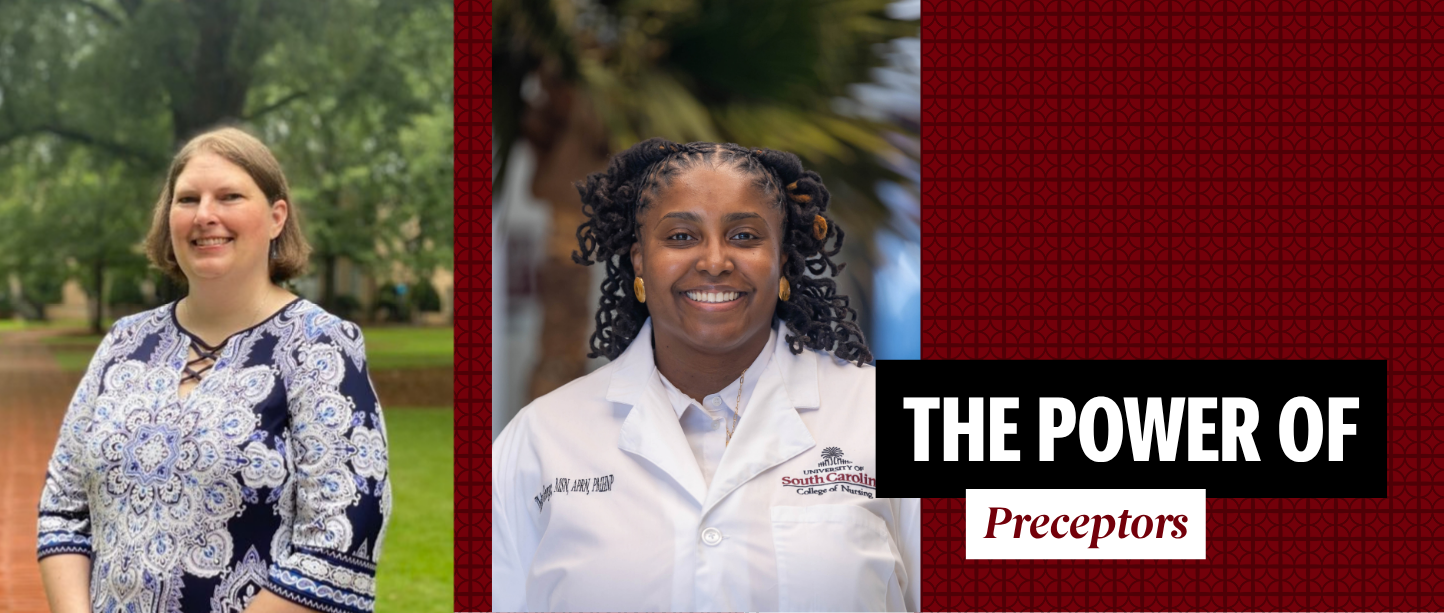
Every year, nurses choose to further their education, enhance the care they provide to patients and become nurse practitioners. With an expanded scope of practice and increased responsibility for managing patient health, future nurse practitioners need hands-on clinical experiences to develop the skills and confidence needed to become successful providers.
Preceptors play an important role in providing these experiences. By sharing their expertise and exposing students to real-world learning opportunities, preceptors bridge the gap between textbook learning and patient care. Students gain more than clinical experience - they gain a mentor who can guide, motivate and support them throughout their education. Preceptors like April Hutto, PhD, APRN, FNP-BC, PMHNP-BC make this possible.
After serving as a nurse practitioner for several years, in 2011 Hutto ('25 PhD, '01 BSN) decided she wanted to begin precepting students. “It’s a good way to give back to the younger generation and help ensure that they are receiving a good education,” Hutto says.
As a preceptor, Hutto brings not only her clinical experience to students but also a personal understanding of the importance of mental health care. Hutto found a love for psychiatric mental health nursing after a battle of her own. Several years ago, her father was diagnosed with terminal cancer. “I found myself struggling with depression and anxiety and having to seek out help,” Hutto says. “I gained a newer appreciation for how medication can help people. While my experiences are different than my patients, it allows me to really empathize and understand where my patients are coming from.”
Working in her own practice as a nurse practitioner, Hutto spends four days a week in the office, averaging 35 patient encounters. Working with patients ranging from 7 to 60 years old, Hutto treats depression, anxiety, bipolar disorder, ADHD, autism, personality disorders and more. This exposure allows Hutto’s students to experience a variety of cases and treatment plans.
Students like Thelma George (‘26 MSN) benefit from these experiences, gaining confidence and independence in their skills. From Hutto, George learned necessary clinical skills like conducting interviews, using an electronic medical record (EMR) system and developing treatment plans with patients. She also learned softer skills, such as creating a therapeutic environment where patients feel safe and recognizing that, as a provider, she may not always have all the answers.
“Having the freedom to take the lead helped me become more comfortable guiding the conversation, controlling the interview flow and naturally transitioning between different topics without making the interaction feel like an interrogation,” George says. “She [April] allowed me to work through my struggles without stepping in and taking over the interview.”
One of the values of having a preceptor is gaining knowledge that cannot be learned from textbooks. “April taught me the importance of connecting with patients and making the interaction feel more like a conversation rather than a checklist of interview questions,” George says. “For example, if an adolescent was wearing a school lanyard, I could begin by asking about what grade they are in or sports they participate in instead of immediately asking about trauma or other sensitive topics.”
George recalls one encounter with a patient who had suddenly lost their mother and was struggling with depression. As soon as George asked a question, the patient began to cry. After offering a tissue and sitting in silence for a moment, George shared a personal experience of dealing with the loss of a parent herself. This provided a space for the patient to feel comfortable opening up to George and talking through her struggles.
The interaction gave George an opportunity to put into practice what Hutto had emphasized throughout her clinical experience - meaningful patient care starts with building trust and knowing when to listen. Moments like this are what make precepting students so rewarding for Hutto. “She did great with establishing rapport with patients and connecting with them. She had a good feel for when to ask follow-up questions or when to hold some silence,” Hutto says.
Beyond developing clinical skills, George shared that Hutto made it a priority to check in on her and provide support as she navigated the challenges of working in mental health. “One thing that school cannot fully prepare you for is the emotional weight that comes with working in mental health, especially when listening to patients share traumatic experiences and heartbreaking struggles day after day,” George says. Hutto’s support reminded George that caring for her own mental health is essential to providing compassionate and effective care to others.
For George, the value of a preceptor extends far beyond completing clinical hours. The knowledge, confidence and clinical judgement she gained from Hutto’s mentorship will travel with her throughout her career, influencing the care she provides to future patients.
Despite the importance of preceptors in a student’s education, there is a need for more providers to serve in this role. By choosing to precept, they have an opportunity to help prepare the next generation of nurse practitioners while investing in the future of the nursing profession.
For anyone considering becoming a preceptor, Hutto has one piece of advice: “Definitely do it and give it a chance. I view being a preceptor as something that we do to give back to the profession, and it is how we invest in the future.”
Want to make an impact on graduate students? Become a preceptor and help train future nurse practitioners.