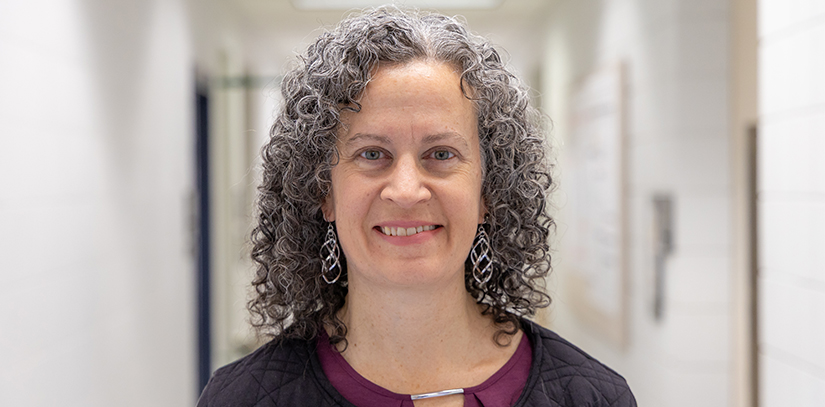
Caryn Outten, a chemistry professor at the University of South Carolina, has been named a 2026 fellow of the American Society for Biochemistry and Molecular Biology.
It’s the latest honor that recognizes Outten’s research — which explores how to fight deadly infections by affecting their iron supply — as well as her teaching and mentoring. Only 16 fellows were selected this year, highlighting Outten as one of the nation's top biochemists.
Outten, who recently completed 20 years of teaching and research at the University of South Carolina, has been making breakthroughs in her lab while studying how the fungi Candida albicans and Aspergillus fumigatus strip iron out of host organisms they affect.
“Invasive fungal infections by these two organisms are a major and growing threat to human health, particularly among hospitalized and immunocompromised patients," Outten says, noting that these fungi are becoming more resistant to traditional antifungal treatments. “Mortality rates remain high."
Outten’s lab hopes to uncover specific ways to disrupt these pathogens’ iron supply, a vital nutrient that keeps fungi alive and which they siphon from their hosts.
The research took a leap forward recently. In a September 2025 paper, Outten’s lab described discovering that metallothioneins, a new family of proteins in fungal pathogens, can receive and hold clusters of iron and sulfur. The study suggests that metallothioneins may serve to prevent the pathogen from overdosing on iron by storing excess supply. Future antifungal therapies could fight infection by targeting those proteins, Outten said.
Outten, who has held the Guy F. Lipscomb, Sr., Chair in Chemistry since 2013, has long been recognized for excellence in her work. In addition to being an elected fellow of the American Association for the Advancement of Science, she received USC's Russell Research Award in 2022 and was named South Carolina Chemist of the Year in 2023.