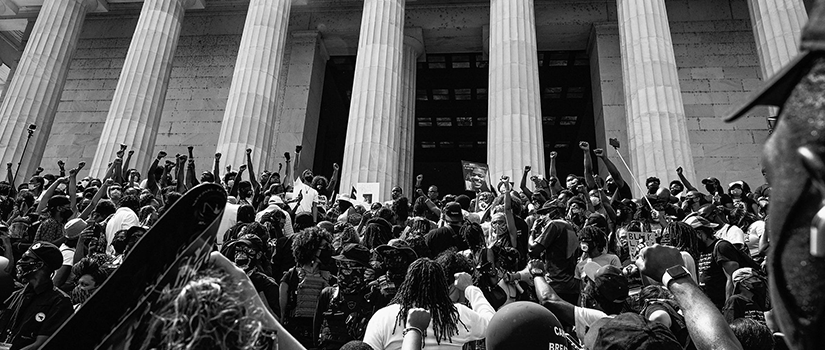
On a humid summer night in 2020, Nora Williams stood in the street with her camera pressed to her face as protesters filled the frame. She wasn’t leading chants or holding a sign. She was documenting history.
“I don’t know how to be an activist,” she said. “But I know how to take photos of what I see.”
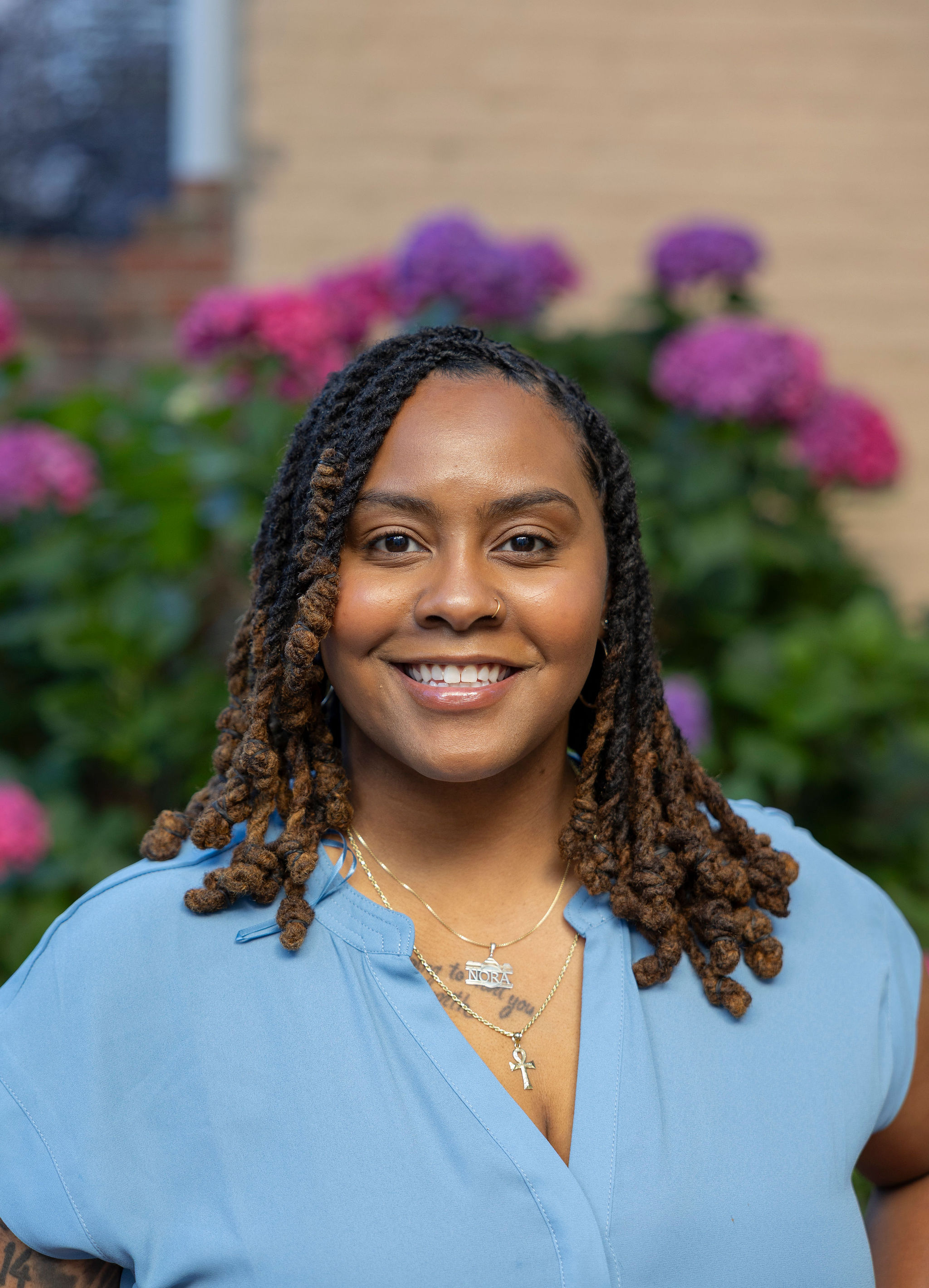
That instinct to witness and preserve the moment marked a turning point. Today, the Lexington, South Carolina, native is a second-year MFA candidate in photography at the University of South Carolina, where she documents underrepresented stories of the American South.
Even before pursuing formal graduate training, Williams’ photos appeared in national publications including The New York Times, The Washington Post, Oprah Daily, Rolling Stone, The Associated Press and The Wall Street Journal. But her path to photography was anything but direct.
From Kitchens to Cameras
Growing up in Lexington, Williams was an athlete, and basketball was her outlet. Her first serious creative endeavor was with the culinary program at Pelion High School, where she discovered the satisfaction of crafting something by hand and presenting it to others.
She carried that passion to the College of Charleston, earning a degree in Hospitality and Tourism Management with a minor in marketing. Immersed in Charleston’s food culture, she worked her way up from hotel server to line cook.
“I was in love,” she recalls of the city’s culture and cuisine.
Photography at the time was simply another creative outlet inspired by her mother’s history of documenting family life with a grab-and-go camera.
She took just one photography course in college but later enrolled in summer darkroom classes at a technical school, bought a film camera and began photographing friends. Graduation portraits led to events. She saved for a digital camera and started carrying it everywhere, capturing architecture, street scenes and portraits as she grew her portfolio.
After graduation, unsure of her next step and exhausted from the hospitality industry, Williams moved to New York City and worked on an Amazon film set. When the COVID-19 pandemic shuttered production, she pivoted. She networked relentlessly and started reaching out to models on Instagram, offering free portraits to build her portfolio.
Then came the summer of 2020.


Answering the Moment
After the murder of George Floyd, Williams returned to South Carolina and began documenting protests in Charleston, Washington, D.C., and Virginia. She wasn’t on assignment, and she wasn’t being paid. She felt compelled to be there.
“This was my voice,” she says.
Her images circulated widely online. She applied to national photographer networks and was accepted. Soon after, one of her social media followers offered to recommend her for freelance photography work. Within two weeks, she landed her first editorial assignment.
The work accelerated from there.
One of her most meaningful projects was a New York Times Food section story on Emily Meggett, the beloved Edisto Island cook who published her first cookbook at age 89. Williams spent two days photographing Meggett.
“It was a beautiful experience,” she says. “She felt like family.”
Assignments followed for Oprah Daily, Rolling Stone, AP, The Wall Street Journal and others. But even as her résumé grew, Williams began thinking about deepening her artistic practice.
I don’t know how to be an activist,” she said. “But I know how to take photos of what I see.
Focusing Her Vision
Williams never imagined going back to school — until she met Kathleen Robbins, head of USC’s photography program.
“After meeting Kathleen, who is now my mentor, I knew that USC is exactly where I wanted to be.”
She enrolled as a non-degree seeking student first, then committed to the MFA program. Now in her second year, she says the program has helped her navigate the fine art world, from writing artist statements to conceptualizing long-term projects, while adding credibility as she considers teaching at the college level.
Her current work reflects that evolution.
For her thesis, Williams is developing a project centered on Gullah Geechee communities in the Carolinas, Georgia and Florida. In another series, “Southern Sexuality,” she explores queerness in the South, pairing recorded oral histories with images printed on church fans — a visual reference to the region’s religious traditions. A long-term documentary project highlights Black cowboys and cowgirls, honoring generations of Southern farmers and ranchers whose stories are often overlooked.
At the heart of each project is a commitment to representation.
“You have to fight for your stories to show a different perspective,” she says.
As a teaching assistant at USC, Williams has found unexpected inspiration in the classroom.
“They don’t know the rules yet, so they’re creating freely,” she says of her students. “It reminds me to be free, to step outside the norm in my work. I’m learning from the students, which is empowering and exciting.”