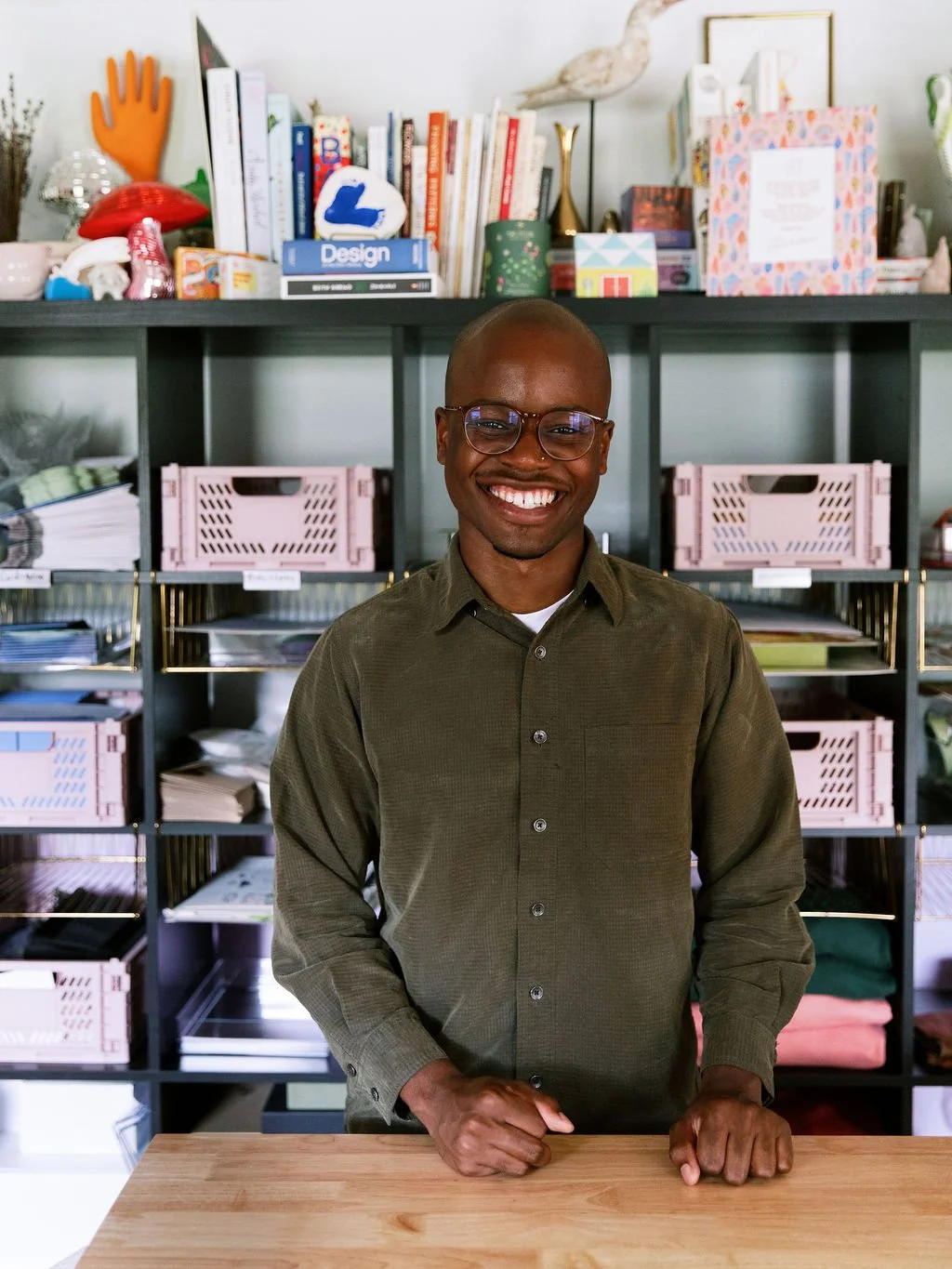
At a small letterpress studio in Columbia, SC, Jon Glover sifts through design projects on his worktable. A stack of color swatches displays the color palette he’s put together for a client’s website. On his computer, he’s drafting a business logo in Illustrator for a local photographer. A third project shows sketches of the invitations an ecstatic bride has ordered for her June 2027 wedding.
A few weeks from now, those same designs will be printed, packaged and in someone else’s hands. But for now, the work lives in Glover’s head and on his screen.
For Glover, a junior studio art major in the McCausland College of Arts and Sciences, the internship at Iris and Marie Letterpress is where he has practiced the skills he learned in the classroom while also getting real industry experience.
Through this opportunity, along with a yearlong artist residency, campus design work and camaraderie with fellow creatives, Glover has designed an academic path that has set him up for success.
“Those experiences showed me what’s possible,” he says. “They gave me confidence, not just in my work, but in what I can do with it.”
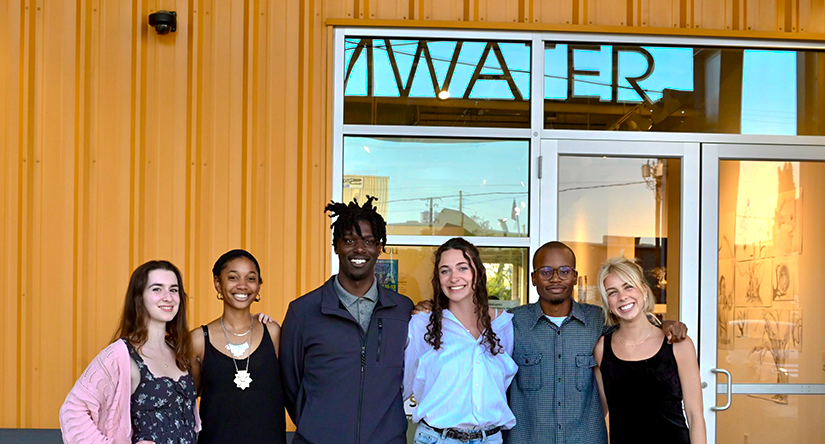
One of those defining moments came when Glover joined a cohort with other select School of Visual Art and Desgin students at Stormwater Studios, a local cooperative studio where SVAD has dedicated space for student residents to work alongside professional community artists. He first saw getting accepted as a long shot because of the highly competitive application process. His courage carried him through, and by the time he'd completed the program, he had a newly defined approach to design.
“It made me think less about just my work and more about how I can use my work to help other people,” he says, “how my designs can communicate their ideas to the public.”
The experience also shifted how he understood community. Working closely with other artists and seeing audiences engage with their work gave him a new sense of connection.
Those experiences showed me what’s possible. They gave me confidence, not just in my work, but in what I can do with it.
“I used to think I was fine on my own,” he says. “But being in that space, seeing people show up and connect with what we created — it made everything feel more meaningful.”
Glover’s confidence grew thanks to feedback and direction from Kathleen Robbins, a SVAD professor who mentors students in the Stormwater Studios residency.
“She helped me trust my ideas in a real-world context,” he says. “That’s something you can’t get from just a grade.”
From Classroom to Client Work
That confidence carried into his next major step: an internship that brought his classroom learning into a professional setting.
The opportunity grew directly out of his coursework. After a strong performance in a typographic design class, his professor recommended him to the studio’s owner.
“It showed me that the work you do in class really matters,” Glover says.
At the studio, he balances multiple projects, developing branding packages, meeting with clients and translating their ideas into visual identities. Concepts he first encountered in class, like brand guidelines and deliverables, became part of his daily work.
“I already understood what a brand needs,” he says. “That helped me step in and contribute right away.”
But the biggest lessons came from experience: learning how to communicate with clients, manage projects and see designs through from concept to final form.
One early project, creating a full brand identity for a photographer, confirmed he was on the right path.
“I remember thinking, ‘I would do this even if I wasn’t getting paid,’” he says. “And then seeing that my designs really reflected the client’s identity was a big moment.”
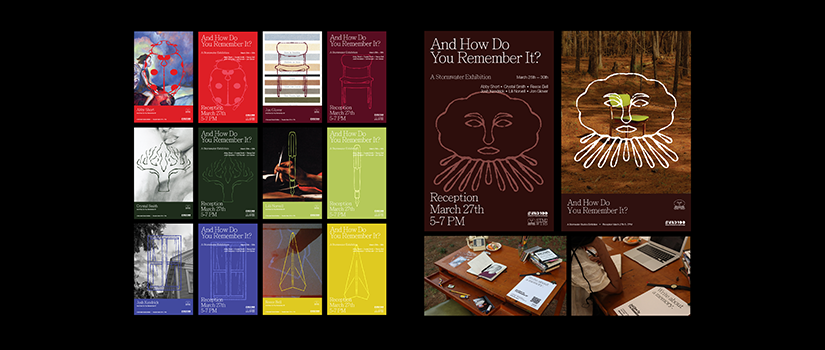
Beyond internships, Glover has continued to build experience within USC’s creative community. As a design intern for the School of Visual Art and Design, he has created promotional materials displayed across campus, including banners for exhibitions in McMaster Gallery.
Seeing his work in public spaces and contributing to the visibility of other artists deepened both his skills and his sense of belonging.
“It made me feel closer to the community,” he says. “Not just with students, but with professors and everyone involved.”
That growth makes his path to art feel even more significant, especially given his uneasy start in the arts.
Passion without Compromise
When Glover first started college, he was considering fields like neuroscience or journalism — choices shaped in part by family expectations — but the pull towards a creative field guided him towards the arts.
“My dad is from Ghana, and he wanted a certain future for his children,” Glover says. “When I told him I wanted to do art, he was worried about whether I could support myself, but he and my family invested in and supported me along the way.”
After seeing the impact of his work at Stormwater Studios and his internship, their confidence in the path Glover had chosen was solidified.
“I have a really great support system and that’s often where my strength comes from. All that gratitude goes into my work," he says. “I didn’t have to compromise on what I wanted for my life, and my experiences like Stormwater and the internship at Iris and Marie confirmed my trust in my decision to pursue design.”
Now, Glover is looking ahead with a sense of possibility shaped by everything he’s experienced. He’s developing independent creative projects, producing video essays and exploring ways to combine design, storytelling and community engagement. He’s also considering paths in creative industries, nonprofit work or building something of his own.
“The future feels like an open book,” he says. “I have a lot of faith in what I’ve learned. I’m still figuring things out, but now I know I can.”