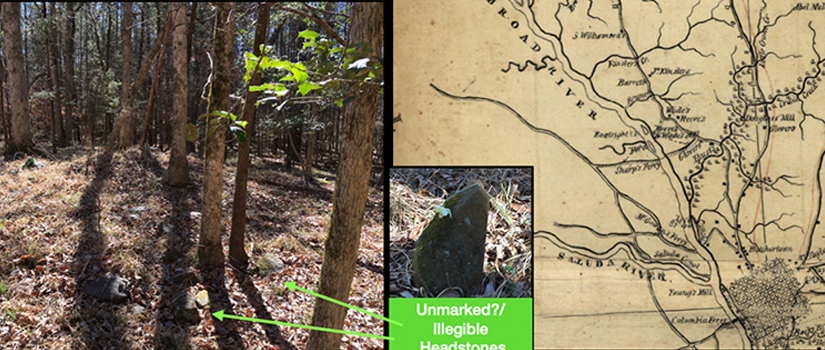
Tucked away near Kinsler Road in northwestern Richland County lies a quiet burial ground that few people outside the local community have seen. Known today as Cedar Creek Cemetery, the site contains an estimated 20 to 30 graves marked by simple, roughly shaped stones and shallow depressions in the earth.
The cemetery is speculated to be a burial ground for African Americans who were enslaved at the nearby Kinsler plantation, and it has the potential to inform researchers about Black life, death and remembrance in South Carolina.
A team led by University of South Carolina anthropology professor Terrance Weik is working to document and preserve the cemetery to better understand its origins. This new research accompanies Weik’s earlier investigation and preservation of the nearby Kinsler Cemetery.
It’s one way we can reach back and be stewards of the people, material culture and the places that we work with.
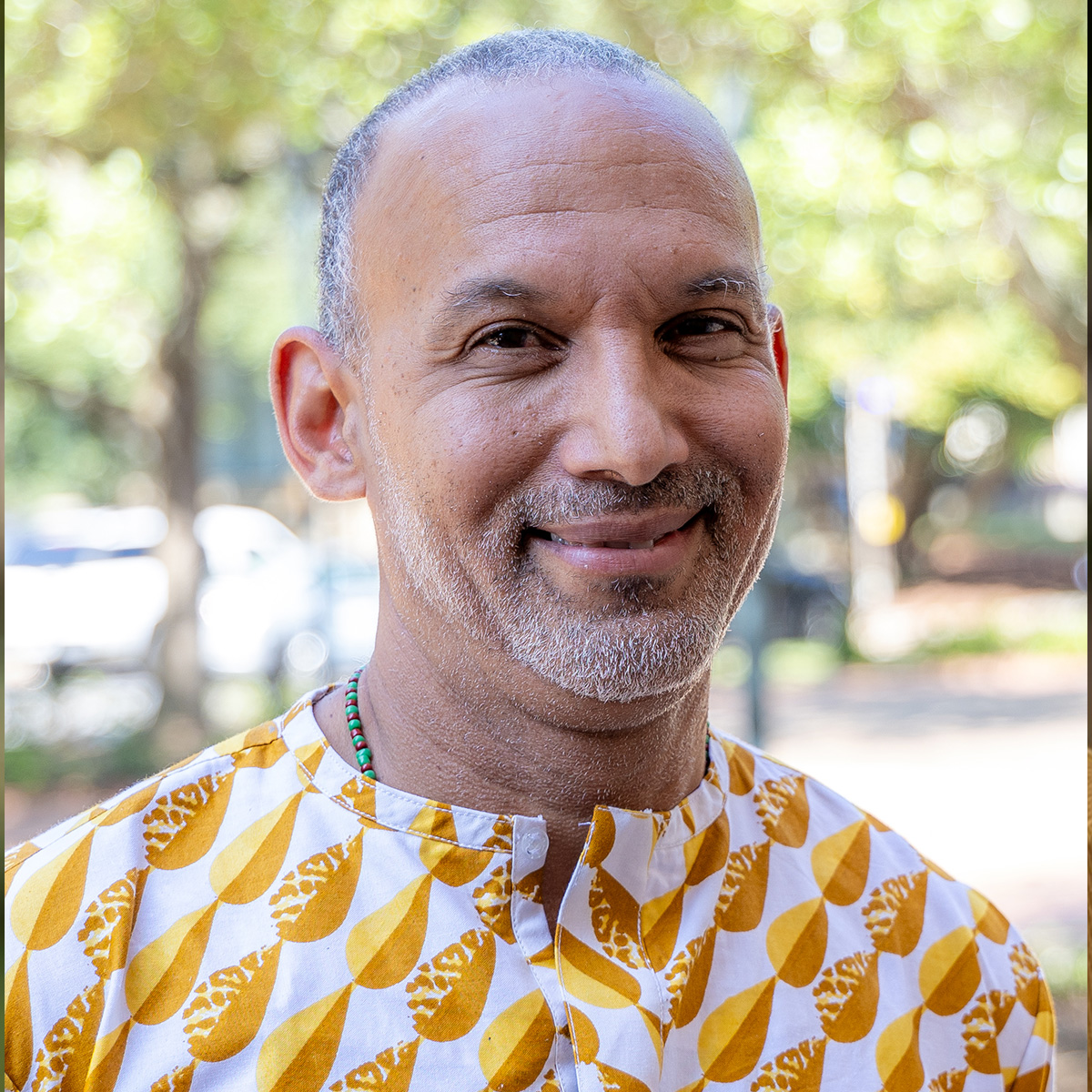
“I'm hypothesizing these may be a pair of sister cemeteries, perhaps one for slaveholders and settler colonists, and another for enslaved individuals,” says Weik. “The Kinsler descendants are embracing both, and I'm working through the alternatives.”
Cedar Creek Cemetery sits across the creek from a burial ground known to its descendants as the Kinsler Slave Cemetery. The cemeteries may have served as burial grounds for people enslaved by the Kinsler family or the enslavers themselves, who owned and operated Kinsler plantation during the mid-1800s. Among the enslavers is John Herman Kinsler, a signer of the South Carolina Ordinance of Secession, a state legislator and a former chairman of the board of what is now the University of South Carolina.
It’s not yet known whether both cemeteries are connected to the same plantation and enslaved population. Cedar Creek Cemetery may well reflect different burial traditions or community decisions made by enslaved people themselves.
“It may be that both were part of a segregated original pattern of internment and then later they become integrated; that fits plantation models. There are many hypotheses right now,” Weik says.
Since the gravestones have no legible or apparent writing, Weik is grappling with how to understand the identities and geographies of the unnamed.
To do this, he’s leading archaeological fieldwork, archival research, laboratory studies and spatial analysis to look at where the burial sites are and how their locations matter. The team is using GPS mapping, laser-based surveying equipment, GIS computer mapping and 3D modeling to record the landscape and gravestones in detail.
Just as important, the project centers community voices through oral history interviews and public workshops.
“It’s one way we can reach back and be stewards of the people, material culture and the places that we work with,” Weik has said about his work preserving cemeteries.
The work is a collaboration with anthropologists Antoinette Jackson of the University of South Florida and Kaniqua Robinson of Furman University, who focus on ethnography, oral history and heritage preservation. With grant support from the Richland County Conservation Commission, they are ensuring that community knowledge and academic research inform one another.
Beyond scholarship, the project will have a lasting local impact. It will support preservation planning for Richland County and the Cedar Creek Community Council, contribute to national efforts to document Black cemeteries and help create future signage and educational resources.