Astronomers at the University of South Carolina are putting South Carolina’s only national park on the map for star enthusiasts.
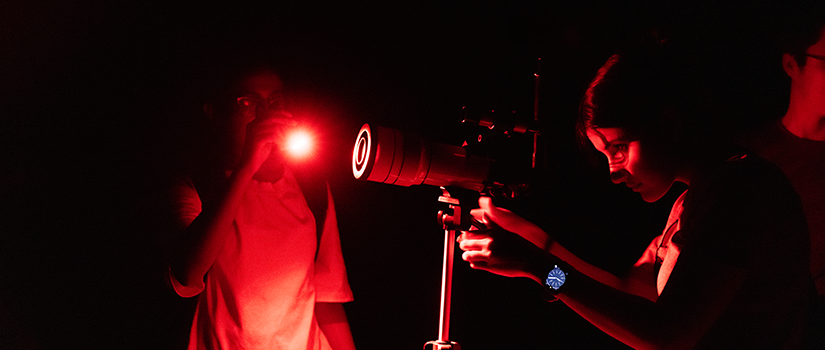
On April 17, astronomy faculty and students packed up their telescopes that they often use for stargazing nights at Melton Observatory and set them up at Congaree National Park, where they could enjoy darker skies and clearer stars — and also share the sights with people who love the park.
Mehrnoosh Tahani, assistant professor in the Department of Physics and Astronomy, hopes the event will help the park get certified as an International Dark Sky Place. The designation recognizes locations that limit light pollution and allow public access for stargazing.
The stargazing night brought together park visitors, students and astronomy enthusiasts to enjoy the night sky both for its natural beauty and as an object of scientific study. Michelle Wooten, an astronomy professor from the University of Alabama at Birmingham, opened the event with a talk at the park’s Harry Hampton Visitor Center. USC graduate students also shared aspects of their astronomy research. Visitors worked on star-related paper crafts.
After dark, the group used red flashlights, which protect night vision, as they hiked to a campground for stargazing. Tahani hopes it becomes a tradition.
“The beauty of the night sky brings us together as people sharing the same planet, wondering what lies beyond and how we came to be here,” Tahani said. “Preserving places for stargazing matters because dark skies inspire curiosity, creativity and wonder in people of all ages. I hope this event gives everyone a chance to enjoy that sense of connection and inspiration together.”
See the Congaree National Park website to learn how to visit the park as a hiker, camper or stargazer. To learn about on-campus stargazing events, watch the McCausland College of Arts and Sciences’ public events calendar.


