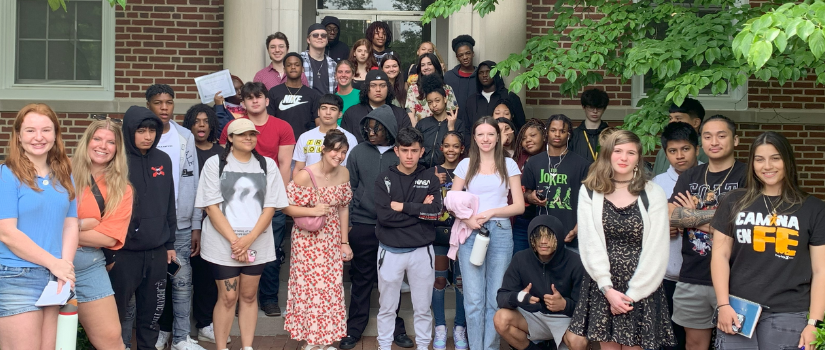
WGST Student Assistant Amiya Ramkissoon recently facilitated an interview with Dr. Tia Andersen to discuss her latest work. Dr. Tia Stevens Andersen holds a joint appointment in Women’s and Gender Studies and Criminology and Criminal Justice. She uses qualitative and mixed methods to study how exclusionary school discipline, juvenile justice policies, and structural inequality shape the lives of young people, especially those removed from traditional educational settings. Grounded in feminist criminology and intersectional frameworks, her research examines how gender, race, trauma, and place influence pathways into alternative schools and justice system involvement. She also investigates how supportive relationships, like mentoring, can disrupt the school-to-prison pipeline and foster resilience.
Her current research, funded by the National Science Foundation, is a multi-year study
following cohorts of expelled youth over time. The project explores long-term patterns
in positive youth development and risk behavior, with a focus on identifying protective
factors and strengths. Additional studies examine how trauma, victimization, and inequality
shape girls’ pathways into alternative schools, how youth cope with school exclusion,
and how the media constructs narratives about violent girls. In addition to her research,
Andersen directs a university-community mentoring program that matches college students
with youth in a disciplinary alternative school, integrating research, teaching, and
practice in the service of social change. Her work has been published in Feminist
Criminology, Children and Youth Services Review, Journal of Community Psychology,
Journal of Youth Development, Crime & Delinquency, Journal of Family Violence, and
other interdisciplinary journals.
I’ve seen that your work is based in feminist criminology and intersectionality. How did you become interested and involved in these fields?
When I started my PhD at Michigan State University, I intended to study mothers in prison using heavily quantitative research methods. Then, in my first semester, I was assigned to work on a research project on girls in trouble with the law who had experienced placement in a detention facility or residential home. That meant that I was doing extensive life history interviews with girls and hearing them reflect on their pathways into the justice system and the obstacles they experienced. At the same time, I was taking graduate seminars on feminist research methods, intersectionality, and feminist criminology. The combination of fieldwork and classroom instruction led me to focus my research career on using a feminist criminological lens to understand youth pathways into the criminal legal system, paying particular attention to how exclusionary school discipline and alternative school placements shape those trajectories.
You teach an Adolescent Mentoring service learning course here at USC. Can you tell me a bit more about the program and what that mentoring process is like?
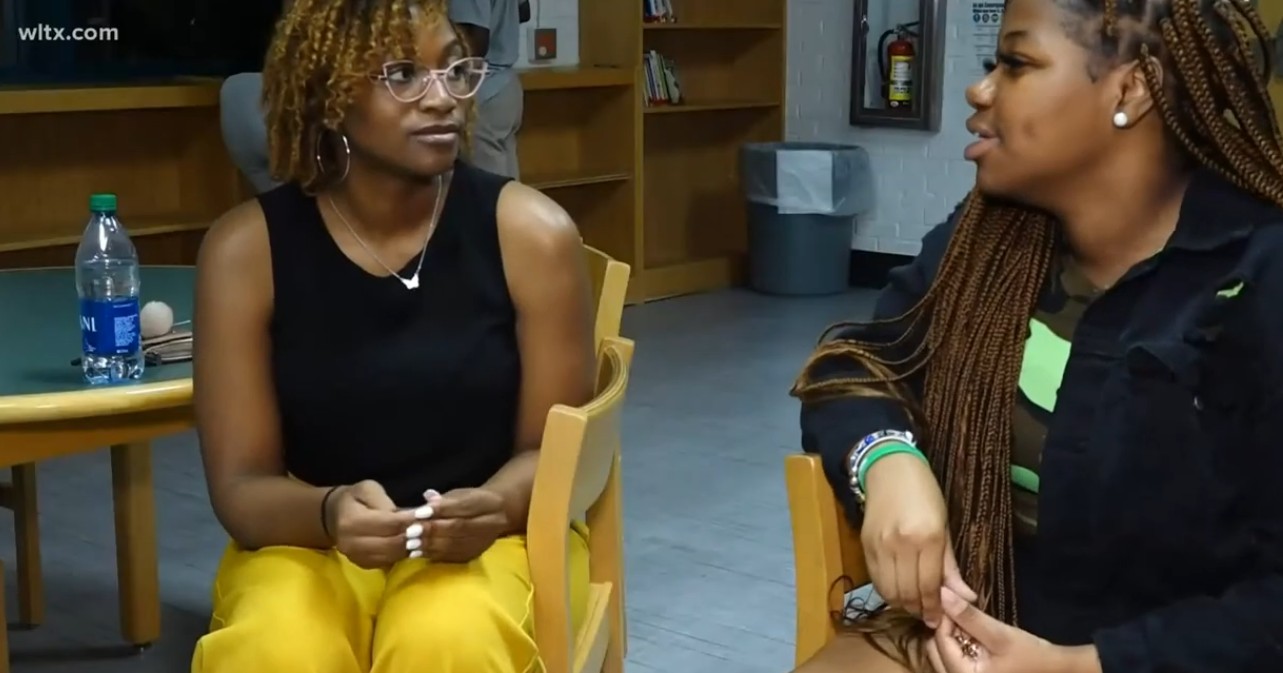
This service-learning course started in 2017 in partnership with a local school district. After an intensive training period, students are matched with a high school student who has been expelled from their traditional high school and placed in the district’s disciplinary alternative school, and they spend class time mentoring at the school. Classroom instruction focuses on understanding the broader context of kids’ lives and the ways families, schools, neighborhoods, and larger social forces intersect. We focus on how systems of race, class, gender, sexuality, and ability intersect to push kids out of school and increase their risk of involvement with the criminal legal system. At the same time, we also critique deficit-based approaches that treats kids like problems that need to be fixed and explore how resilience frameworks that emphasize strengths and agency. By the end of the semester, I want my students to both have an appreciation for the power of mentoring while also recognizing the limits of relational interventions that don’t address the systemic roots of inequality.
Have you found these mentoring relationships to make positive impacts on at-risk adolescents?
Yes! We receive a lot of positive feedback from the “mentees”, even years after participating in the mentoring program. They appreciate having someone who shows up consistently, listens without judgment, and provides resources and support. At the same time, while mentoring does matter, it doesn’t undo the broader inequities or structural forces that young people face.
Your current research is on expelled youth and girls’ alternative schools. Could you tell me a bit more about that?
My research explores young people traveling what’s called the school-to-prison pipeline, which is a phrase used to describe how school policies and practices, like exclusionary school discipline and zero tolerance policies, push schoolchildren into the criminal legal system. I focus on one of the key “stops” along the pipeline: disciplinary alternative schools. With support from the National Science Foundation (NSF), I’m leading a study that follows middle and high school students over time after their expulsion from their “home” school and placement in a disciplinary alternative school. The research the challenges they face and their resilience and agency. We also explore how their experiences are shaped by intersecting systems of race, class, gender, and other forms of inequality. For example, girls in my study often describe pathways into alternative schools that are shaped by experiences of trauma and running away from home.
After working broadly with youth and juvenile justice policies, what made you want to bring your knowledge to the Women’s and Gender Studies Department? In what ways do you think both WGST and youth justice policies can contribute to one another?
My work has always been disciplinary, and WGST felt like a natural fit. I’d taught cross-listed courses before and was always struck my the energy and enthusiasm WGST students bring to the classroom, so the chance to join the department was very exciting. WGST brings tools for analyzing power and inequality; youth justice policies ground that in real systems. Together, they create space for more just and inclusive solutions.
Through your research, hands-on experiences, to teaching, what are some moments or aspects of your career that make you the proudest?
One of my proudest moments was when a former mentee reached out on the day of her high school graduation to thank me. She had been in the mentoring program four years earlier as a freshman, and I hadn’t spoken to her since. She told me she used the resource guidebook that her mentor created for her to finish high school and earn a scholarship to attend college. We’ve stayed in touch, and she reached out again recently to share her college graduation photos.
What do you hope that your expertise can teach students in the WGST department?
I hope students learn to see resilience and agency, especially in young people navigating the criminal legal system and other systems of social control. I want them to leave my classes being able to analyze systems of inequality and with a confidence that they can create social change.