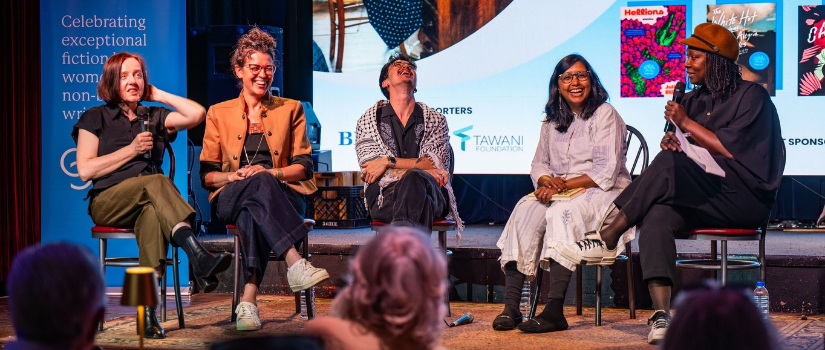
Last month, I had a conversation with Julia Elliott, author and professor at the University of South Carolina, regarding her background, interests, and latest work. During the interview, she imparted many lessons and valuable pieces of advice on storytelling and publishing. Further, we explored her creative inspirations, passions across genres, love of horror, and experiences with both creative silence and great success.
Southern Storytelling
When asked where her passion for literature (and more specifically Southern Gothic storytelling) came from, Elliott told me she could attribute that passion to her father. She relayed that her "... dad came from a long line of storytellers, and he was a very enthusiastic storyteller. He was like a history buff, but he loved sordid tales and Edgar Allen Poe. He was also like a great kind of liar and he would make up weird stories to scare us."
This funny story prompted a great discussion around her childhood and how it revolved around her father's tales and weird stories from his own childhood. These experiences gave Dr. Elliott a "power of the narrative voice." It granted her the security to do the same as her dad and feel able to hold others captive—hostage even—with her stories. Her experience of a Southern childhood was made impactful by her father and other influences like a high school English teacher who saw her potential in poetry. This positive reinforcement encouraged her to explore her passion and equipped her with the ability to reflect on the world around her through literature and language.
Rejection & Resilience
When asked to expand upon any trials or tribulations faced throughout her career, she said: "Every writer will tell you it's mostly rejection and misery." Her college career began with an English degree and a focus on creative writing. Then, with more praise from her professors, she journeyed into grad school. “What they don't tell you is that grad school is mainly just workshops and those classes are often full of people who don't like your work.” As Dr. Elliott reflected, this can be some writers' first exposure to rejection, but it’s necessary to push through it. Once she earned her Master of Fine Arts (MFA), she went on to earn her Doctor of Philosophy (PhD) and wrote a novel for her dissertation.
Despite all that work, it often still takes a while to get published. Elliott confronted this fact after a period of youthful naivete during which she was sending stories out and receiving rejections from large publishers. A piece of wisdom she shared, as was given to her, is that “-- you need to start with the weird, indie, and peculiar journals first. When you're starting off, you can’t just jump to the big leagues. You need some experience and credentials behind your name.” As her work was already “weird”, as she put it, she needed to adjust to her buyers—the publishing companies. She describes companies that are familiar with the weirdness and whimsical nature of literature and are respected but less known.
Once she made it through the introductory phase of publishing, Elliott went on to apply to highly acclaimed literary magazines such as the Georgia Review and Tin House. The initial steppingstones were essential in pushing her forward in her career and literary aspirations. “There’s always a starting point, and it may look different for everyone,” she reiterated, “it starts with putting yourself out there, learning from the experience and then picking yourself back up again.” Writing is truly a career based on patience and resilience. She noted that there was a 10-year gap between her two book publications, along with two failed novels. Publishing requires some back and forth—sometimes the work doesn’t cohere with what the companies are looking for, or is simply “too weird” to be marketable.
“There’s always a starting point, and it may look different for everyone,” she reiterated, “it starts with putting yourself out there, learning from the experience and then picking yourself back up again.” - Julia Elliott
Genre-Bending
For her short story collection Hellions, Elliott was able to pull from previous works, and as Hellion was a title in Best American Short Stories it was a perfect unifying device that tied the collection of stories together. She explained that growing up, bad children who “...had the devil in them” were referred to as “hellions”. It was also used to describe those who were “witch-like”—especially marginal groups of people, “...who don’t quite fit into mainstream society.” In the collection, Elliott included stories about women of varying ages within implicit storylines about witchiness that fit into the idea of a “hellion”, tying them into a collection. This collection stems from Elliott’s practice of not limiting herself while writing—she writes whatever she feels like. “I'll have all these weird ideas written down and whenever I feel like the idea has built enough momentum, I'll write the story.”
Asked about her inspirations inside and outside of Southern Gothic literature, Elliott stated: “Southern Gothic is built into a lot of my stories, but my story collection also contains 2 medieval stories, and that interest arises out of when I was in grad school, studying medieval and Renaissance literature and being blown away by the earthiness of medieval literature and the Baroque language of Renaissance literature. So one of those stories, called “Bride”, takes place in a medieval monastery, and it's a very lush, rich story, sort of like a medieval painting with a lot of gilded qualities. It has magic realism too—there's always an element of the fantastic or genre-bending in just about everything that I write. I guess the primary thing that I do is play around a lot with genre.
I love horror and I teach a class on horror. I would not say that the stories in Hellions are horror stories, but they definitely have horror elements. There's a sci-fi story in there about time travel dating. There are dark academia stories. There's magical realism. There's folklore, dark folklore, and even elements of dark fairy tales. I'm also really, really inspired by surrealist painters and writers, so all of that just kind of comes together in a very surrealist work that spans from magical realism to southern gothic, to historical fiction, and whatever I feel like doing.
Teaching Gender & Horror
As a professor of English and Women’s and Gender Studies within USC’s Palmetto College, Elliott teaches and Honors College seminar titled “Monstrous Mothers, Diabolical Daughters, and Femme Fatales: Gender and Monstrosity in Horror Films”. The focus is on female monsters and what that means in society. “We talk about how monsters are deeply rooted psychological archetypes that go back in time to ancient monsters like Medusa. At the same time, every movie monster reveals the specific fears of a generation, like the Exorcist, which is all about fears of teen sexuality, teens getting out of control, 2nd wave feminism and all of that.”
We also spoke about the role of gender in film production, specifically with regard to male directors who create images of female monsters. Elliott noted that since around 2014, there has been a plethora of female directors using the horror in very calculated ways to convey feminist themes. For example, she pointed to The Babadook which is “all about the traumas, trials, and rages of motherhood”, or Jennifer's Body “which is about rape culture and consent” and even Raw “which is about a sort of coming-of-age cannibalism.” These examples showcase stories that are relevant to reclaiming the horror genre and elevating it into a different type of message around feminism.
Silence & Success
Hellions sold well and was bought by Tin House, providing good traction that was bolstered by a Southern Book Prize nomination and winning the prestigious Carol Shields Prize for fiction. Even with that, Elliott notes “...soon came the silence. And with the silence, the lack of media and the “post-publishing depression” and so on.” To mitigate this, Elliott advises to “Really focus on the work itself and not the publicity, and to just stay in touch with your writing practice...” When discussing the idea of numbers, and the optics some books doing better than others (a reality of publishing), Elliott states “I don't really focus on numbers so much. There's a general feeling that a book is maybe a success or maybe a slight disappointment, but no book is ever a total flop.”
When asked about her emotions related to recent accolades she has earned, Elliott remarked that winning the Carol Shields Prize for Fiction has changed her life exceptionally. The Shields Prize is the first major English-language literary prize to celebrate excellence in fiction by women and non-binary writers in Canada and the United States, awarding $150,000 USD to its Winner, and $12,500 USD to each of its four Finalists. The award is highly reflective of the women's and gender studies mission Dr. Elliott holds so dearly. With this recognition came many residencies, the ability to travel, and a lot more coverage and media attention on her written collection, Hellions. She states that this prize has changed the trajectory of her career and even got her recognized by an indie press company that discovered Hellions because of the prize. This experience has overwhelmed her with so many acknowledgments and recognition, and she hopes she'll “ be able to take that momentum into [the] next project and publication."
Getting Started
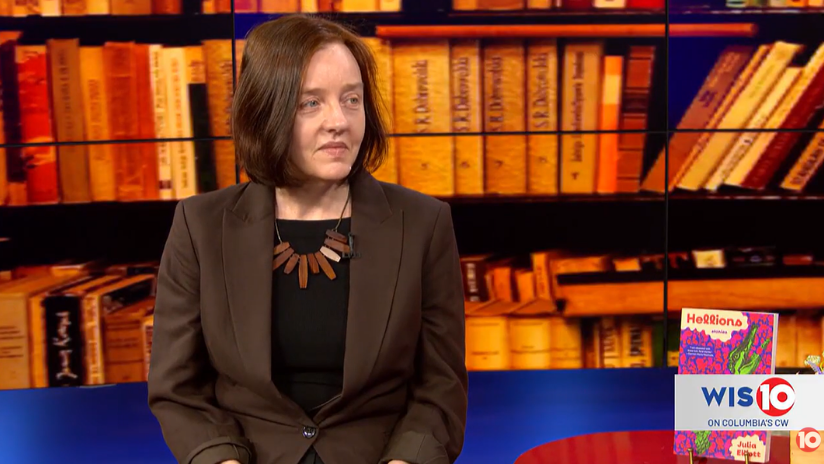
When asked about advice for folks interested in research, storytelling, and publishing this is what Elliott had to say: "I feel like younger writers seem to get very self-conscious about two things: one, whether their work is good, and two, whether it's original. I don't think that they should worry too much about either of those. They should really worry about finding their writing style, playing around with it, experimenting, messing up and following their imaginations. As Elliott puts it, "when you're young, it's all about learning to do crazy things with fiction. So, find your muse—whether that's Karen Russell or George Saunders—and don’t be afraid to take inspiration, to mimic these admirable writers, and to find your own voice. Imitation is the best form of flattery and it's also the best way to learn.”
You can keep up with Dr. Elliott via her Website, Facebook, or Instagram.