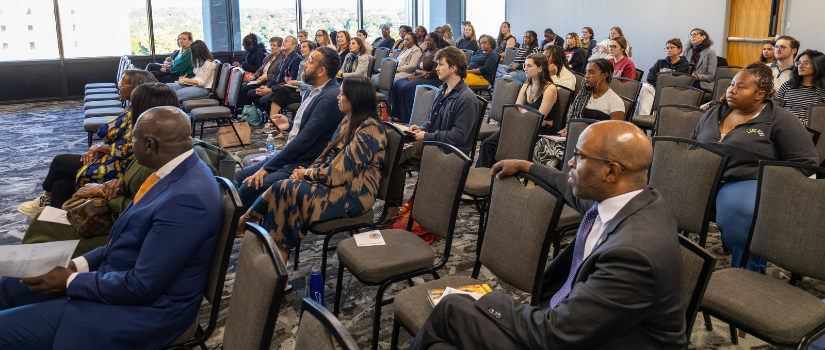
On Tuesday, October 20, 2026, keynote speaker Dr. Leigh Raiford from the University of California, Berkeley, gave the 32nd Annual Adrenée Glover Freeman Lecture: "Making Home in the World: Kathleen Neal Cleaver's Photographic Archives" hosted by the Department of Women's and Gender Studies at the University of South Carolina.
As an author and co-author of five books around the importance of history and photography, Raiford journeys into the revolutionary uses of images and how they can make “home”. At the start of her talk, she emphasized the importance of institutions of higher education to teach and learn “the fullness of our histories”.
We need models for how our elders and ancestors–enslaved, queer, trans, immigrant, femme, disenfranchised—endured inhospitable terrains, and even shifted the territory to make more fertile grounds for themselves and those to come.
Raiford’s presentation emphasizes the rewards and challenge of archival work as it serves as a proof of existence for these communities, especially important and valuable during times when these histories are facing erasure. This acknowledgment of life is critical for cultural and social well-being. To continue this work is to fight "and by fight, I mean, organize, love, learn, listen, refuse, care for one another, and teach," she further explained.
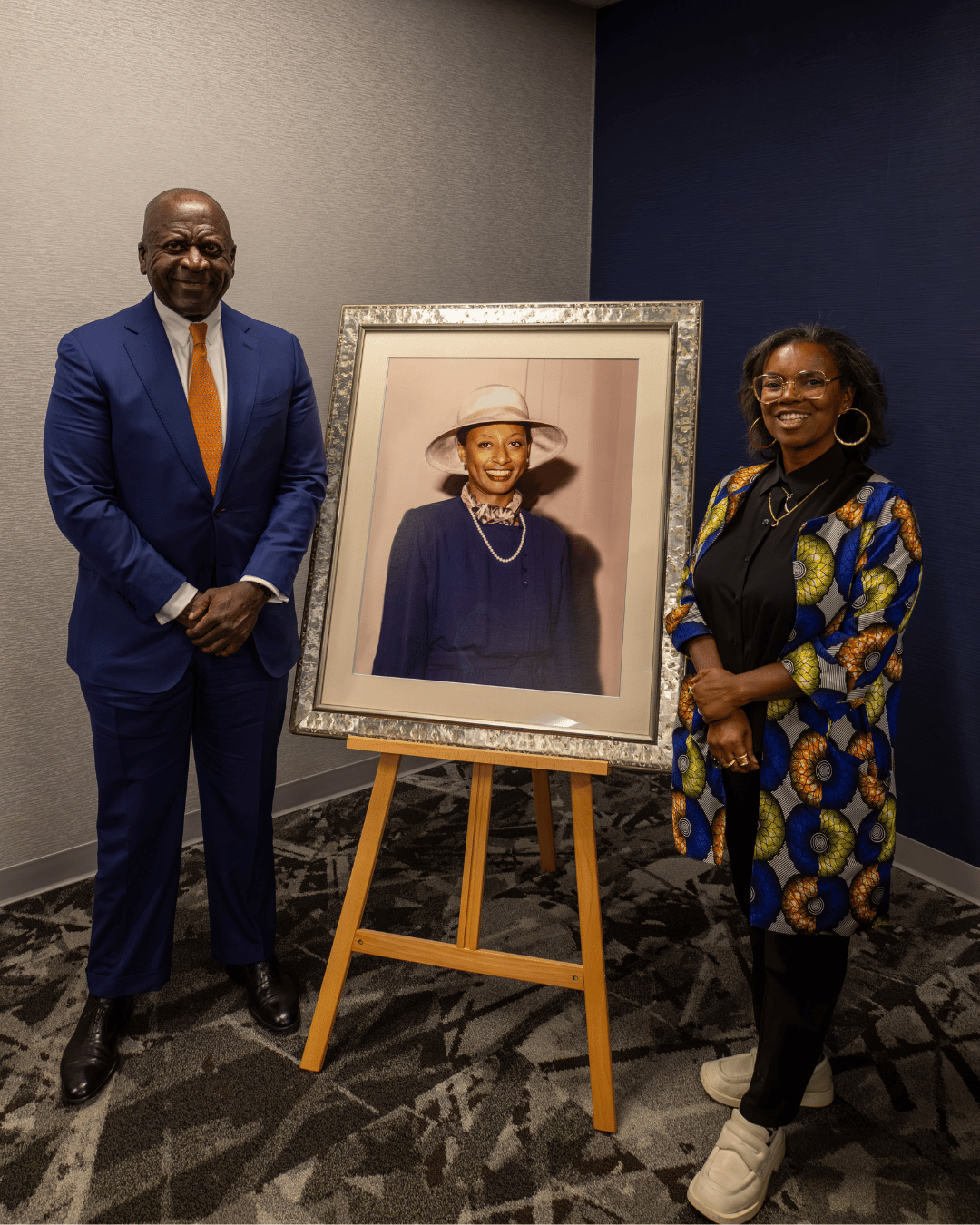
Raiford drew parallels between the lecture’s namesake, Adrenée Glover Freeman and the subject of her talk, Kathleen Neal Cleaver, describing them both as lawyers and community caretakers. Not only a human rights activist and a former Black Panther Party leader, Kathleen Neal Cleaver also kept an impressive personal photography archive, which a small team led by Dr. Raiford worked to organize, catalog, and digitize. Throughout the talk, Raiford chronicled periods of the Cleaver family’s life through a photo album of the family’s time living in exile in Algeria and France.
Raiford discussed how the family album functions as both elegy and eulogy, how it represents and understanding of Black power, and how these albums hold space for belonging and self-identity. Raiford provided glimpses into the family's journey, allowing the audience to understand the idea of curatorial photography and homemaking, and the ways these ideas lend themselves to Black women’s world-building, organizing, and radical imagination. She ended the lecture stating: “The Algiers album, and the photographic archive from which it comes, reveals a life of radical commitments that does not deny life itself.”
The lecture was free and open for the campus and Columbia community to attend and was followed with light refreshments, continued conversation, and a book signing where Dr. Raiford's most recent work, When Home is a Photograph: Blackness and Belonging in the World, was available for purchase thanks to All Good Books. Prior to this event, a catered lunch was held for undergraduate and graduate students and Dr. Raiford to discuss her research and explore mutual topics of interest. Dr. Raiford also recorded an episode of WGST: Unboxed with student assistant Grace Ariss titled “Black Visuality and Power Movements with Dr. Leigh Raiford” which can be found here.
(Photos by McCausland College student photographer Aaron Muhammad.)
Leigh Raiford is Professor of African American and African Diaspora Studies at the University of California, Berkeley, where she teaches, researches, curates and writes about Black visuality and world-making. Raiford is the author of When Home is a Photograph: Blackness and Belonging in the World (2026), Imprisoned in a Luminous Glare: Photography and the African American Freedom Struggle (2011), co-author with Ariella Aïsha Azoulay, Wendy Ewald, Susan Meiselas and Laura Wexler of Collaboration: A Potential History of Photography (2024); co-editor with Heike Raphael-Hernandez of Migrating the Black Body: The African Diaspora and Visual Culture (2017), and co-editor with Renee Romano of The Civil Rights Movement in American Memory (2006). Raiford is Series Editor with Sarah Elizabeth Lewis and Deborah Willis of Vision and Justice, an imprint of Aperture Books.
The Adrenée Glover Freeman Lecture in African American Women’s Studies was established in 1993 in memory of Adrenée Glover Freeman, a Columbia attorney who was active in civic affairs and served on the Community Advisory Board of the Women’s and Gender Studies Program. Each year the lecture is given by a prominent African American woman.
Interested in supporting our lecture series? Click here to donate.