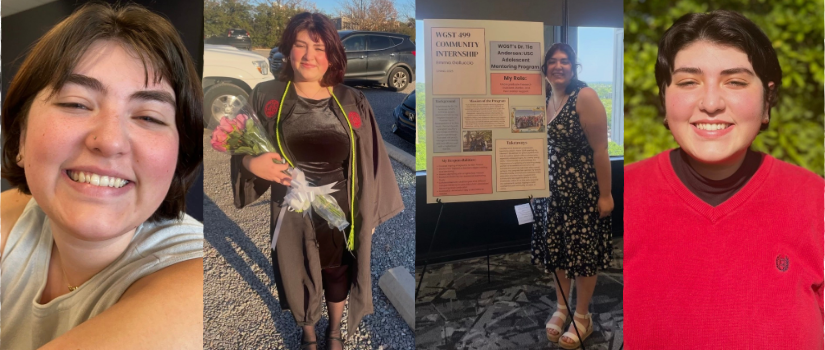
For many people, college is the first time they can carve out their future all on their own. That future starts with the friends you make, the professors you connect with, the clubs you join, and most importantly, the major you choose. Choosing your major is an incredibly personal decision, guided by your values, passions, and visions of your future career. It takes an incredibly passionate and driven person to pursue a degree in Women’s and Gender Studies; a degree packed with the values and heart of all the revolutionaries that made it possible. I recently got the chance to sit down with a recent graduate, Emma Galluccio, one of these uniquely passionate individuals, and discuss what four years in the program looks like and what a career with a WGST degree can look like.
Emma Galluccio is 21-year-old alumna of the University of South Carolina. During her time at the university, she majored in Women’s and Gender Studies and minored in Public Health and Social Work. She now works at a social work based non-profit, Fast Forward CTC, based in Columbia, where she plans to stay while she completes her Master's in Social Work here at USC.
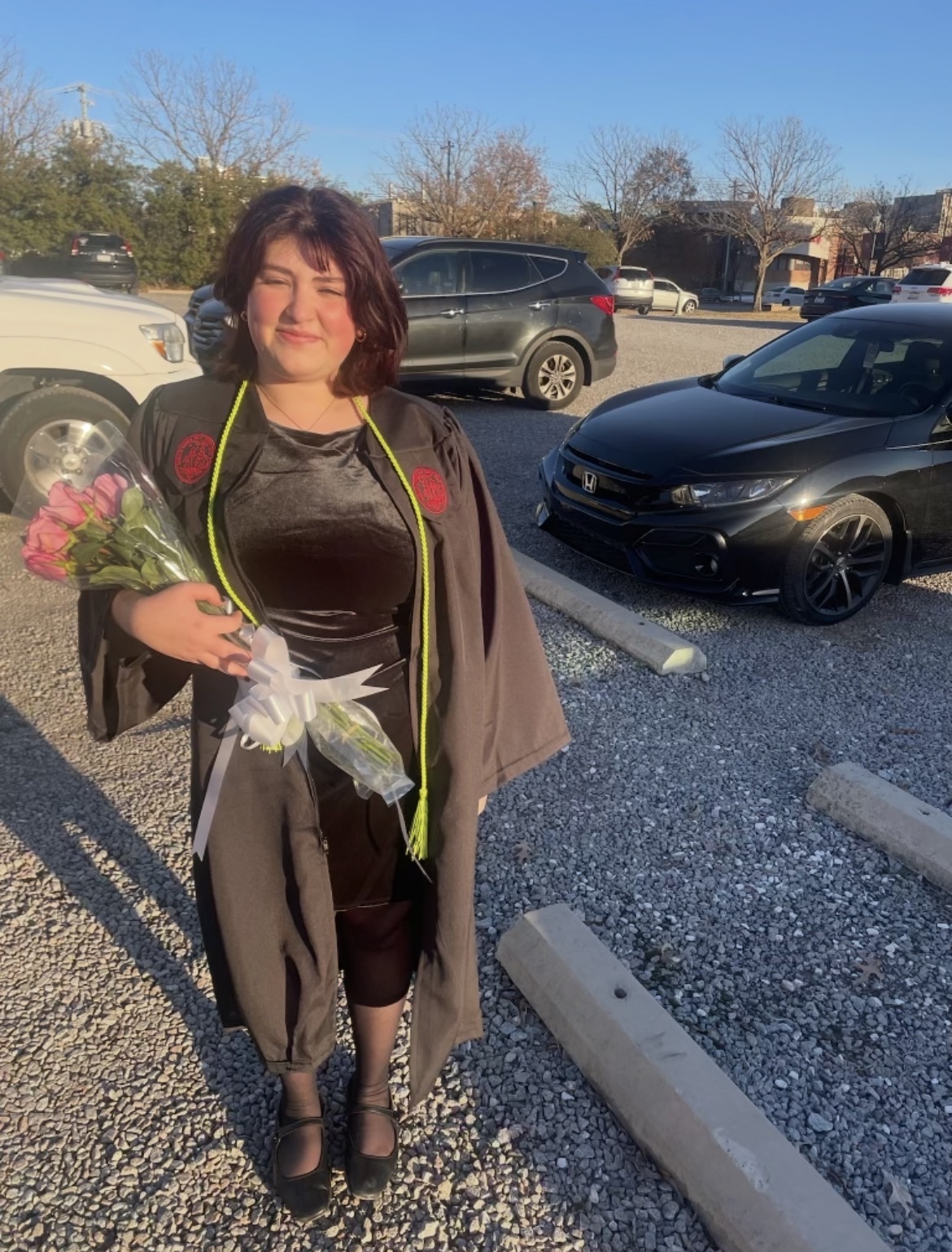
Galluccio came to USC a life-long feminist, knowing she wanted to work with women. She spent her first semester as a Journalism major, quickly realized it wasn’t for her, and decided her WGST minor deserved closer inspection. At the time, she was enrolled in Dr. Campbell’s introductory course, “I remember meeting Dr. Campbell for office hours in person because it was an online class, asking her about the program, what I could do with a degree, and what she thought a good pathway was.” This conversation was highly influential; Galluccio continued, “After that, I took Dr. Suzanne Swan's Women's Health course. That formally persuaded me to switch from a minor to a major. Then, I picked up a minor in Health Promotion, Education, and Behavior and Social Work, and I just kind of took channeled those avenues for Women's and Gender Studies.”
Galluccio quickly felt right at home in the program, she explained, “I enjoyed how open-minded everybody was. When you're having a lot of these discussions, there were no wrong answers, everybody could just chime in and talk about how they felt about current issues.” Not only did she connect with her peers, but she soon found mentors in many of her professors, “Dr. Campbell and Dr. Swan are two of the biggest reasons why I pursued what I did. They've been such a great resource and have both been people that I've been able to lean on. Dr. Tia Andersen too--taking her Adolescent Mentoring course and going into schools to work with at-risk youth, specifically at-risk teenage girls, really helped inform what I wanted to do with my career.”
Anyone that has ever stepped foot inside a WGST class knows that intersectionality is a major theme in the field. You hear it so much that the definition and origins of the term become second nature. Galluccio embraced the term, “I feel like one of the biggest theory pieces I took away from WGST is intersectionality and being able to understand how because of one's identity and the different makeups of one's identity how different everybody's experience is going to be.”
For Galluccio, the idea intersectionality persisted outside of the classroom and followed her into professional life, “I think as a social worker, it's important to have that kind of mindset as you're navigating the world. I specifically work with low-income populations and people struggling with being unhoused. Open-mindedness and being able to listen and learn is a major theme I feel like I took away from the program and the degree.”
Women’s and Gender Studies is a program that easily intersects with many different pathways. Choosing the right minor is important because it could better tailor your WGST studies to a specific career field. Galluccio explained, “There's so many different outlets that you can find in WGST if you apply yourself in the ways that you want and I think there's so many great professors in the department that help aid in that way.” For Galluccio, minors in Public Health and Social Work best fit her career path, “When you're studying Women's and Gender Studies, it helps to figure out a specific avenue which you want to apply yourself. Public health, social work, and WGST are such good things to pair together. I feel like Women's and Gender Studies also incorporates many themes around social work because in many courses you're learning about social advocacy and social justice.”
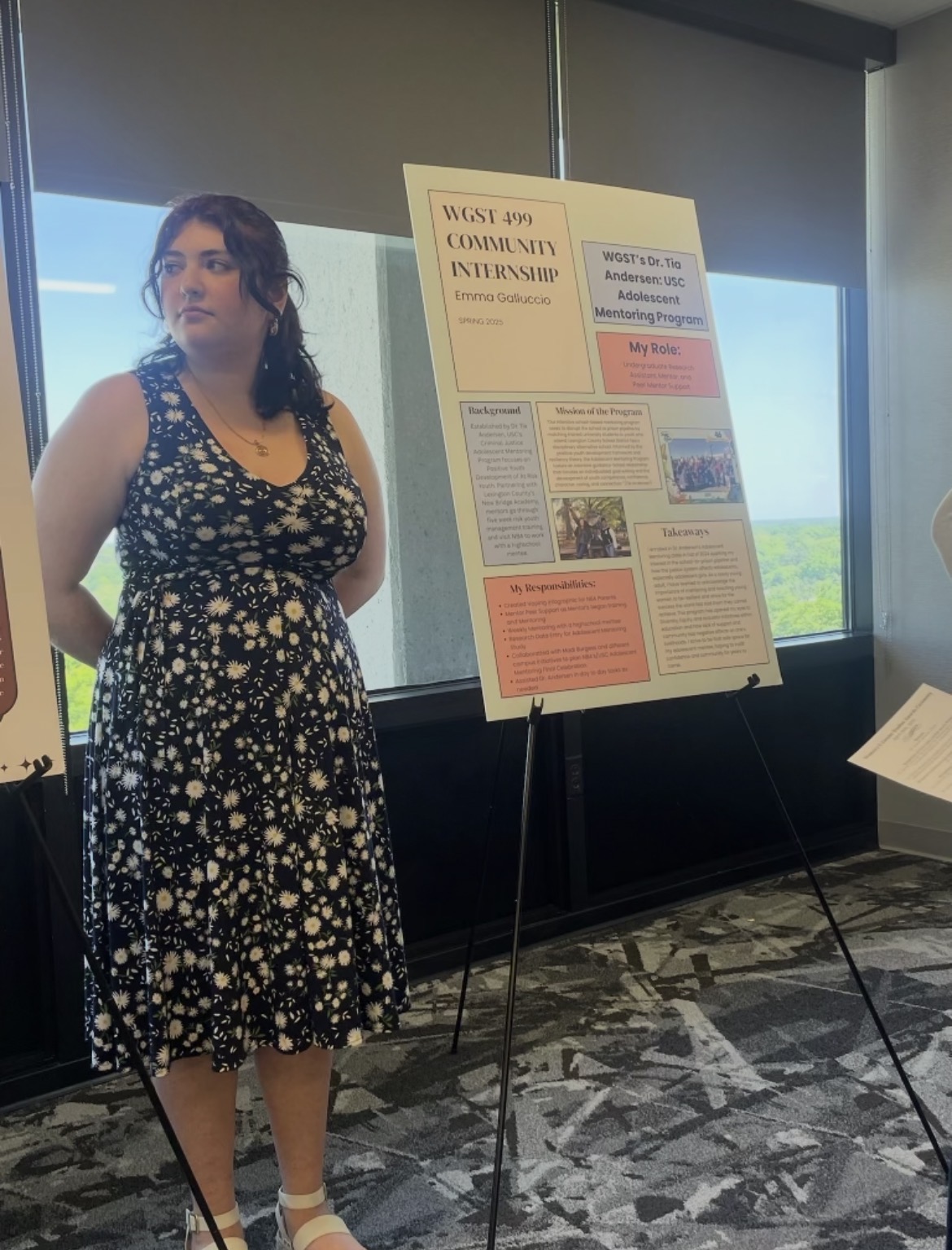
Galluccio credits Dr. Tia Anderson’s Adolescent Mentoring class for taking her passion for Women’s and Gender Studies and applying it to a social work setting. She explained, “I feel like that class has really influenced how I operate at work on a day-to-day basis now. The whole point of that class was learning advocacy, understanding intersectionality, and how they intertwine with each other. One person's experience is completely different from yours--you need to figure out a way to meet in the middle and advocate on behalf of that person. I feel like advocacy is just the single biggest thing I took away from the program in its entirety.” A passion for WGST doesn’t have to stop at social work, but can be applied anywhere and everywhere.
Galluccio’s passion led her to Fast Forward CTC, a social work non-profit serving Columbia’s veterans, women, and children. Galluccio explained, “Through WGST, I realized I really liked advocacy, working on a client basis, and being able to get to know somebody's story individually and help them learn and grow. That's why I decided to pursue case management, and Fast Forward just so happened to be a perfect opportunity.” As a case manager, Galluccio primarily performs intakes and assessments, assisting her clients in finding employment and housing opportunities.
As an undergraduate, Galluccio heard many criticisms of pursuing WGST. Rather than believing her doubters, Galluccio followed her gut and pursued her passions. She explained, “People asked me all the time, ‘What are you going to do with your WGST degree? You can't do anything with it,’ But yes, you can, you 1,000% can. There is so much meaningful work out there.” Galluccio herself is evidence of this, “It's a matter of how you apply yourself. There are so many opportunities, and I feel like the Department of Women's and Gender Studies does such a good job of entertaining all those other interests that you can pair with the degree.”
There is so much meaningful work out there. It's a matter of how you apply yourself.
- Emma Galluccio
To anyone considering pursuing a degree in Women’s and Gender Studies, but are stuck on the fence, Galluccio has some final words for you, “I think everybody would be better off if they took even one Women's and Gender Studies class.” If you are interested in dipping your toes in the WGST waters, learn more here.