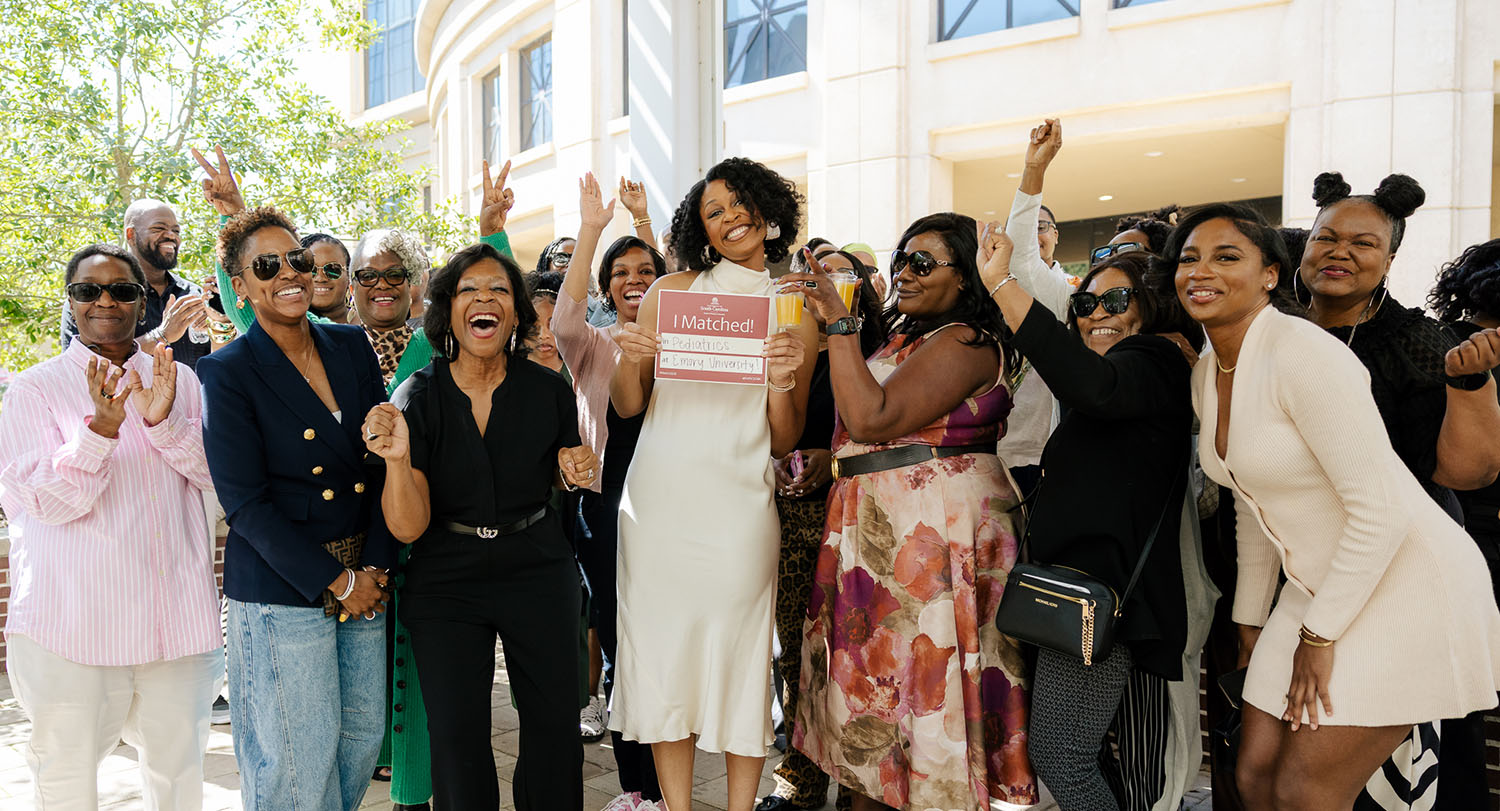
More than 220 University of South Carolina health sciences students reached a major milestone this month, learning where they will continue their training during national Match Day celebrations on March 18 and 20.
On Friday, medical students in Columbia and Greenville gathered in person to share the moment with classmates, faculty, family and friends as they opened envelopes and celebrated their next steps. Pharmacy students received their placements through virtual announcements on Wednesday.
The Columbia and Greenville schools of medicine reported a combined 96 percent match rate, exceeding the national average, which typically falls between 90 and 94 percent, according to the American Medical Association.
For the College of Pharmacy, 43 students matched into first-year residency positions or fellowships, and 25 alumni advanced into second-year residency programs.
“Each match is the result of years of rigorous preparation, clinical training and dedicated mentorship,” says Mary Anne Fitzpatrick, USC’s executive vice president for academic affairs and provost. "We are incredibly proud that these students are not only matching into competitive programs, they are pursuing specialties and training in communities where they will make a profound difference.”
Strengthening South Carolina’s workforce
The University of South Carolina continues to play a leading role in preparing the state’s health care workforce, graduating more health professionals than any other institution in the state.
Many graduates will continue their training close to home with 48 medical students matched with residency programs in South Carolina at places such as Grand Strand Regional Medical Center, Lexington Medical Center, McLeod Regional Medical Center, Medical University of South Carolina, Prisma Health, Spartanburg Medical Center and Trident Medical Center.
Pharmacy graduates are also contributing to the state’s workforce. Of the 43 students and alumni who secured postgraduate training positions, 10 will remain in South Carolina. Several will serve in underserved and rural communities, including Hope Health and McLeod Regional Medical Center in Florence, as well as Columbia VA Medical Center.
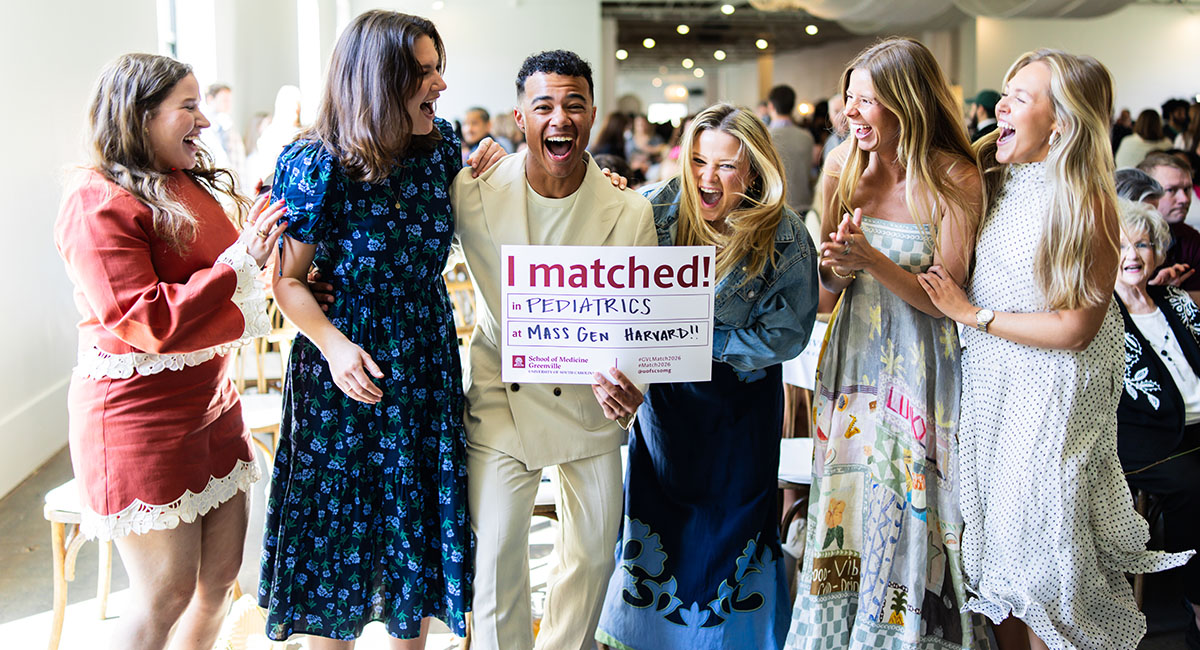
These graduates are entering residency and postgraduate programs as highly skilled physicians and pharmacists who are prepared to meet complex health care challenges.
Meeting critical health needs
As concerns persist nationwide about shortages in primary care, USC graduates are helping meet that demand. This year, 78 medical students matched into primary care specialties, including internal medicine, family medicine and pediatrics.
The schools had five graduates match into a neurological-focused specialty, with four going into neurology and one into neurosurgery.
The University of South Carolina is pursuing a comprehensive plan to improve diagnosis and treatment of neurological disorders. USC held a ribbon-cutting for its Brain Health Center this week and has plans to open a neurological hospital and rehabilitation center, the state’s first standalone medical facility fully dedicated to care of the brain and nervous system.
A defining moment
Match Day represents a turning point for future physicians and pharmacists, marking the transition from classroom learning to hands-on clinical training. Throughout their final year, students apply to programs nationwide, completing interviews and ranking their preferred institutions.
Medical students are matched through the National Resident Matching Program, which uses an algorithm to pair applicants with residency programs based on mutual rankings.
Pharmacy students can pursue postgraduate training in a variety of clinical settings, including hospitals, ambulatory clinics and health-system community pharmacies, and they are matched through the American Society of Health-System Pharmacists Residency Match. Students also gain postgraduate training through executive residencies or fellowships.