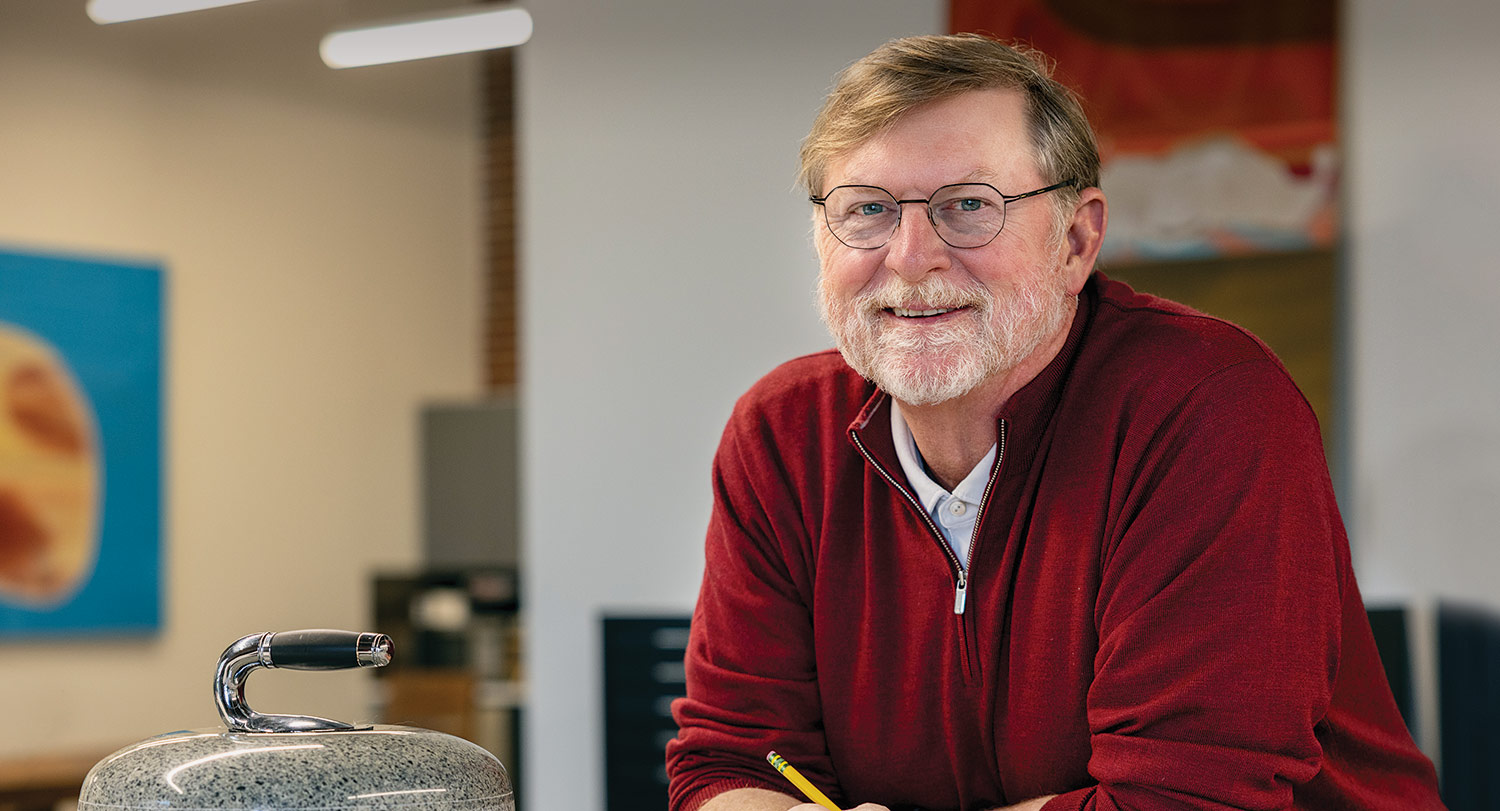
How one man’s curiosity about curling took him to the top of the sport sounds like a weird movie plot. But dig a little deeper, and it makes more sense.
Alumnus Beau Welling’s father worked with golf architect Tom Fazio on projects like the Thornblade Club in Greenville County, and Welling saw a career in golf course design as a way to harness competing interests in the sciences and the arts. He earned a physics degree at Brown University, studied landscape architecture at the Rhode Island School of Design while at Brown and spoke to Fazio about a job.
But the timing wasn’t right, so he entered the Master of International Business program at USC instead. Through the program, he landed an internship with Siemens in Karlsruhe, Germany, then spent a couple years as an investment banker before finally signing on with Fazio in 1996. A decade later, in 2007, he started Beau Welling Design.
The firm, which has done land planning for large projects like Greenville’s Camperdown Plaza and Falls Park Riverscape Extension in addition to golf course design, is also heavily involved in TGL, a rapidly growing simulator golf league.
So where does curling fit? Turns out, Welling’s relationship with the sport predates all of the above. In 1988, when he was a senior in high school, he discovered it while watching the Calgary Winter Olympic Games — when curling was still just a demonstration sport.
“I went out of my way to learn about it,” he says. “Rocks. Brooms. Ice. And I think, ‘This is the dumbest thing I’ve ever seen.’ And to top it off, there was a 14-year-old girl on the U.S. women’s Olympic team — someone four years younger than me!”
Fourteen years later, bafflement turned to fascination when Welling came home one night and turned on the 2002 Winter Olympics in Salt Lake City, Utah. “And lo and behold,” he says, “it’s that curling thing again. And I find myself inexplicably drawn to the television.
“It’s an extraordinarily strategic game, which very much fits my brain. And it is an ancient Scottish game, just like golf. It’s very obvious to me that they both come out of the same Scottish ethos. Both sports are rooted in tradition and in values like integrity and honesty: You call your own fouls. Both are camaraderie-based. They both have really weird jargon. And, arguably, both are excuses to drink Scotch.”
His curling odyssey hit peak weirdness in 2006. The winter Olympics were in Torino, Italy, and this time, Welling was glued to the TV. “I basically stopped working. I’m literally at home watching curling all day,” he says. And if he did go into the Fazio office, he talked nonstop about curling.
He also noticed that practically all the U.S. curlers seemed to be from the same place: Bemidji, Minnesota. And when Welling then learned that the U.S. curling national championships were about to start there, he asked his assistant to inquire about tickets. The man she talked to in Bemidji was bemused by the idea of a South Carolinian interested in the sport and promised to get him the best seat available.
His first morning in Minnesota, Welling ran into Pete Fenson at the hotel breakfast. The skip, or captain, of the U.S. team had just won bronze in Torino. Welling was starstruck.
“We start chatting, and at some point I mention that I just flew in from South Carolina,” he says. “And Fenson is like, ‘Oh my God, you’re Beau! You’re here! We’re going to have to get you in the opening ceremonies on Saturday!’” Word had already spread about this man from the South who loves curling.
Welling got his front row seat — “They’ve taken a stool from the bar and turned it around against the glass overlooking the ice,” he says — and he quickly ingratiated himself with the Bemidji curling family.
A couple of days turned into nine. Locals took him ice fishing. The town threw him a birthday party. He attended the closing banquet and was recognized from the podium by the president of USA Curling. The president even named him the official Southern ambassador for the sport, sparking a standing ovation from 600 people.
In the parade welcoming the U.S. curlers home after the Torino Olympics, Welling rode in the fourth car. When the parade arrived at the Bemidji Lumberjacks high school gymnasium, they sat him on the floor with the Olympians. Before he left town, he was asked to join the board and serve as the first independent director of USA Curling.
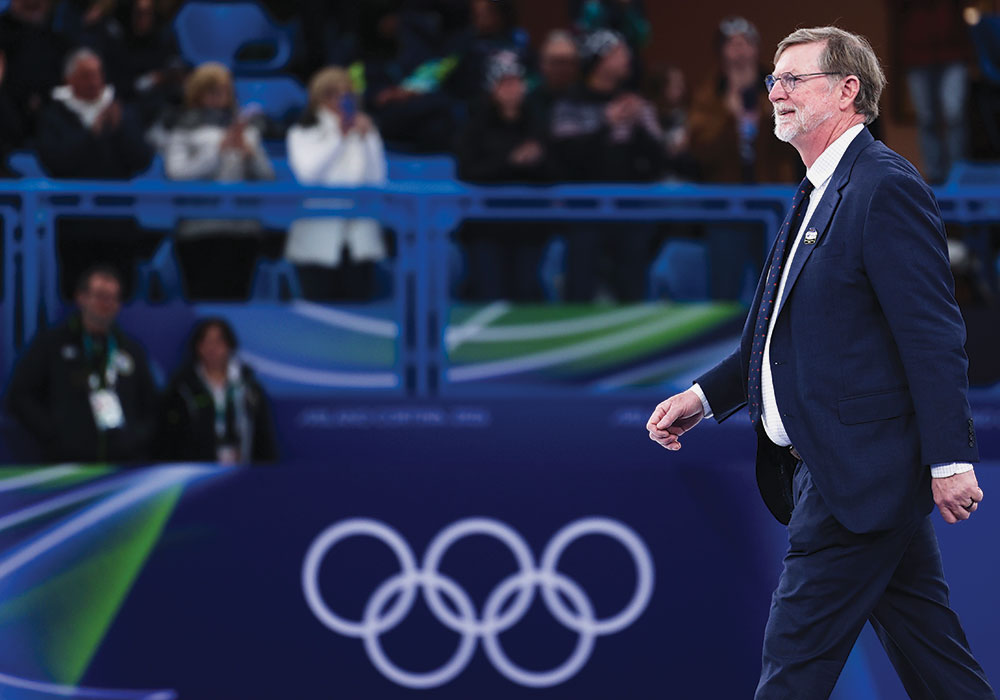
Sixteen years later, in 2022, Welling was named president of World Curling. Earlier this year he spent a month in Italy running the curling portion of the 2026 Winter Olympics. Now, he is trying to help make the sport’s popularity more sustainable during non-Olympics years. One project the association is working on involves embedding tech into the stones that can relay stats and data in real time.
It’s equal parts quirky and fun, but it’s also serious business. And as he works to expand the sport’s footprint not just at home but around the world, the business education he received at USC is paying dividends.
“I think of my MIBS days extraordinarily fondly,” says Welling, who is up for reelection as World Curling’s president in September. “I come across as this crazy sort of person with all these different interests — and I’m basically doing two full-time jobs right now — but it’s all part of the journey. And the MIBS program experience was a very, very formative one.”