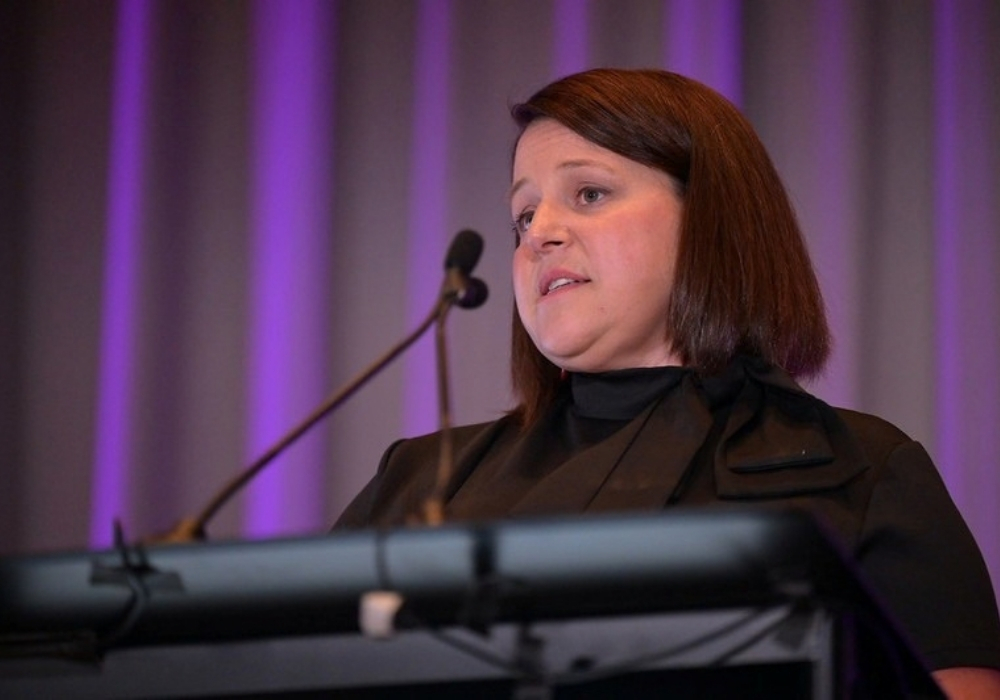
Laura Ashley Thomas doesn’t exactly remember how it happened, but in 2002, ahead of her freshman year at the University of South Carolina, she received a letter in the mail: She qualified to apply for Opportunity Scholars Program, one of two college-level programs at USC part of the federally funded TRIO Program.
The Opportunity Scholars Program is aimed at helping first-generation and low-income college students be successful as undergraduates. Students are in smaller classes, get access to mentoring and tutoring, and receive a scholarship.
Thomas was applying to every scholarship she could find, so of course she applied. She got in. And though the award amount wasn’t life-changing, it allowed her to take smaller classes her freshman year, take part in cultural enrichment programs and gain mentors who are still in her life today.
Thomas’ time with TRIO stuck with her through graduate school and as she rose through the ranks from an accounting role to a senior leadership position for a life sciences manufacturer. When the time came for Thomas to direct philanthropic efforts at her company, she knew who she wanted to help.
“TRIO works,” the South Carolina native says. “It really does work. It really does make a difference.”
Thomas is just one USC TRIO alum whose experiences stuck with them. Here’s how Thomas and another alumna are giving back.
Getting first-gen students ready for postgrad careers — and paychecks
Back in 2020, Thomas was appointed to a committee at her then-workplace, Thermo Fisher Scientific, to decide how to give back to the community and widen access for marginalized graduates in the life sciences industry.
The idea started with helping students from marginalized backgrounds learn basic budgeting principles. Thomas reached out to Althea Counts, the director of TRIO at USC who has known Thomas for 20 years.
“I was like, ‘Hey, can we try this out on your students and see if this works?’” Thomas recalls. Counts agreed. “And that’s what we did. We just did a PowerPoint. It wasn’t flashy … we were teaching about credit scores. They loved it.”
“TRIO works. It really does work. It really does make a difference.”
Soon, Thomas and her team expanded the financial literacy trainings to include students in California, New Jersey and Massachusetts. In the years since, the program has grown to become a national initiative for the Council of Opportunity in Education and expanded to help students get prepared for the workforce. She was recognized in September by the nonprofit for her contribution to the TRIO program.
For Counts, Thomas’ commitment to the program — and uplifting first-generation college students — is evidence of the importance of TRIO.
“Seeing alumni show up for our students reminds us why TRIO matters,” Counts says. “Their willingness to come back and guide others makes a strong statement about the program.”
Alumna creates scholarships for first-gen, low-income students
Aisha Haynes became an Opportunity Scholar as a low-income student — she received the same letter in the mail as Thomas did. The Orangeburg, South Carolina, native graduated from USC in 2004, then returned to earn her master’s and Ed.D.
TRIO made a lasting impression on her.
“It really had a huge impact on my life,” she says of TRIO. “The smaller class sizes and the faculty were great. We had mentors, as well.”
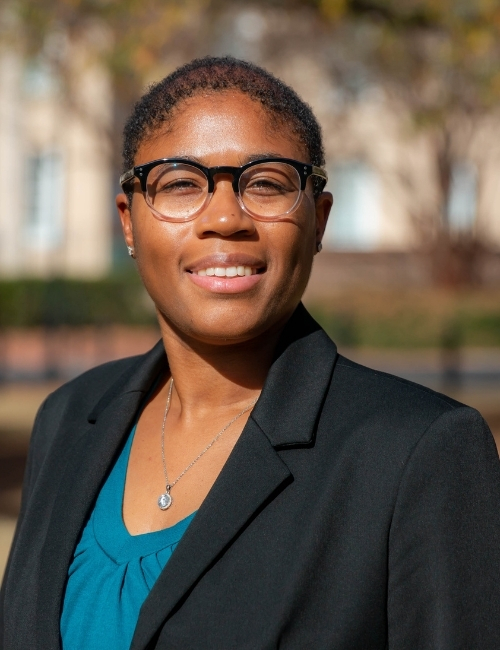
Haynes now works at USC as the associate director and director of distributed learning and innovation for the Center for Teaching Excellence, where she leads initiatives that strengthen the quality and effectiveness of online teaching and learning. She was taking a walk on the Horseshoe one day when she had the thought: “I want to do something for TRIO.”
That initial spark has led Haynes to establish an endowed scholarship for first-generation and low-income students at USC — she’s created four more since.
It took years for Haynes to build up the funding needed to establish the scholarship, but she saved a portion of her paychecks until she had enough to establish that first fund.
In addition to the scholarship she has at USC, she’s established four similar awards with Palmetto College, which includes the online degree programs USC offers and the system’s two-year campuses. She’s now launched four endowed legacy gifts at the two-year campuses — Lancaster, Salkehatchie, Sumter and Union.
“I don't want funds to be a barrier for students to be successful,” Haynes says. “I'm able to help in that way.”
Haynes comes from a low-income household, and she was intentional in making her scholarships geared toward low-income and first-generation students. Several of the awards were given out this semester.
“I got a letter from one of the students. She was a freshman and was saying how the scholarship is going to really help her to be successful in school,” Haynes recalls. “I was like, ‘Oh man, I just created this. And I can see that direct impact.’”
For Counts, seeing alumni of TRIO give back in the ways Haynes and Thomas have speaks to the program’s importance.
“Other students have a defined pathway to success. Our students don’t always have that pathway,” she says. “They’re smart. They know they want to do it. Their family supports them. But that defined pathway is something they don’t have. And that’s what our program does.”