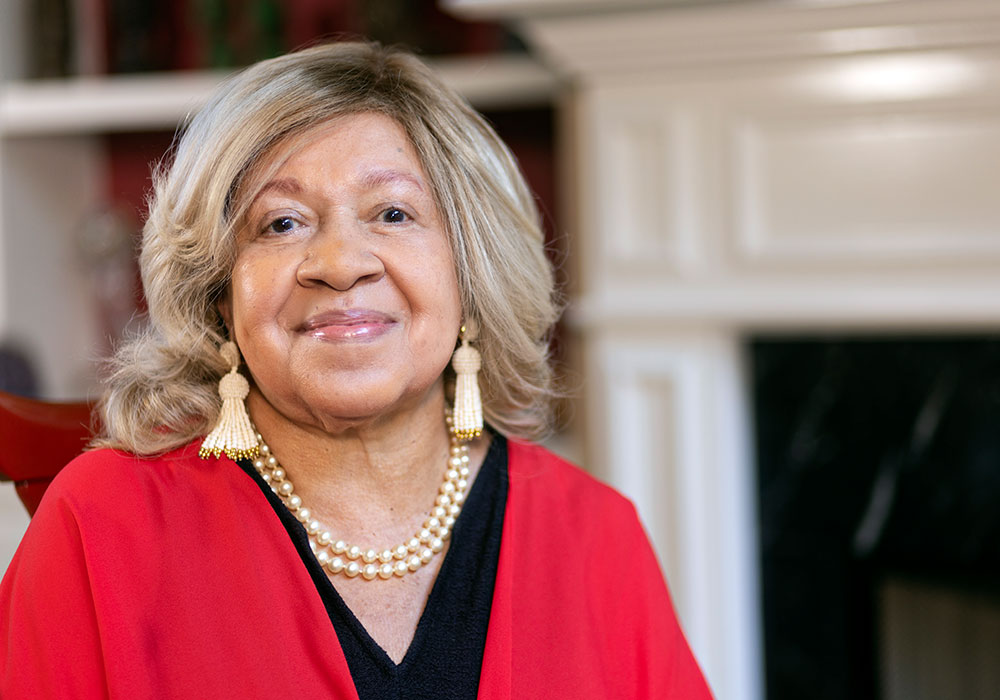
Henrie Monteith Treadwell, a public health champion whose enrollment more than 60 years ago marked the University of South Carolina’s desegregation, died Tuesday, Oct. 27, 2026.
Treadwell, along with the late Robert Anderson and James Solomon Jr., registered for classes on Sept. 11, 1963. They became the first Black students admitted since Reconstruction. In 2024, the university unveiled a 12-foot bronze monument, commissioned by the Board of Trustees and located on the Horseshoe, to honor the three students and commemorate their role in USC’s history.
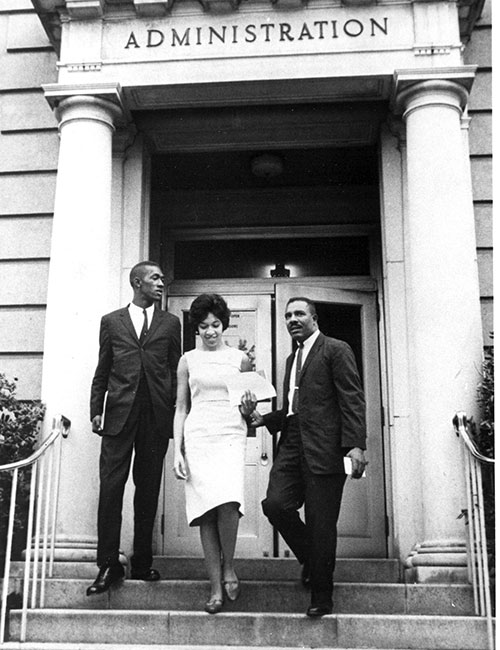
“With the passing of Henrie Monteith Treadwell, the last of USC’s three brave desegregation pioneers, we acknowledge the profound role she played in defining our values as an institution,” said university President Michael Amiridis.
“Henrie made clear that she broke racial barriers at USC not in a spirit of fear, but with great determination and hope, knowing that she was leading a path that others must and would follow. She lived a monumental and inspiring life, and we are forever grateful for her immeasurable contributions to our university, our state and our nation.”
It was Treadwell’s lawsuit, filed when she was 16, that led to the university’s integration. Her subsequent enrollment wasn’t her only “first” while at USC: In 1965, she also became the university’s first Black graduate when she earned her degree in biochemistry.
“It is with profound sadness that we mourn the passing of Dr. Henrie Monteith Treadwell, a trailblazer whose courage changed the University of South Carolina, the state of South Carolina, and the lives of countless people who followed her path,” said Bobby Donaldson, executive director of USC’s Center for Civil Rights History and Research and associate professor of history. “Her steady determination, unwavering dignity and courage transformed a personal pursuit of education into a defining chapter in the long struggle for civil rights in South Carolina.”
Treadwell’s educational pursuits continued after she graduated from USC. She went on to earn a master’s from Boston University and a Ph.D. from Atlanta University, both in biochemistry, followed by postdoctoral work in public health at Harvard University.
“Taking the walk into the university was just an example of what I’ve continued to do throughout my career.”
Her pivotal role in USC’s integration earned her a permanent place in university history, but when asked by Carolinian magazine in 2025 to reflect on her achievements, she noted that her undergraduate experiences prepared her to transform lives far beyond South Carolina: Her long career with the W.K. Kellogg Foundation took her to other countries in search of solutions to pressing public health issues.
In her later years, Treadwell served as founding executive director of the Community Voices project at Morehouse School of Medicine in Atlanta, where she conducted and published research centered on strengthening marginalized communities.
“I have been, over these past 60 years, around the world, working in ways that really mimic what I did at the university,” she said. “It’s a way of opening doors for people who do not themselves have the key to that door. Taking the walk into the university was just an example of what I’ve continued to do throughout my career.”