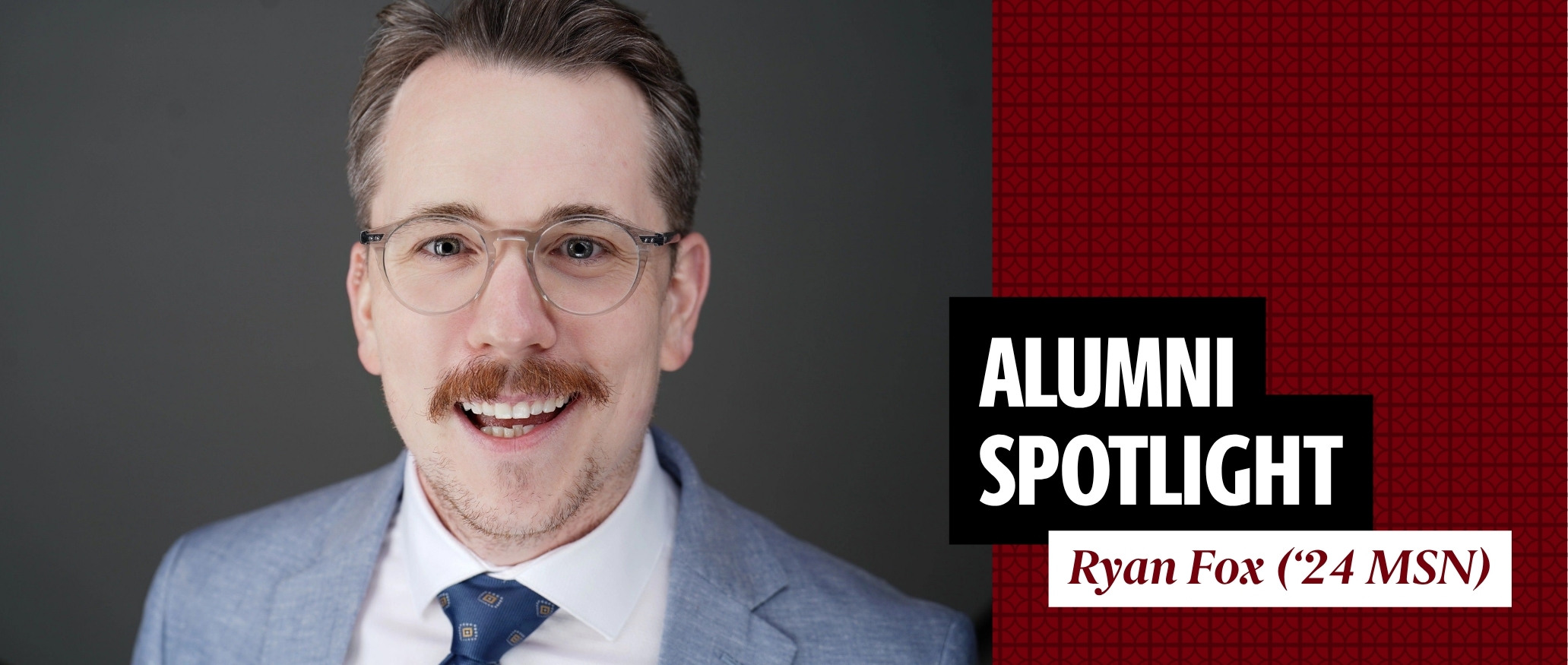
In recognition of Men’s Health Month and Pride Month, Ryan Fox (‘24 MSN), a registered nurse in the Medical Intensive Care Unit (MICU) at Lexington Health reflects how his identity and personal experiences have shaped his approach to caring for others. Fox shares advice on how to take charge of one’s physical, mental and emotional health and discusses the importance of supporting vulnerable populations.
What inspired you to pursue a career in nursing, and what has been the most rewarding part of your journey so far?
I come from a family of nurses, as a son of an LPN with some fabulous RN aunts I spent years avoiding the “calling” to the bedside. Ultimately, I became envious of my husband’s career in pharmacy and made the switch after 10 years as a classical musician. I love the interpersonal relationships that develop in nursing; the trust that’s fostered with patients and their families, the comradery at the nurses’ station, the limitless personal and professional growth within the field–it all brings so much value to my life!
As a male nurse and member of the LGBTQ+ community, how has your identity influenced your approach to patient care and advocacy?
The LGBTQ+ experience in America can forge resilient communities, and I think it offers me a perspective, or maybe even a sensitivity, to relate to many different types of people and populations. I think it can be true for any person’s unique background and lived experiences; my specific blend just happens to work well at the bedside in the patient’s favor.
Why do you believe National Men's Health Month is important, and what health issues do you think deserve more attention among men today?
The stigmas surrounding men’s health put such a burden on prevention, treatment and care. Most would be surprised to hear suicide disproportionately affects men in our country with a prevalence nearly four times greater than women in some demographics, while women are more likely than men to receive any mental health treatment. There’s a disconnect somewhere, and I believe highlighting it can begin to break down those barriers.

What habits or practices do you practice to maintain your physical, mental, and emotional well-being?
Burning out from bedside is such a humbling experience in the way it hijacks your thinking, mood and energy. For me, finding high-value activities outside of work has been my saving grace. I love to garden and work in my yard, which helps me stay active, gives purpose, plans my time off, and create a peaceful space to enjoy. My husband and I are currently prioritizing meaningful experiences, and we sometimes use the number of shifts it would take to go on a trip, make a purchase, or achieve a goal we have as part of an extrinsic reward system. I think of it as a fun way to combat the burnout by reshaping my perspective and giving the actual work some purpose away from the bedside.
What would you like to share with LGBTQ+ individuals during Pride Month about health, wellness, and living authentically?
Pride is a celebration of a sense of belonging and remembrance of those who fought for LGBTQ+ rights, and it functions to raise awareness about issues facing the community and a call to action against ongoing injustices. Living out and proud is a challenge and sometimes exhausting, which makes cultivating your network of support, your chosen family, so important to your own mental health and validation.
As a nurse, what are some common health screenings, preventive measures, or wellness practices that you encourage men to prioritize throughout their lives?
Familiarizing yourself with your risk factors would have to be the first step! Your age, family history, environmental exposures -- whether that be from workplaces, home, travel, hobbies/recreation -- and diet can help narrow down where to prioritize your time and resources. Discussing health goals with your primary care provider to lay out a timeline for screenings and address manageable unique risk factors is important.