When he penned the First Law of Motion, Sir Isaac Newton probably wasn’t thinking about human inactivity, but the principle still applies. Objects at rest tend to stay at rest unless acted upon by an external force.
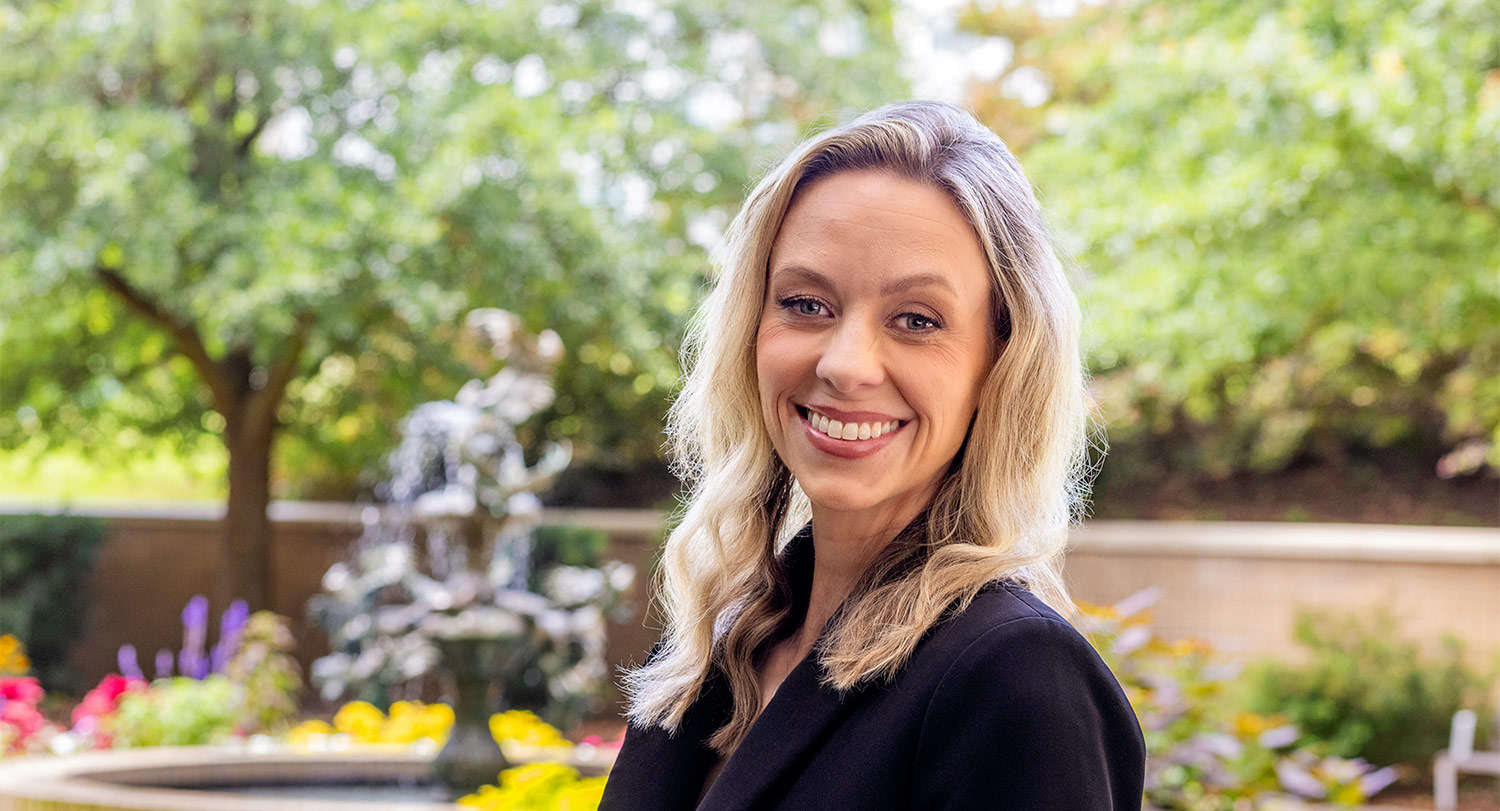
Courtney Monroe, a faculty member in USC’s Arnold School of Public Health, believes social support — a steady diet of well-calibrated encouragement, assistance and accountability from one’s peers — is the best external force to get people moving. Now Monroe and two of her colleagues are exploring ways to refine and improve that approach to promoting physical activity in a five-year NIH-sponsored study.
“For physical activity, a lot of epidemiological evidence shows that social support is one of the key factors for maintaining a behavior change once you’ve adopted it,” says Monroe, an associate professor in the Department of Health Promotion, Education and Behavior and an affiliate faculty member in the Arnold School’s Technology Center to Promote Healthy Lifestyles. Monroe’s co-investigators on the project are Delia West, director of the center, Christine Pellegrini and Bo Cai.
“The challenging aspect of all the work we do in this field is figuring out how to get people to maintain a change in their lifestyles,” she says. “We're pretty good at getting people to adopt a behavior over the short term, but getting people to maintain that behavior using scalable approaches is still the million-dollar question.”
To help answer it, the study is recruiting 300 adults nationwide who are insufficiently physically active and who enroll in teams of three to eight people. Each team’s participants know each other but don’t have to live near each other or exercise together in person.
"This isn’t about nagging someone to exercise more — it’s tapping into different types of support that people might want or need to keep going."
Participants receive smartwatches to monitor their physical activity, access to web-based content about behavioral change and personalized goals and feedback from the research team. Groups are monitored for three months with a follow-up at the one-year mark to measure how well they’re maintaining increased physical activity.
Some of the participants receive additional training to help them understand how best to support and encourage their fellow team members. The idea is that even though team participants know one another, they might not know the best ways to motivate each other to persevere in physical activity.
“We’re going to measure what’s called autonomy support and show them ways to offer it so that team members feel supported by and accountable to one another but not pressured. This isn’t about nagging someone to exercise more — it’s tapping into different types of support that people might want or need to keep going.
“That’s the primary goal of this study: to see if providing explicit digital social support training measurably improves sustained physical activity levels.”
Monroe grew up in a physically active family that often walked and biked together. In college, she learned more about the nation’s obesity epidemic and got interested in helping people understand the benefits of physical activity. Smartphones were coming out at that time, and Monroe saw opportunities for using digital technology to promote healthier lifestyles.
“It’s not the technology itself that is the primary driver of behavior change,” she says. “It’s the theory-based behavior change elements baked into those tools — apps for tracking steps and connecting with friends — that make them effective. I’m always trying to figure out how to leverage social support and the social context that we’re embedded in to promote physical activity.
“My advice to people who want to become more physically active is to seek out someone to support them and perhaps go along with them on that journey. Take small consistent steps, be kind to yourself and nurture that support so that you’ll keep at it."