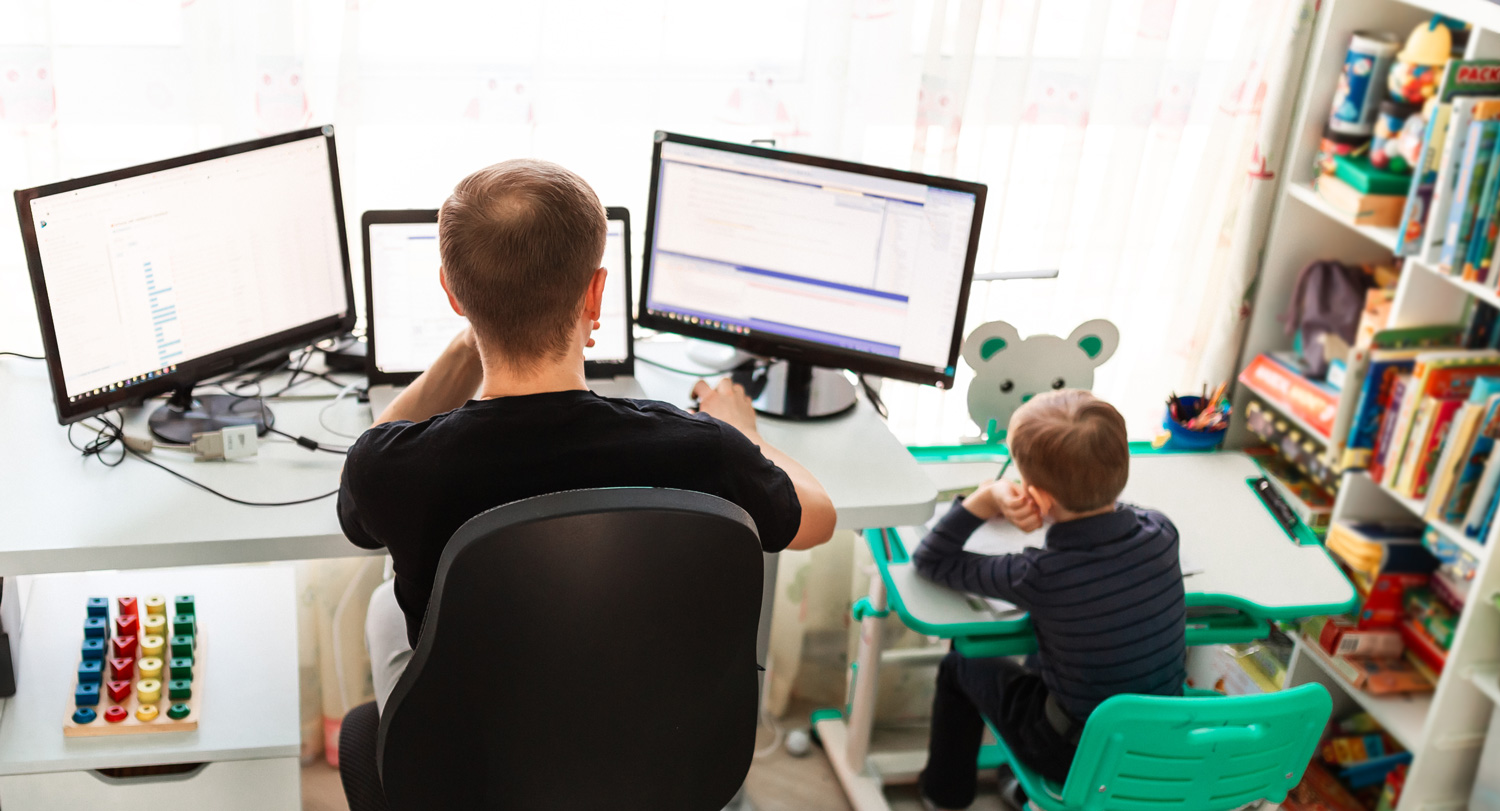
What makes working from home work — or not?
In 2019, only 6.5 percent of the American labor force worked remotely, according to the Bureau of Labor Statistics. That number spiked to nearly half of the workforce during the COVID pandemic. Although the trend has since leveled off — today, only about 15-20 percent of jobs offer a remote option — it nonetheless represents a major sociological shift in American life.
At the University of South Carolina, the Family Inequality Research Lab set out to find out what was actually happening in work-from-home environments. Did working fathers work in a home office more often than working mothers? Do lighting, location and chair type have an impact on how workers feel about their work?
Instead of sticking to traditional sociological tools like surveys or interviews, sociology professor Jennifer Augustine and a team of undergraduate researchers let the work spaces themselves do the talking. They photographed more than 50 remote work setups, searching for clues about how our environments shape our work lives.