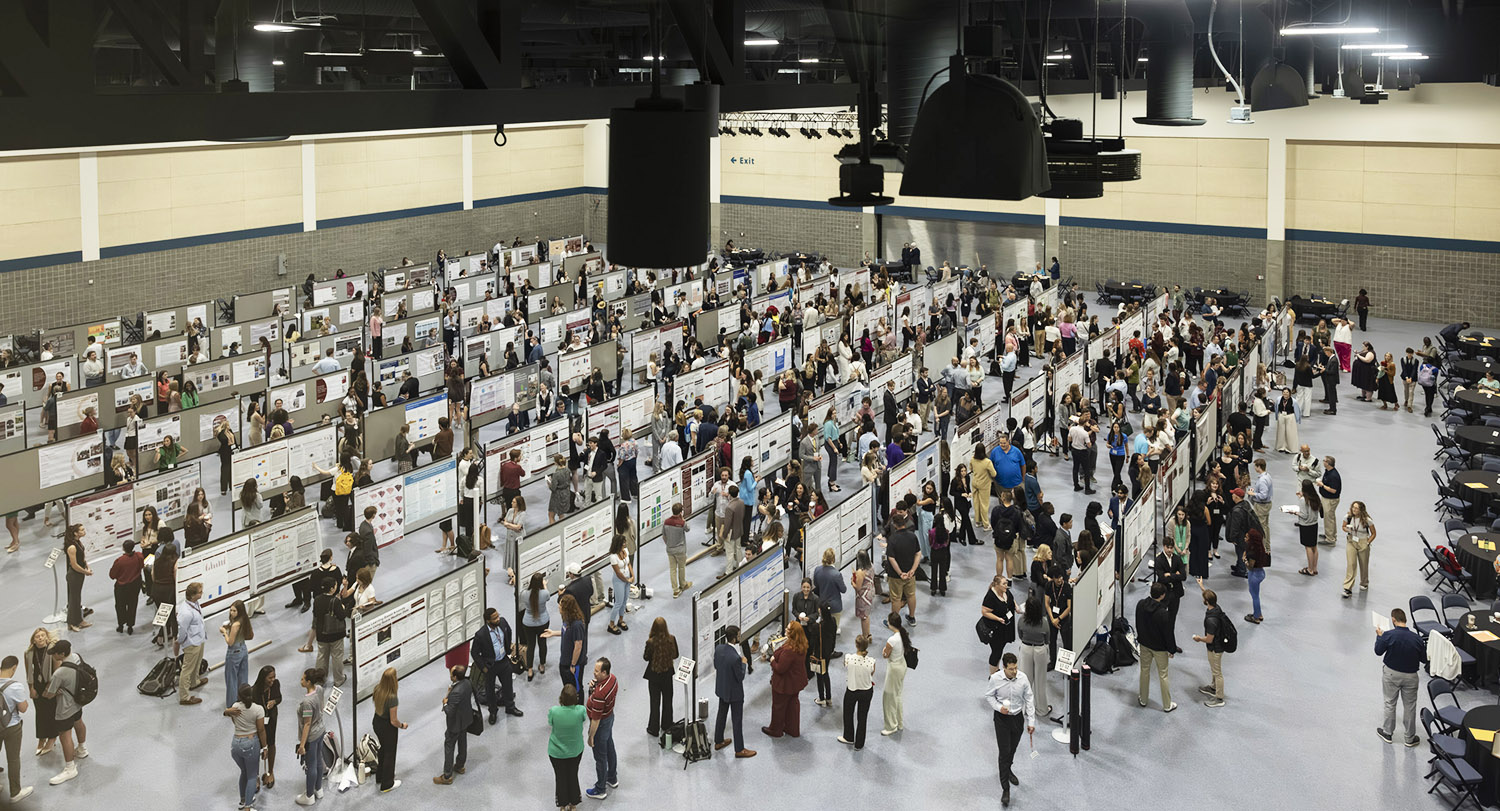
Each year, Discover USC presents more than 1,000 research projects covering hundreds of subject areas and students from all areas of the university, including undergraduate and graduate students, medical scholars and postdocs. Each of those students works with faculty mentors to explore topics that interest them, learn more about research skills and work on how to present their findings to an audience.
As this year’s Discover USC approaches on April 24, we reached out to a student who took part last year to learn more about what the experience was like.
Katherine Palmer is a senior from Waxhaw, North Carolina, and a psychology major in the McCausland College of Arts and Sciences.
How did you get involved in Discover USC last year?
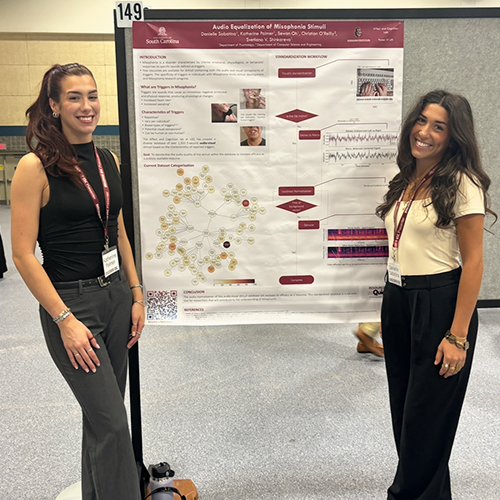
I became involved in Discover USC 2025 through my research lab in the psychology department. My mentors encouraged me to present a poster based on my first independent research project, which reflected over a year of work I conducted as a research assistant in the Affect and Cognition Lab. This was my second Discover USC presentation, so it felt natural to build on my previous experience, and it was the perfect opportunity to showcase my progress and completed efforts. It was a great way to share my work with the USC community.
What was the project you pursued?
My project last year, “Audio Equalization of Misophonia Stimuli,” built on my 2024 project titled “Audio-Visual Misophonia Trigger Database.” Both projects are a result of my lab’s broader research on misophonia, a condition characterized by intense emotional distress and physiological and behavioral reactions to specific auditory triggers.
Our lab studies the responses that participants experience when exposed to these triggers, using audio-visual clips created by our lab. Because research tools related to misophonia are limited, we developed a large dataset of over 1,300 audio-visual trigger stimuli. I worked on improving, organizing and standardizing this dataset to prepare the database to be publicly accessible and provide better materials for future researchers.
What did you learn about yourself through this process?
Through this process, I learned about my passion for contributing to work that can help others. Seeing our database become publicly available was especially meaningful because it meant my work could help support researchers studying misophonia. The sense of fulfillment from this experience made me realize how much I enjoy being in research and contributing to the field of psychology.
“Feeling nervous or overwhelmed is completely normal, but once you start interacting with others and experience the conference, it quickly becomes a rewarding experience, and you get to share your hard work with the community in a fun, interactive way.”
Additionally, these projects inspired my current community-based project aimed at improving misophonia awareness and increasing psychoeducation in our USC community. My research projects helped me discover my combined interests of helping others, supporting mental health and advancing research, and helped me clarify my long-term career goals in clinical psychology and academia.
What advice would you give to a student who is participating for the first time this year?
My advice to a student participating in Discover USC for the first time would be to embrace the experience and not let nerves hold you back. While it can seem intimidating, talking to other researchers and learning about the depth of research at USC is eye-opening and a wonderful experience. I would encourage anyone considering it to present their work or to just attend and learn about all the great opportunities here at USC.
Feeling nervous or overwhelmed is completely normal, but once you start interacting with others and experience the conference, it quickly becomes a rewarding experience, and you get to share your hard work with the community in a fun, interactive way.