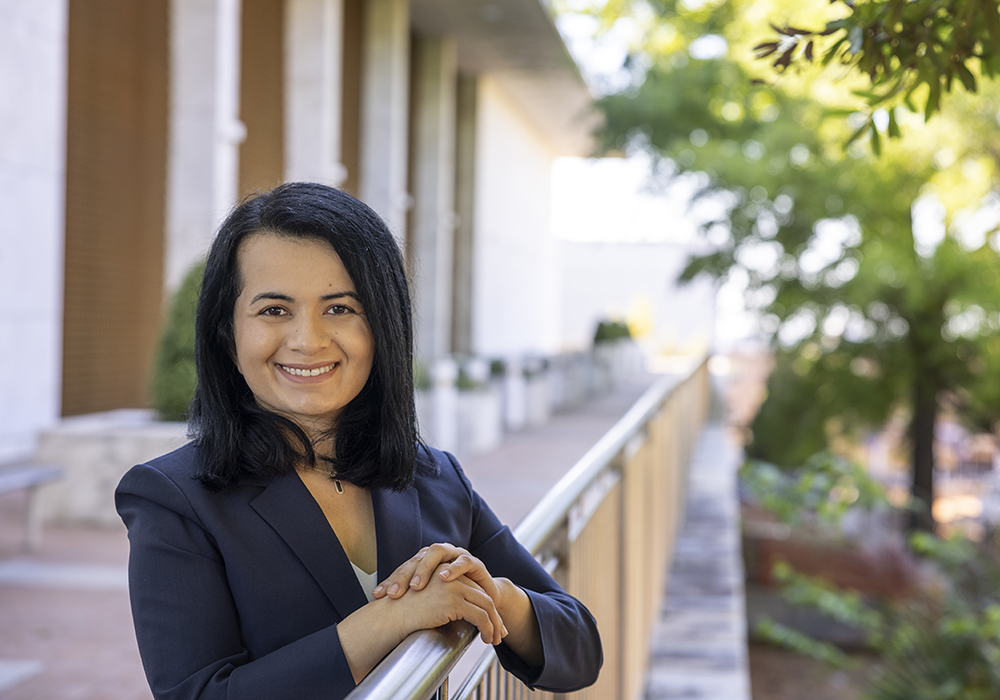
This spring, doctoral graduate Zo Sediqi will walk across the stage to receive her diploma from the University of South Carolina’s College of Education. As a woman born and raised in Afghanistan in the 1990s, the moment carries special significance for Sediqi beyond the degree itself.
Sediqi is one of only a handful of Afghan women anywhere in the world to earn a Ph.D. — a distinction that has taken on new weight since 2021, when the Taliban returned to power and imposed an education ban.
When she was a child, the Taliban took over the country and gained widespread control by 1996. They imposed an education ban for girls and women that lasted until 2001. Sediqi should have been just starting preschool then, but she wouldn’t get to attend her first day of school until age 9. In the meantime, her father arranged for his daughters to study at home.
“My dad was very much invested in girls’ education. He knew girls that get an education are less likely to be oppressed, so he hired private tutors for a while,” Sediqi says. “They would come to our home and teach us, and I also went to another teacher to learn math and English.”
When Sediqi walked to the tutor’s home, she carried her textbook hidden in a Quran cover — girls were still allowed to study this book. Growing up in a family where women, and even many men, had not received a formal education, Sediqi is thankful that her parents supported hers.
“I have a lot of peers I know back in Afghanistan that didn't have those opportunities — not by choice. They didn't have access to education,” she says. “The empowerment that I have is a lot different from what they have.”
A window of opportunity
After the ban lifted during the United States-led intervention in Afghanistan, Sediqi was able to resume her education in person. With the advantage of her years of tutoring, she tested out of a few grades and was able to graduate from secondary school early at 16 years old.
In college, Sediqi was one of the youngest students in her class. She excelled in her English major, though she didn’t know exactly what she wanted to do with her degree.
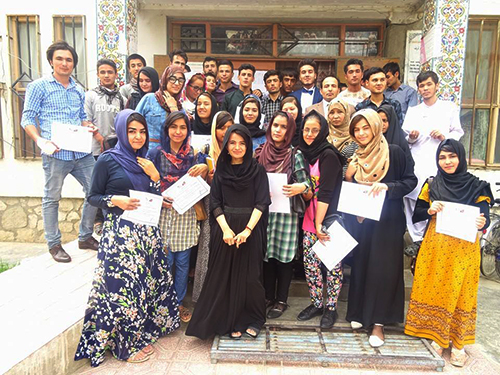
“Back then, I only knew the jobs I might get with that major. Being a translator for the United Nations was a big dream, but also just having a job — that was a dream,” she says.
She eventually decided to become an educator herself. After graduating, she returned to her university to teach English. At just 20 years old, she was the youngest faculty member ever at Balkh University.
Sediqi took her professional training seriously. She participated in many leadership development programs and traveled to India to study teaching methods and pedagogy. In 2015, she was selected for the Afghan Junior Faculty Development Program, a Fulbright visiting scholar program that took her to Purdue University for a semester.
She returned to the U.S. in 2017 as a Fulbright Fellow at Western Michigan University. After she finished her master’s degree in 2019, she and her husband moved to Columbia. She joined the staff at USC’s Career Center and now serves as associate director of employer relations. When she decided to start working toward her doctorate, she took advantage of USC’s tuition incentive for employees.
“I never thought that getting a Ph.D. would be possible, particularly if you talk about when I was in Afghanistan,” she says. “It was just a dream come true having that employee tuition benefit.”
Having successfully completed her program, Sediqi is now one of very few Afghan women to have earned a Ph.D. A couple of years ago, she made a search for other Afghan women in the U.S. with the degree and found only a small number.
“You can literally count them, so yes, it’s very rare,” she says. “But I'm glad to see some of the younger people from my Fulbright cohort — I have seen one or two other women — have started their journey.”
Sediqi dreams of leading in the higher education space, helping universities align with evolving and often competing economic and political demands. To answer some of the biggest questions about higher education leadership, she used her doctoral research to understand how university presidents lead under pressure from competing stakeholders.
“For presidents, it’s impossible to make a decision that makes everyone happy, and that deeply attracted my attention,” she says.
Sediqi interviewed eight presidents to find out what made them successful. Her work resulted in a university presidency leadership theory on how higher education presidents lead effectively.
“I'm hoping that it will help university presidents think about where they are currently, and how to position the university for the future.”
Giving back to Afghanistan
Throughout her time at USC, Sediqi has remained invested in her students in Afghanistan, especially after the education ban took effect in 2021. The new ban is even more restrictive.
“A lot of my students were impacted. The students I knew back home — their hopes and the desires they had, whether they were in college or high school, they just couldn't continue,” she says.
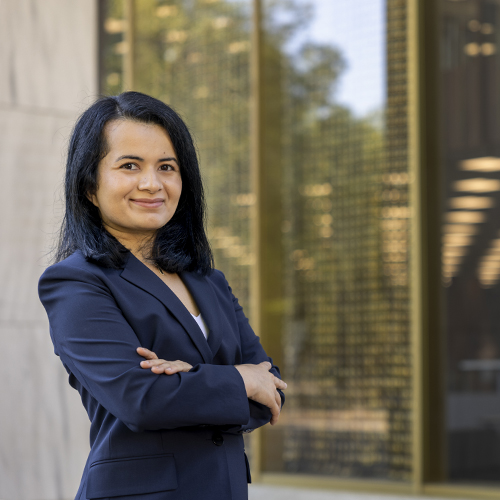
Inspired by her own experience, Sediqi applied for a grant from the College of Education to pursue an independent research project in partnership with Payal Shah, an associate professor of education with expertise in the region.
“There are a lot of narratives about the ban and how girls can't go to school, but there is still a small population of girls who are continuing their education online. Their voices need to be reflected because there is still some hope for this country,” she says.
The resulting article tells the story of one girl in Afghanistan, “Atena,” who completed her high school degree online. The paper examines Atena’s feelings about her situation and the ways she finds empowerment through her education.
“In essence, I say in the article that it is empowering to stand up to authority and resist in the ways that you can,” she says.
Sediqi has taken the lesson to heart through her own acts of resistance. She has helped Atena and other young women enroll in college online. She also views her scholarship as a small way she can positively contribute.
“I couldn't change any laws or policies in Afghanistan. The only thing I could do was use my skills to share the voices of populations in the world that nobody is listening to or paying attention to,” she says.
As she moves forward with her career in U.S. higher education, Sediqi carries with her a deep appreciation for education.
“A lot of people take it for granted,” she says. “For me, coming from that background where it was like, ‘no, you cannot get an education because you're a woman,’ it shows the voice that education gives to people.”