As the University of South Carolina marks 225 years since its charter, in 1801, the historic milestone is being recognized with stories, conversations and other tributes across campus. Naturally, Carolinian wanted in on the action. We also wanted to make sure we’re sharing stories you might not have heard.
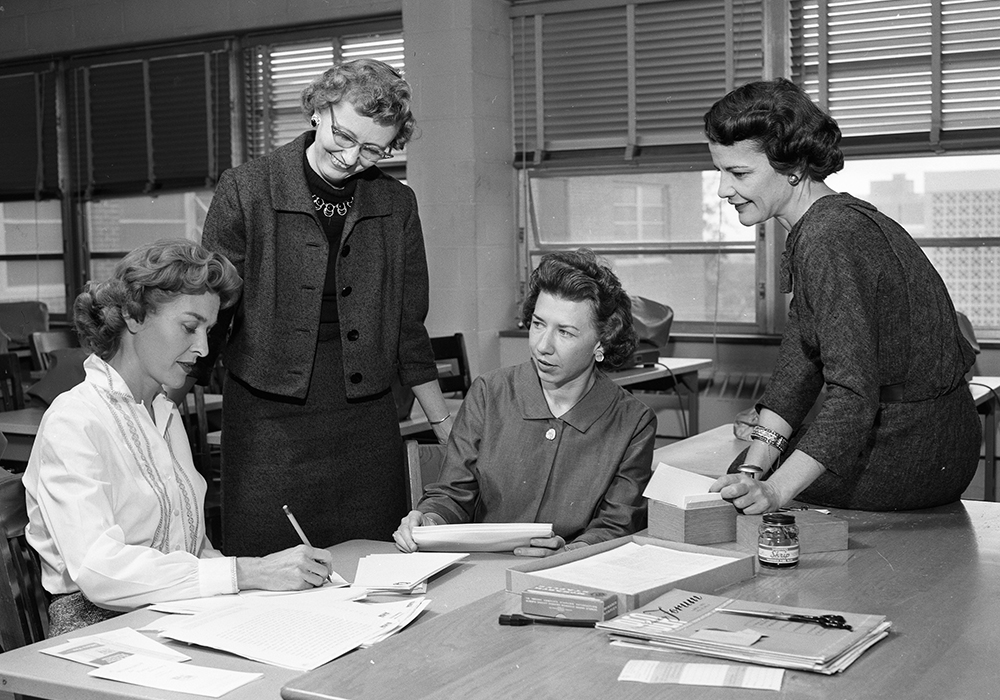
To that end, we decided to shine a light on a few remarkable women whose efforts changed the institution for the better. USC didn’t admit its first female students until 1895, nearly a century after the first male students arrived on campus, but the women who followed have helped shape the dynamic institution we know today.
The alumni and faculty recognized in these pages are hardly our only trailblazers. From renowned researchers to world-class athletes and artists to Fortune 500 CEOs, countless highly accomplished women have passed through the campus gates over the years — including many who have graced the pages of this magazine. We chose these seven because they may be less familiar to our readers but are wholly worthy of our appreciation.
The Dean
Today, USC’s student body is mostly female — 60 percent, to be exact. When Irene Dillard earned her master’s in 1921, that percentage was 20. But the disparity wasn’t strictly a South Carolina problem. When Dillard earned a Ph.D. in English from the University of North Carolina in 1924, she became one of just two women to have completed a doctorate at Chapel Hill.
But the tide was turning. Back home, USC was opening its first women’s dormitory and needed a dean of women. Dillard was hired as the university’s first female full professor and first female dean that same year.
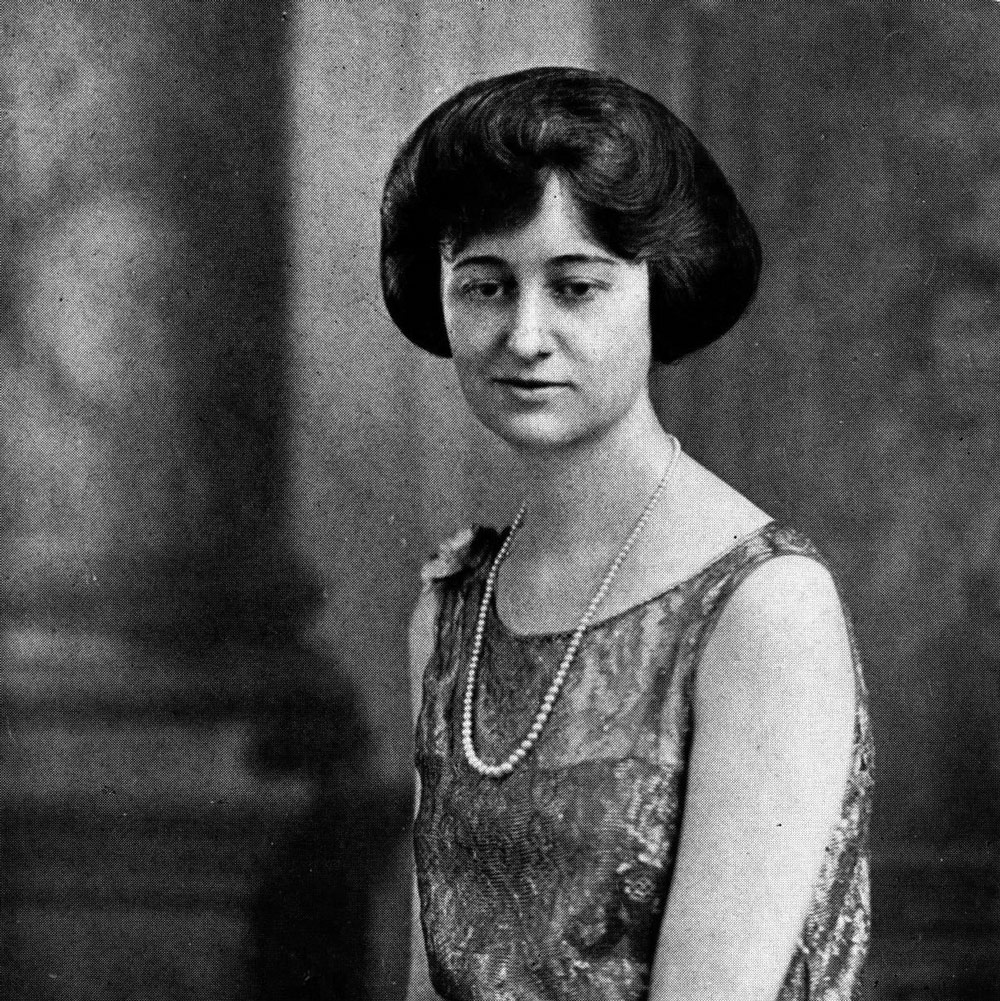
“They were looking for someone who could help integrate women into the university system as a whole and usher them through being full-time students on a university campus, because women had not done that before,” historian Jennifer Marler, ’25 Ph.D., told university podcaster Chris Horn for an upcoming episode of Remembering the Days.
The assignment was clear: advocate for more women’s housing to accommodate skyrocketing enrollment, advocate for more female representation in the faculty, and teach and mentor students.
Dillard had support from USC President William D. Melton, an ardent proponent of coeducation, but in 1931 The State newspaper ran a short announcement: Dillard was engaged to marry USC law professor Charles Elliott. What should have been a happy milestone ignited a controversy.
Standard practice, if not policy, for female teachers in the early 20th century was to step down once they married. In fact, after seeing Dillard’s engagement announcement, many prospective replacements wrote to USC’s new president, Leonard Baker, expressing interest in the job.
But Dillard had no plans to resign. Her choice to continue working was considered an embarrassment by some trustees — likely (though no one would come right out and say it) because she held a higher academic rank than her husband. There were calls for her resignation, but she refused. She was forced to resign in 1935.
“At no point was Charles Elliott’s position targeted or discussed,” said Marler, who wrote about the scandal for The South Carolina Historical Magazine in 2021. “If you go through the trustees’ minutes, he is repeatedly referred to as Professor Elliott, and once she gets married, she is referred to as Mrs. Irene Elliott, totally setting aside her work life.”
But Elliott’s USC story didn’t end with her forced resignation. In 1946, the former dean returned as an English instructor and was soon promoted to associate professor.
Her efforts to advocate for women’s equality didn’t end, either. Archived letters from Dillard Elliott to university administration show that she pushed for equitable salaries for herself and other female faculty members. She retired in 1964 and died in 1978.
The Educator
For university history buffs, Celia Dial Saxon’s story is familiar. Born a slave. Trained as a teacher at the South Carolina Normal School. Taught for decades in Columbia schools. A residence hall is now named in Saxon’s honor.
Less familiar is the story of Saxon’s contemporary, Matilda Pinckney.
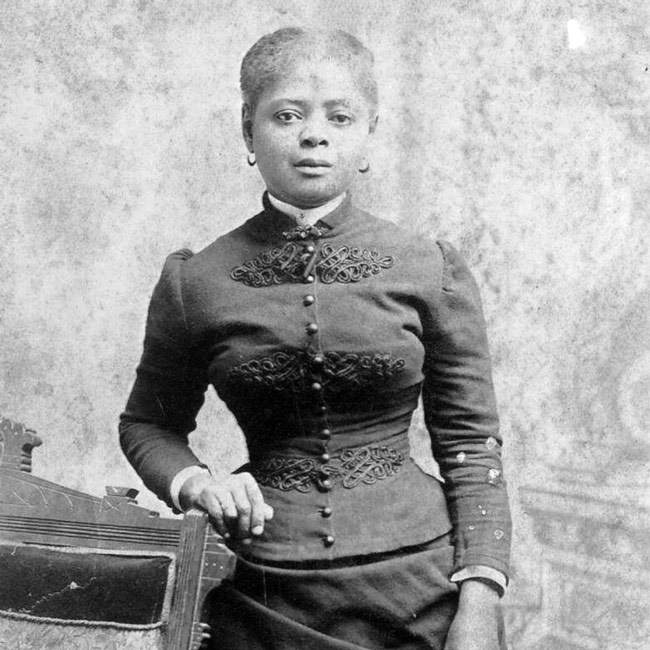
Pinckney was also born pre-emancipation and attended the Normal School, which operated out of Rutledge College during Reconstruction. What makes her story unique is that she attended classes within view of the home where she was once enslaved.
Pinckney’s parents were both enslaved by professors and lived on campus. Her father, Titus, was enslaved by Maximilien LaBorde. Her mother, Lucretia, was enslaved first by Francis Lieber and later by Robert Woodward Barnwell. Pinckney was likely born behind what is now Lieber College on the Horseshoe around 1860.
Al Thompson Jr. is Pinckney’s great-great-nephew. Thompson heard stories about Pinckney from his grandmother but didn’t know about his family’s role in USC’s first integration, which was short-lived. The Normal School was closed by the state in 1877, and the university reopened as whites-only in 1880. Thompson learned all of this during a trip to the archives in 1984.
“That’s when I saw they lived on the University of South Carolina campus,” he says.
“I always thought they lived on Blanding Street. That’s when my father said, ‘Oh,
did you know that Blacks attended
the university?’ And I was shocked.”
Though the Normal School closed before Pinckney graduated, she ran a successful nursery school out of her Blanding Street home. And many in her family carried on her legacy.
Albert Thompson Sr., her great-nephew, filed the suit that would earn equal pay for Richland One’s Black teachers — a move that cost him his job. He eventually earned his Ph.D. So did Thompson Jr., who taught chemistry at Spelman College. Both of his siblings became teachers, too.
When he heard about a 2021 episode of USC’s Remembering the Days podcast on Matilda Pinckney, the younger Albert Thompson connected with USC historians to learn more — and to share.
His family had old photos of the Pinckneys, including one of Matilda. Before that, historians weren’t sure they’d ever have a face to go with her name. “I was good and grown when my father told me the story,” Thompson says. “I tell my daughters now.”
The Director
A program is only as good as the graduates it produces. At USC’s College of Nursing and the Arnold School of Public Health — two gold-standard programs at the University of South Carolina — you can find a perfect example: Lillian “Lill” Mood.
You might also notice that her academic career is distinguished by a tendency to be a first.
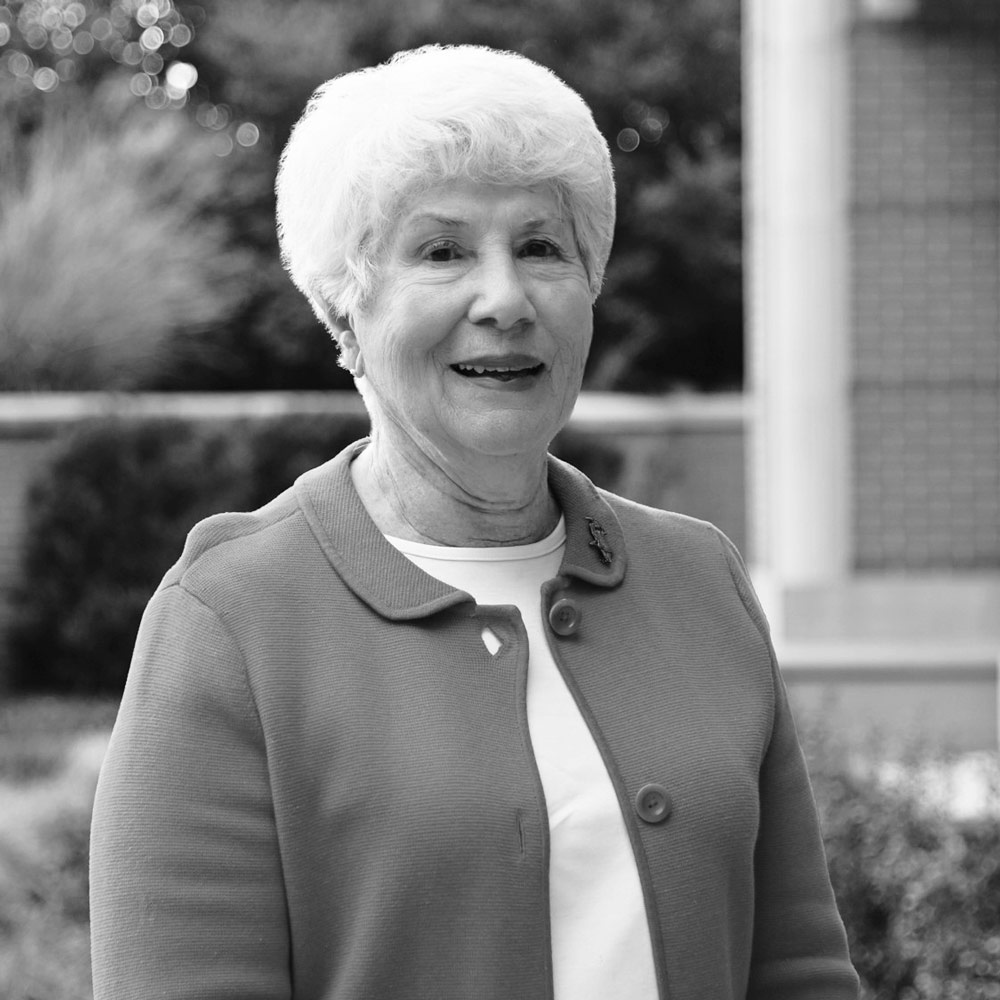
A native of Summerton, South Carolina, Mood arrived on campus in 1958, one of the first 37 students to enroll in USC’s brand-new, four-year Bachelor of Science in Nursing program. She graduated in 1962, stayed another year as a clinical instructor in obstetrics and pediatrics, then embarked on a career in community hospitals.
But remember what we said about Mood’s tendency to be a first. When the vice president of South Carolina’s State Board of Health recruited her to organize and operate home health services programs in three counties, the opportunity to affect overall public health policy appealed to her — but it also meant going back to school.
“I asked the VP what it would it take to get a seat at the table, and he said I would need a graduate degree in order to join the conversation,” Mood told interviewer Erin Bluvas in 2025.
Enter the Arnold School of Public Health, or as it was known when it opened its doors in 1975, the School of Public Health. That summer, 34 students began their studies with a five-week session. Once again, Mood was one of them.
The interdisciplinary program, which drew on faculty expertise in business and nursing as well as public health, allowed Mood and her classmates to shape collaborations between the university and public agencies that continue to this day.
“We were an energized and committed group of people,” said Mood. “The new and existing relationships we developed in the education setting carried over to work and planted the seed of how to take these collaborations beyond the department to national and interagency efforts.”
Mood, who kept her job at the State Board of Health throughout her studies, would continue to shape policy as state director of public health nursing, assistant commissioner for the S.C. Department of Health and Environmental Control and director of risk communication and community liaison.
“It wasn’t like I had this planned out and did some systematic evaluation,” she said. “My life is full of being in the right place at the right time.”
The Advocate
In 1972, when Edna Smith Primus became the first Black woman to graduate from USC’s law school, she paved the way for other Black women students. What Primus did after earning her law degree paved the way for other attorneys to help people in need.
Primus knew the challenges of poverty. A native of Yemassee, a small town in South Carolina’s Lowcountry, she grew up in a family with seven children. Her mother worked as a sharecropper. Her father died when she was young.
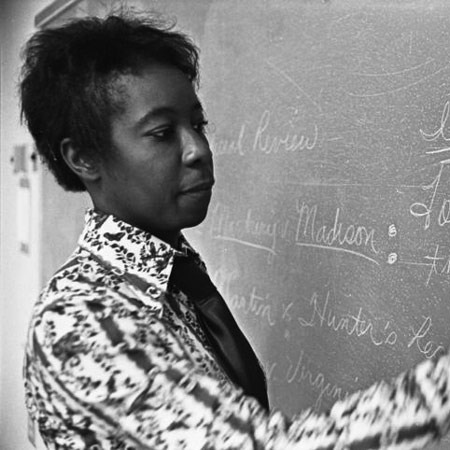
But earning a spot at a prestigious private school put her on the college trajectory. She graduated from USC with a bachelor’s in political science in 1966 and pursued a career in law.
“Law school was a frightening experience at first,” she told The State newspaper in March 1973. “I didn’t know what to expect. I kept the fact that I was in school a secret from my family, because if I didn’t make it, I didn’t want them to know.”
Primus did make it, though, becoming not only the first Black woman to graduate from USC’s law school but also the first woman to pass the new South Carolina State Bar exam. And her future came into focus.
Just three months later, in her capacity as vice president of the American Civil Liberties Union’s state affiliate, Primus offered free legal services to a group of female welfare recipients who had been coerced into undergoing sterilization procedures.
“I don’t want to charge people exorbitant fees. I can get along on a set salary,” the new lawyer said in that same interview with The State. “I have no big aspirations — I don’t care about being a judge or moving up the ladder of success. I want to help Black people know what the law is; basically, I just want to help people.”
After a doctor complained to the state bar association, the South Carolina Supreme Court’s disciplinary board reprimanded Primus on the grounds she solicited potential clients for personal gain.
The reprimand, Primus would recall years later, was “demoralizing” and damaged her reputation in the legal community. But in 1978, the U.S. Supreme Court heard her appeal and ruled in her favor. That landmark case, In re Primus, held that lawyers are protected by the First Amendment when soliciting prospective clients on behalf of a nonprofit organization. Law students across the country now study it in their professional responsibility courses — including at USC.
Primus continued her public service efforts in the years after the ruling. From 1981 until her retirement in 2010, she worked as managing attorney for Palmetto Legal Services, a nonprofit that helps clients fight evictions, access government benefits and navigate other legal issues. She died in 2019.
The Mentor
It’s not unusual for a college professor to be honored with a named scholarship. In the case of university legend Ada B. Thomas, the scholarship that bears her name is the tip of the iceberg.
In addition to earning numerous honors, including top awards from the university and the state, “Mrs. T,” as she was affectionately known, was so beloved that students dedicated the 1969 yearbook to her. When she retired, grateful alumni even raised money to buy her a brand-new car.
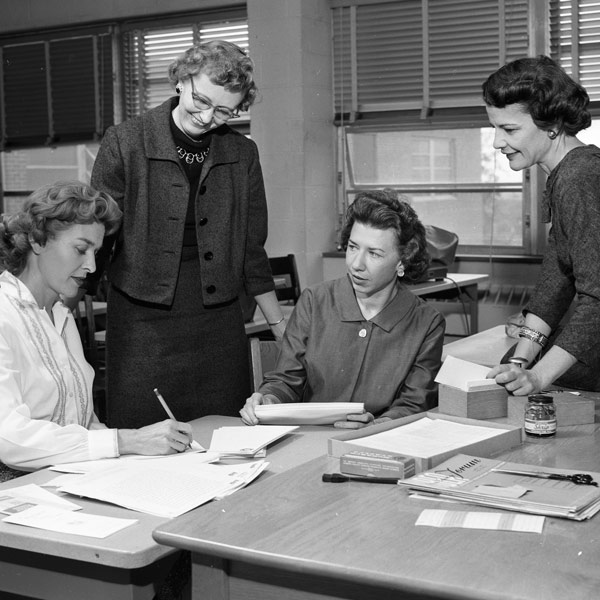
So what was it that endeared Thomas to students? First, some background: She entered USC as a student, enrolling in the business school’s two-year secretarial science program in 1937. That was eventually followed by a bachelor’s in business administration and a master’s in educational guidance. She was hired in 1957 as a secretarial science instructor. The job was temporary, but it kicked off a long career. Over the next 32 years, she worked her way up at the business school, serving as coordinator of counseling, assistant dean of the undergraduate division and management professor.
Her calling, though, was advising.
Dan Bundy, ’84, transferred into the business school from USC Lancaster. He knew he needed help charting his path to graduation and heard about Thomas. “She was the only advisor I ever talked to, but I was also told she’s the one you’ve got to have if you want it done,” he says. “She’s the only one that has the keys.”
Thomas put time and effort into sorting out Bundy’s schedule, putting him on track for a successful career in commercial banking. Their interactions were short, and Bundy was one of many advisees, but he never forgot how invested she was in his future.
“I felt like she knew who I was. I remember walking past her later in my college years and reaching out to her as we passed, more to kind of say, ‘Hey, look, I made it. Your efforts were worthwhile.’”
Those efforts weren’t limited to USC students. Jim Davis, ’85, ’94 law, started undergrad at Wofford but planned to transfer. He met with “Mrs. T” more than once.
“She told me that Wofford really did not offer a prerequisite I needed, and she checked around and found the class I needed at USC Spartanburg,” Davis recalls. “When I transferred to Carolina, every credit hour I had taken transferred as well.”
Once he arrived, she checked in on Davis regularly. When he later applied to USC’s law school, she quietly kept an eye on admissions and called him with the news of his acceptance before the letter hit the mail.
“I am forever grateful for her care and concern and how she went so far above and beyond to help students like me,” Davis says.
Thomas retired from the business school at the end of 1989. It didn’t last long. As soon as she was eligible to return part time, she joined the College of Liberal Arts, where she advised students for another decade.
She died in 2003. Today, her legacy lives on through the scholarship and advising award named in her honor and in the thousands of students she guided during her time at USC.
The President
Students at USC have a reputation for cutting their own path. For alumna Jotaka Eaddy, ’01, who grew up on a dirt road and now runs a powerful social impact consulting firm in the nation’s capital, that path started in Student Government.
Eaddy’s dirt road was in Johnsonville, South Carolina, a town of about 1,400. She had served as student body president at Johnsonville High School, but when she got to campus in 1998, she realized how many opportunities lay before her at the state’s flagship public university.
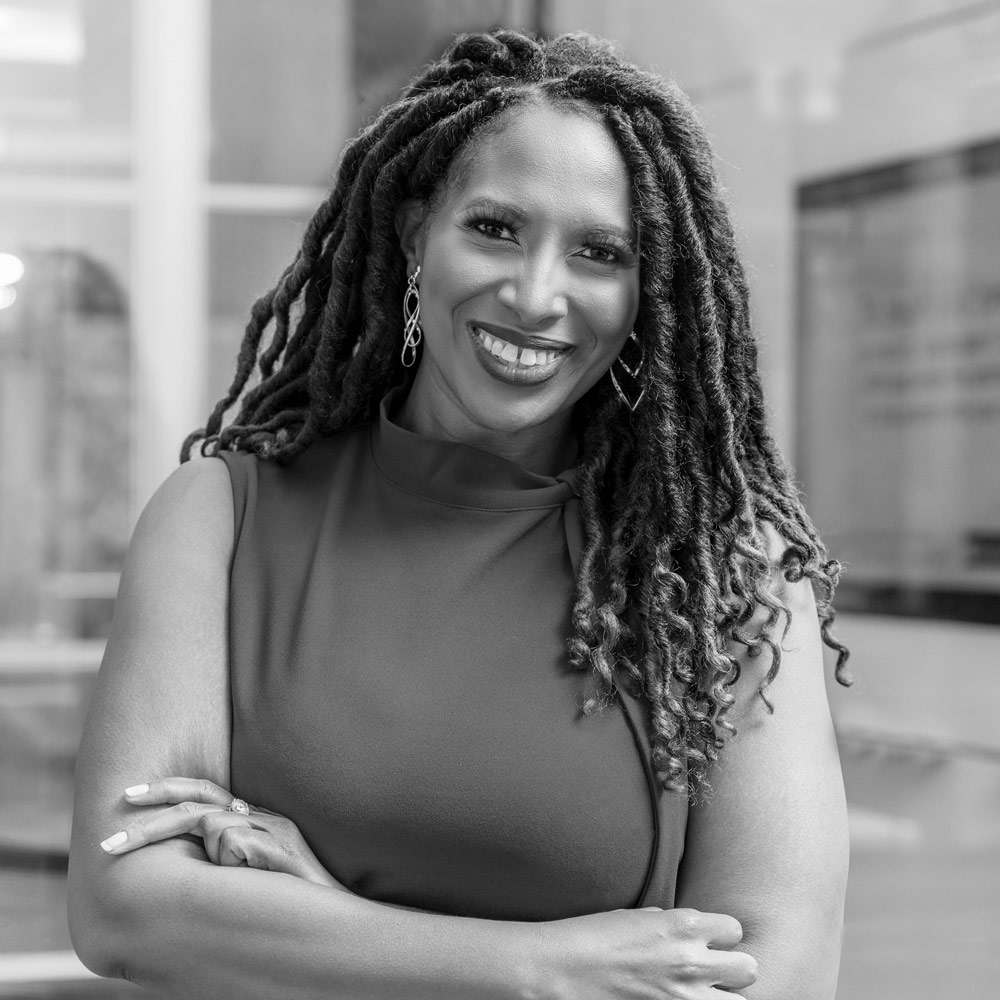
She quickly signed up for the Association of African American Students, the Chosen Gospel Choir and other campus organizations and activities. It was in Student Government, though, that she found her niche.
Eaddy was involved in student activism from the time she arrived on campus, protesting budget cuts to Black and other minority student organizations. And then, as a student senator, she helped draft a resolution encouraging the university to take a stand against the Confederate flag at the State House, which the Board of Trustees ultimately did.
All of that played into her decision to run for student government president in 2001. By that point, more than one Black student had held the office. The first, Harry Walker, broke that barrier in 1971. There had also been five women elected president, dating back to Rita McKinney in 1974. But there had never been a Black woman president in USC’s 200-year history.
“I knew that when I decided to run, it wouldn’t be easy,” Eaddy told Chris Horn of USC’s Remembering the Days podcast in 2022. “I also knew that if I ran, it would be a historic run in that I was potentially going to break what was, at the time, a very important barrier that needed to be broken to become the first Black woman student body president. I didn’t want to be the only, but I did want it to help open the door so that others can follow.”
In addition to her positions on racial equity, Eaddy’s campaign promoted the Contract for Carolina, a platform that pushed practical changes like extending the drop-add date, providing a nighttime shuttle, creating a student section for basketball games and implementing a new course for students to earn credit for community service.
Ultimately, she won the race in a runoff against another female candidate, Katie Taylor.
After graduating with a degree in political science, Eaddy put her USC experience to work in civil rights advocacy and helped found #WinWithBlackWomen, a collective of intergenerational Black women leaders around the country. She is also the founder and CEO of Full Circle Strategies, a consulting firm that specializes in strategy development, management consulting, public affairs and community engagement.
“I’m a firm believer that talent is distributed equally, but opportunity is not,” she said. “So, when I think back on the experience of being student body president at the University of South Carolina, I learned so much, and not just during my time as student body president, but just as a student. I learned, really, how to be the professional that I am today.”
The Professor
A Sacramento native with a Ph.D. in African American history, Grace Jordan McFadden was hired in the summer of 1971 to help update the state’s K-12 social studies curriculum. She had her work cut out for her. South Carolina public schools were only recently integrated; though the process began in 1963, it was met with resistance until federal courts mandated statewide compliance in 1970.
In a 1981 interview with The (Myrtle Beach) Sun News, McFadden recounted discovering that the Black experience was “gravely neglected, omitted or distorted” in school curricula. “I saw a void in the history of Blacks in South Carolina,” she said.
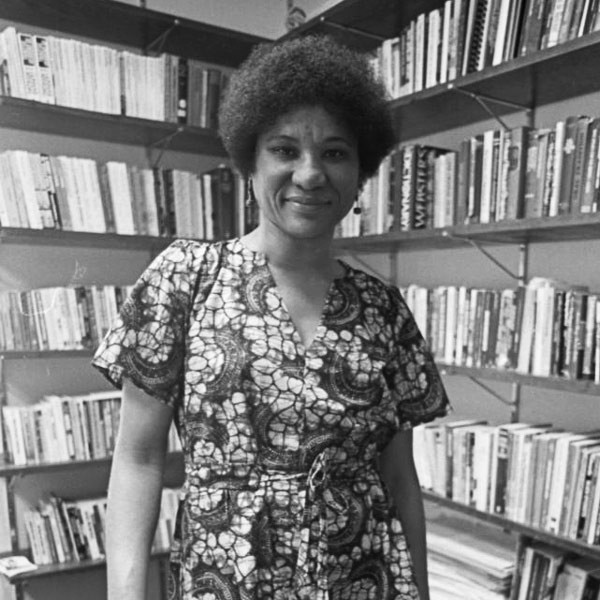
USC gave her a conduit to fill that void. When McFadden joined the faculty that same year, the university was working to build its newly approved African American Studies Program, under the direction of Willie Harriford, USC’s first Black administrator. In A History of the University of South Carolina, historian Henry H. Lesesne, ’98 Ph.D., noted that McFadden’s history courses, taught as part of the program, were popular among both Black and white students.
And McFadden herself left a mark: She was the first Black female professor in the then-College of Humanities and Social Sciences and the first to receive tenure.
Then there was her yearslong effort to compile a cross section of the state’s Black stories through interviews with civil rights figures, educators and others whose recollections painted a more comprehensive picture of the past. That 25-part video series, The Quest for Human Rights: Oral History of Black South Carolinians, aired on South Carolina ETV and served as a valuable classroom resource.
Though she died in 2004, McFadden’s impact lives on through the Grace Jordan McFadden Award. This scholarship is given annually to two students majoring or minoring in African American studies.
And since 1997, the Grace Jordan McFadden Professors Program has provided financial support and mentorship to underrepresented graduate students pursuing careers in academia. The program is directed by her widower, John McFadden, who blazed trails of his own at USC as the first African American to receive full professor status since Reconstruction and the first to be named an endowed chair.
“This program is special to me because of the emotions that it generates,” John McFadden told a communicator from USC’s Office of the Provost in 2021, “because of the history that it’s put into place and the legacy that I’m able to help perpetuate through it.”
Erin Bluvas, Evan Faulkenberry and Chris Horn contributed to this feature.