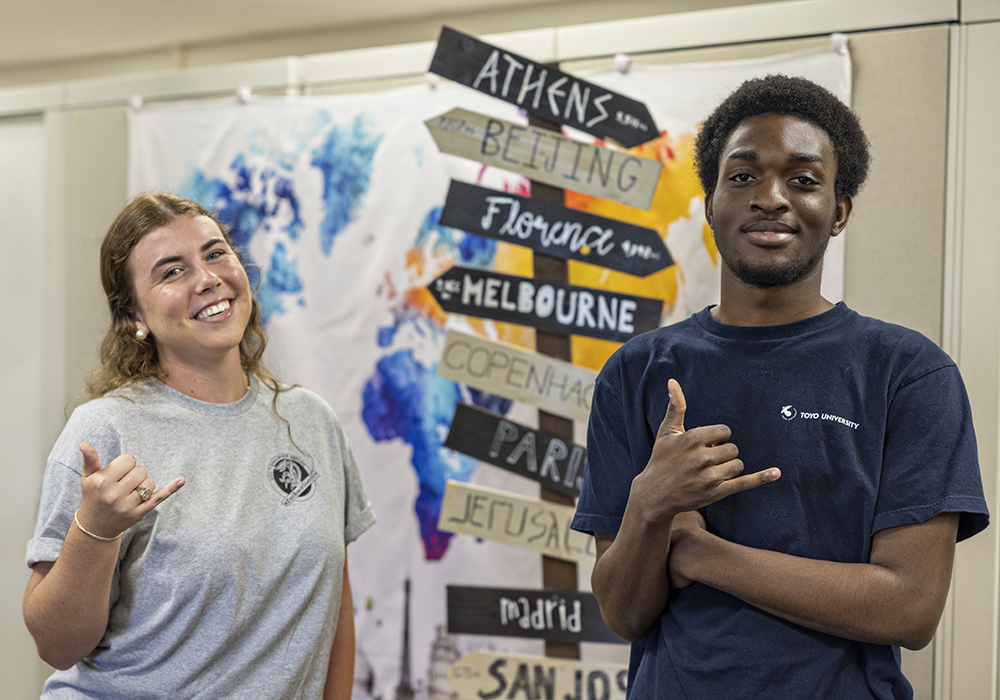
Over the past school year, USC’s Education Abroad Office coordinated more than 2,800 travel experiences for undergraduate and graduate students, from short spring break trips and Maymesters led by faculty to full-term exchange programs abroad.
Last spring, senior Kelcie Pollinger studied in Morocco to meet degree requirements for the Moore School’s international business program. Pollinger has also participated in a five-week Spanish-language immersion program in Peru through one of the affiliate partner programs available to students.
Isaiah Smalls, a media arts senior in the McCausland College, also took advantage of a partner exchange program to study abroad in Japan. Smalls spent a semester in Tokyo, where he focused on honing his Japanese language skills so that he will be able live and work in the country after graduation.
In addition to learning about cultures and languages, Pollinger and Smalls gained valuable experiences and skills they will use in their future careers. Both say education abroad helped them grow in ways they never would have expected.
As peer mentors for the Education Abroad Office, Pollinger and Smalls regularly meet with students to answer their questions. They also draw on their experiences to lead interactive sessions for U101 courses for freshmen.
Here, they share some of their key insights — and why studying abroad is a can’t-miss opportunity.
Language learning is one reason to study abroad
Smalls: It was a huge help being immersed in the language because I felt like there was only a certain level I could reach by just studying in my room by myself. I needed that immersion experience. I took four Japanese classes, and all the professors would teach in Japanese. They wouldn’t speak English to you at all!
Pollinger: My trip to Peru was my first time actually using the Spanish I’ve learned. I never realized how differently Spanish is taught in America versus learning it in South America or even in Spain. When I was in Peru, everything was aimed at furthering your language skills, so we were basically not allowed to speak English most of the time. At our homestay, we had to speak Spanish with our “host abuela,” who did not speak any English.
There are many ways to grow academically while studying abroad
Pollinger: When I was studying in Morocco, most of my classes had to do with my business and marketing majors. I took a strategy class, where I learned about different markets, like food distribution, and the logistical side of things. Now, I think I want to go into something like product management for my career. A lot of my professors were very well connected. They had worked at companies like Disney and helped me meet new contacts in the business world.
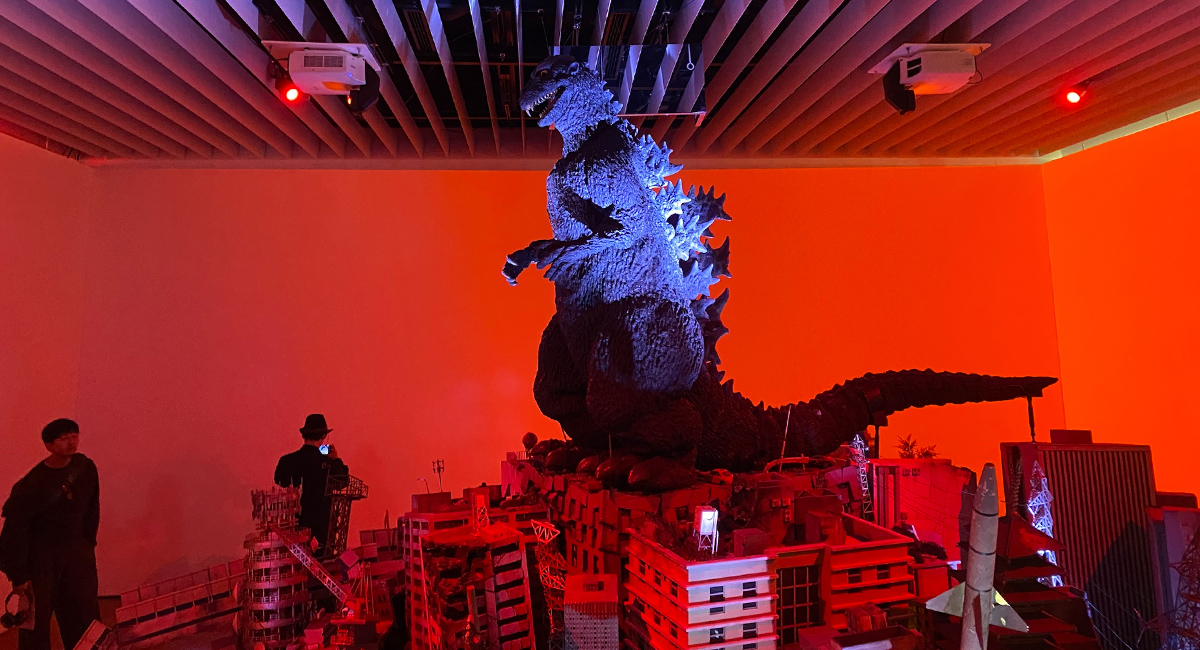
“If you go to Roppongi, there's a big tower with a lot of exhibtions,” Small says. “I saw a Godzilla exhibition, and there was one featuring Osamu Tezuka — they call him the God of Manga.”
Smalls: I didn’t specifically take art classes when I lived in Japan, but I did continue to work on my art. We could visit a local art museum on a student discount, and I really enjoyed that. I took a class on landscape design and one on cultural exchange, which was taught mostly in Japanese. Before I went, an advisor sat down with me for an hour to plan my classes and make sure I would be on track for my degree.
Traveling abroad can be challenging, but also full of adventure
Smalls: I had never been out of the country before studying abroad in Japan. At the same time, I moved to Columbia from Aiken to go to USC, so I had already sort of gone through a similar adjustment to living in a new place. It didn’t take too long to adjust. I went to shops nearby, like the bookstore, pretty often. I also liked to rent a bike and go for long rides along the Arakawa River.
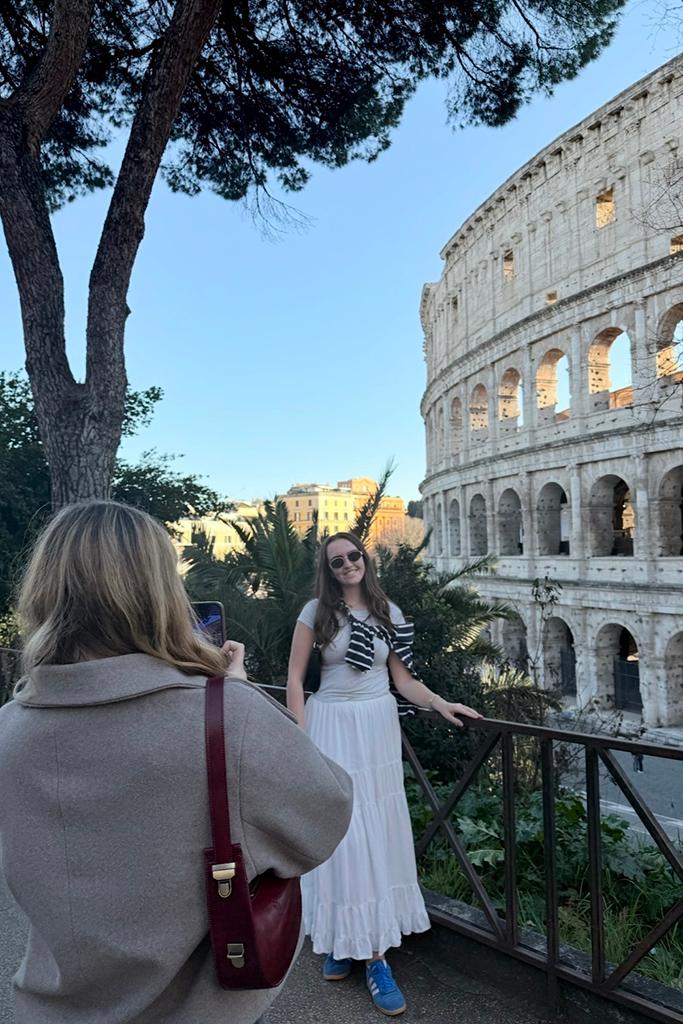
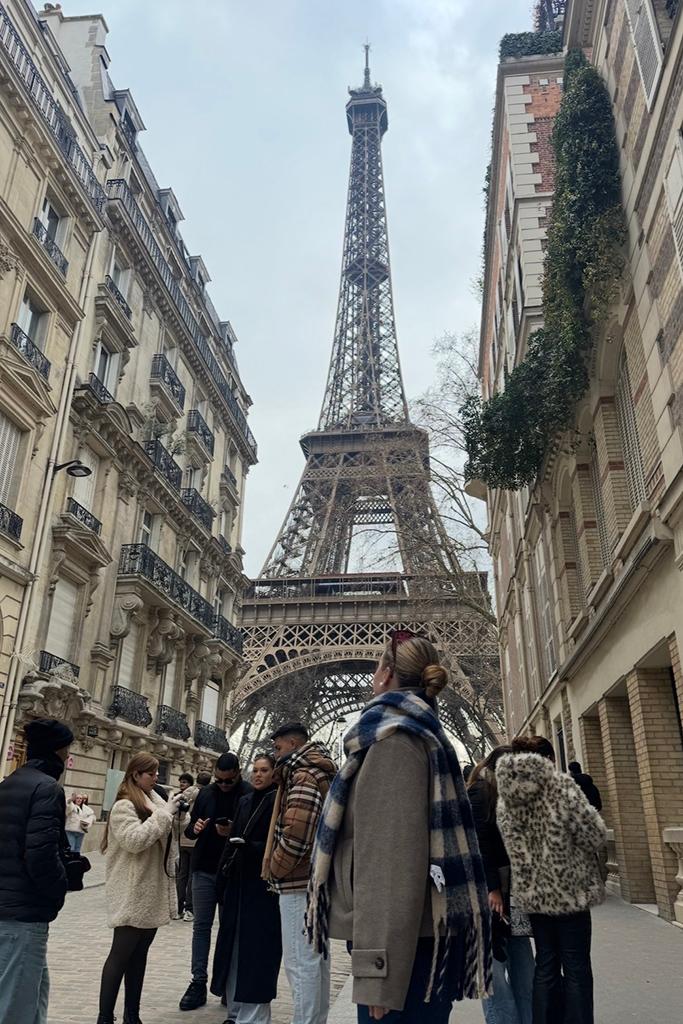
Pollinger: I chose Peru and then Morocco because I wanted to be able to go to as many places as possible. It’s kind of crazy to be able to say I went to the Amazon rainforest and all these places in South America. When I was in Morocco, it was just a matter of figuring out how to get to the airport, so I did a lot of traveling in Europe. I also went to the Sahara Desert twice, which was awesome.

Living abroad isn’t as expensive as you might think — if you plan well
Pollinger: Living in Morocco definitely helped me learn how to budget, which I had not really done before. I had to cover my own apartment and travel, so I learned to ask myself, “Do I need a coffee every day before school? Or should I save that money so I can go to London?” I’m definitely more aware of my spending and finances now. I never took a rideshare when I was living abroad. It could be an hour walk, and I was going to walk it. There are a lot of ways to budget, so don’t be afraid about the money aspect.
Smalls: I used my financial aid to study abroad. There’s a form that you fill out, and the financial aid that you get here in the U.S. will transfer over to your education abroad trip — for me, that included scholarships and everything. Once I was able to get all of that worked out, it came down to a price I could afford.
Studying abroad helps you become more adaptable to change
Smalls: Study abroad will force you to grow. Before Japan, I didn’t really like having to connect with new people. But when I got there, I told myself, “It’s just going to be you. Your mom, your brothers, your family, they’re not here — and they’ll all be asleep by time you get up.” So I had to go out there and try to make friends and do things with people. After Japan, I gained a lot of confidence to try new things. I realized that change is going to happen regardless of where you are in the world, so I say just embrace change.
Pollinger: I was an extremely type A person before studying abroad. I always had a plan and knew exactly what was next. A lot of the experience for me was about learning to laugh at myself — learning to be OK with not knowing what was next and going with the flow. I’m extremely type B now. I’m open to going wherever the opportunities lead me.