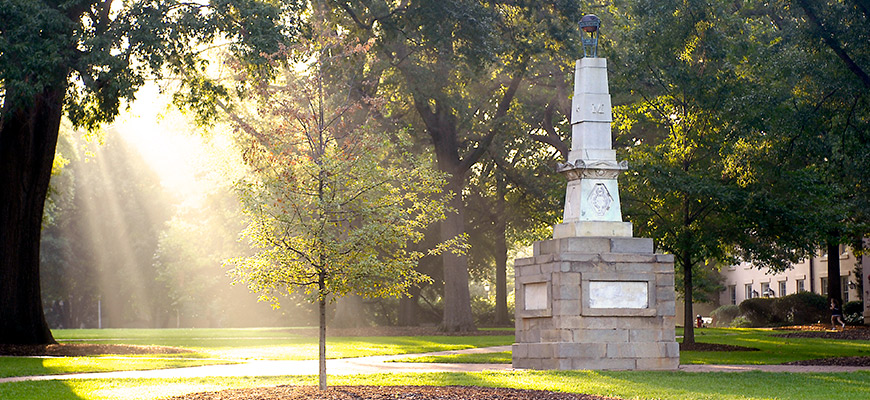
Transfer students find their way to the University of South Carolina in all sorts of ways. Some have started at another USC campus or a different college or technical school. Some have been serving in the military, while others are returning from breaks in their educational journey.
Regardless of how they get here, their numbers are steadily growing. Approximately 1,680 transfer students started classes this fall on the Columbia campus, an increase of 28 percent since the fall 2022 cohort.
Once they arrive, they succeed and graduate at a similar rate as the overall student population, suggesting they are acclimating well to campus and their academic goals.
“Given that these students have prior lived college experience, they bring to USC a variety of life experiences that add a great deal to the USC campus,” says Amber Fallucca, director of the Carolina Experience program. “The combination of these attributes helps to contribute to the overall Gamecock experience in meaningful ways as they engage in student organizations and their academic major courses supporting their overall student success.”
In celebration of National Transfer Student Week Oct. 19-23, we caught up with three transfer students to talk about their experiences as Gamecocks.
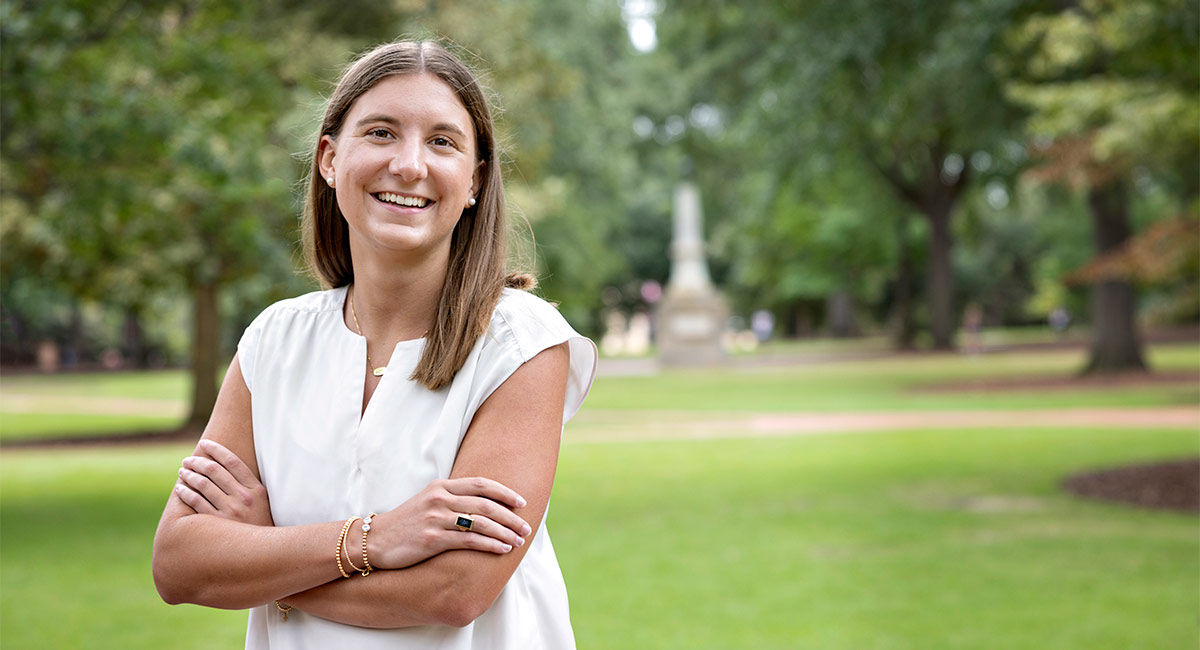
Harper Rice
Senior, public health
Harper Rice grew up a die-hard Clemson fan. There was no question for her family — or for her — where she would attend college.
But after graduating from high school in Allendale, South Carolina, and heading to Clemson for her freshman year, something didn’t feel right. She worried she wasn’t getting the college experience and professional development opportunities she hoped to find. And when she visited friends who attended USC, she started thinking about her next step. She even put together a PowerPoint presentation of pros and cons of each school as she worked through her thought process.
“I kind of soft launched the idea of transferring to my family,” Rice says. “I came home one weekend and I was like, ‘Guys, there’s something I need to tell y’all.’ I presented the slideshow to them and they were like, ‘Obviously, we want you to be happy; we’re going to support you in whatever you want to do.’ They were just initially very, very, very surprised, which I understand. I was surprised myself.”
But by the spring of her freshman year, she applied and was accepted as a transfer student. Now a senior public health major at USC, she says there is no question it was the right decision.
“I've loved every second of it, quite honestly,” she says. “I got involved fairly early when I got here. It was the best thing I could have possibly done.”
She rushed and joined Kappa Delta sorority as a sophomore. She enjoyed and did well in her classes. She is a University 101 peer leader. And she serves in student government as secretary of alumni relations.
Perhaps the activity where she’s had the biggest impact is Homecoming. Her roommate during her first year at USC was an upperclassman involved in Homecoming planning, and she suggested Rice follow her around during the week of activities.
“The rest from there is history. I ended up being Homecoming president my sophomore to junior year. As part of being president, I was a student life ambassador, which is helping with orientation and all that good stuff.”
She also played a key role in the restructuring and rebranding of the Homecoming Commission, which was relaunched with a broader mission as the Carolina Traditions Council. The student-run programming council has positioned itself as the “keepers of tradition,” and expanded its reach to celebrate the moments, rivalries and rituals that connect students to USC.
“We have professional staff members, but the main idea was to give students a say and let students help plan events. Not that students always know best, but students have a unique perspective and they kind of know what their peers are looking for,” she says. “I’m really excited about it because it’ll give everyone a way to celebrate Homecoming in their own way — and it’ll make everyone feel included and seen and valued.”
Rice will graduate in May with plans to attend graduate school, although she’s still weighing her options on the path she will pursue.
Her advice for new transfers? “Say yes to all the opportunities that present themselves and be open to exploring all your options. If I had told my roommate, ‘No, I think I’ll just stay home. I don’t really want to go to a Homecoming event,’ then things would have been so drastically different. Take advantage of all the opportunities that present themselves, because you never know what that might lead to.”
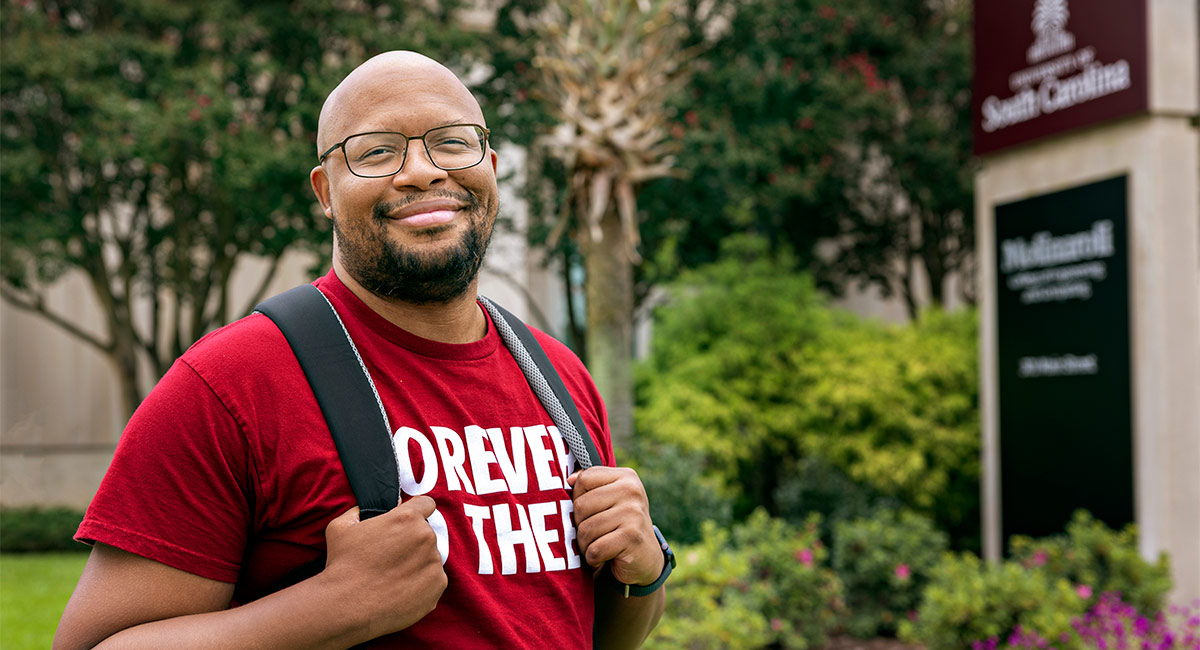
Kevin-Michael Harrell
U.S. Army veteran, IT major
Kevin-Michael Harrell took a roundabout route to a USC classroom.
Born in Marion, South Carolina, in 1993, he was raised in Dillon and moved to Blythewood where he graduated from high school in 2011. He worked retail jobs for several years, until he and his best friend walked past the Army Recruiting Station at Sandhills in 2017. They saw a sign advertising a $20,000 signing bonus along with money for college.
“So we walked in. But we were also like, ‘OK, we’re not actually going to do it. We’re just going to hear them out,’ That’s what we said to each other,” Harrell says. “That was April. I was shipping off to basic training in June. My best friend shipped off in August.”
Harrell headed to Army basic training at Fort Jackson before postings at Fort Gordon, Georgia, and Fort Riley, Kansas. While he was stationed at Fort Riley, he deployed to South Korea. He returned to Fort Riley and then received orders that stationed him back in South Korea.
In 2025, after nine years, he decided to leave the Army as a staff sergeant and headed home. He knew he wanted to go to college; he had taken online courses while he was an active duty service member at the University of Maryland global campus.
“I had done my research. I had seen an advertisement that said USC was one of the top veteran-friendly colleges in the country,” Harrell says. “That honestly was the biggest factor for me because I wanted to hopefully find a college that supported me as a veteran and offered resources to me that could help me ease my transition.”
He applied to Carolina as a transfer student in February 2026 and was accepted in March. Now 33, he started classes as an information technology major in August.
Now in his first semester, Harrell says his classes are going well — but he still is adjusting to breaking away from the military routine.
“I’m not used to having autonomy over my day,” he says. “Usually, I have someone over me telling me, ‘Hey, this is what we’ve got to get done and I need you to do it.’ And I’m like, ‘Roger that, sergeant.’ So it’s nice, but sometimes I just don’t know what to do with myself, which is why I find myself joining all these clubs and all these activities. But I’m trying to learn how to relax now that I don't have anybody breathing down my neck.”
He’s jumped into campus life, joining the Association of Transfer Students, Minorities in Computing, STEMVETS and the Cybersecurity Club. He’s involved in the First-Generation Center, and has spent some time networking and meeting other veterans at USC’s Veterans and Military Service Center.
He’s also enjoying his courses, and after graduation hopes to pursue a career as an IT security analyst or cyber security officer.
“It keeps me busy. It also allows me to be on the edge of technology. It allows me to be aware of what’s coming, what’s new and how to keep ahead of it.”
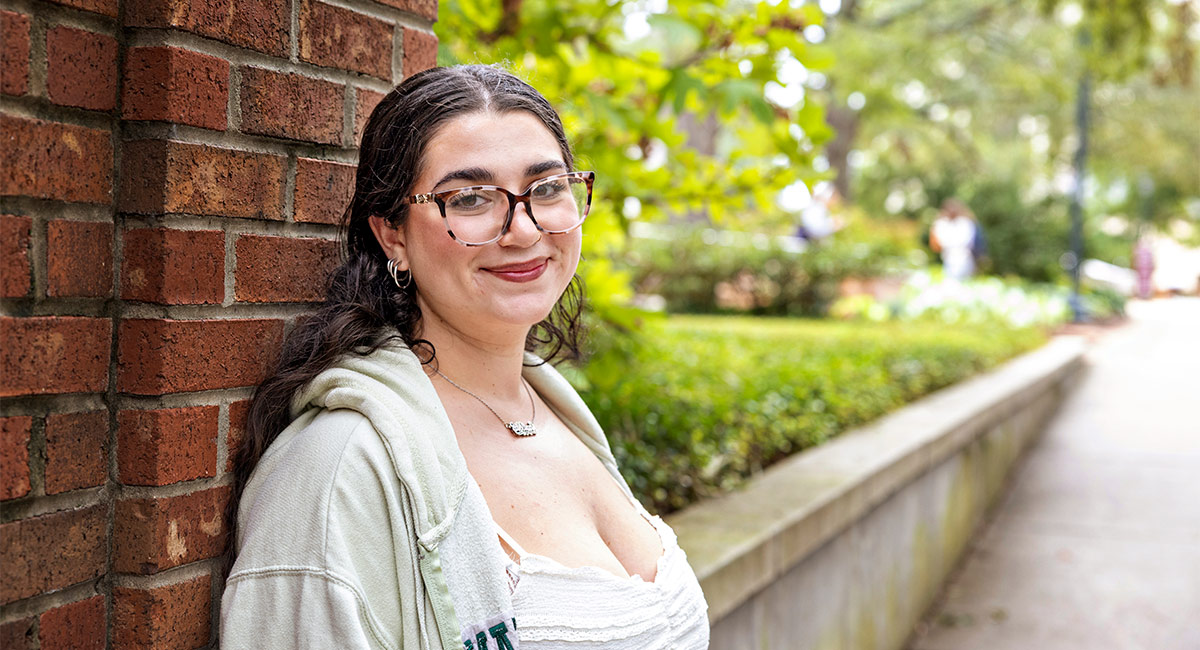
Jillian Bourbeau
Junior, biology major
Jillian Bourbeau grew up in New Jersey, considered colleges in Vermont and Maine and ended up at a mostly commuter school about 30 minutes from home where she could play field hockey.
She realized quickly it wasn’t what she was looking for, but tried to tough it out, wondering if what she was feeling was just freshman year college “jitters.” By second semester, she was miserable and decided to look elsewhere.
Her mother had a friend whose son was heading to the University of South Carolina and suggested it might be a good fit.
“I never really imagined myself going to an SEC school or moving down South. But in that moment, I felt like I needed that kind of drastic change,” Bourbeau says. “Everything else that I thought would work didn’t. So I applied and was accepted, and my mom and I came down a weekend after that. We did a tour and I just completely fell in love. I couldn’t imagine not going here.”
In August 2025, she made the 10-hour drive from home and started as a sophomore at USC.
“It was a really big transition and jump. I was super anxious. But my fall semester was honestly the best semester that I ever had. I genuinely was so happy,” she says. “Adjusting to the Southern kind of way of life, I’m not going to lie, it was a little bit of a culture shock. I remember walking around campus and people were holding doors open for me and smiling and making eye contact. People would randomly say, ‘Hi.’ But I adjusted to it. You know, it was nice.”
Once on campus, Bourbeau says she intentionally pushed herself to step out and meet people, and that made all the difference.
“I was not the biggest socializer. I really am a homebody, which is crazy because you never see me at home now. But I was like, ‘You know what? I need to be comfortable with the uncomfortable and push myself out of my shell.’ No friends are going to be made by sitting in your apartment, right?”
She joined a sorority and a lot of clubs, including the Association of Transfer Students, where she eventually became vice president. She says she found a group of friends who love to hang out, but also prioritize their academics. She now is a junior majoring in biology with plans to be a physician’s assistant.
She also works as peer leader for Carolina Experience, helping students navigate the university after the first year.
Sometimes students feel less engaged after their freshman year, she says, “so our job was created to try and lessen that disconnect. So we have one-on-ones with students and I try to just point them in the right direction. I really like it because I used this [resource] when I was first transferring in. They had a transfer mentorship program. So instead of being a mentee, I’m now a mentor.”
Learn more about how the university supports transfer students.