As our nation commemorates the 250th anniversary of our founding, colleges and universities should take this opportunity to reflect on a question that is important to our republic: What is the enduring purpose of higher education in a free society?
The University of South Carolina, where I serve as chair emeritus of the board of trustees, was established during the earliest years of our republic in an era when our nation’s greatest leaders fervently believed that the preservation of liberty depended upon an educated people.
While that conviction remains for some leaders today, this ideal needs renewed attention throughout the higher education community.
Today's conversations about higher education understandably focus on affordability, upward mobility, research, economic development, athletics, and public confidence. Each is important. Yet the weight of these discussions can obscure a more fundamental truth—America's colleges and universities were created not only to prepare students for productive careers, but to prepare citizens capable of sustaining constitutional self-government.
Few articulated that responsibility more clearly than Jonathan Maxcy, the first president of South Carolina College, predecessor to the University of South Carolina. On July 4, 1819, only forty-three years after the Declaration of Independence, Maxcy addressed students, faculty, and local citizens to remind them that Americans were "bound by the strongest ties of honor, of gratitude and interest, to preserve and to transmit to posterity, undiminished, the rich inheritance bequeathed us by the founders of American independence."
He then explained why education was indispensable to that obligation:
"Our government rests wholly on the opinion of the people. This opinion, to be correct, must be enlightened; it must be founded on impartial examination, and rational conviction. Hence appear the necessity and importance of rendering education and knowledge universal. Without these, a free government cannot exist."
More than two centuries later, his words remain remarkably relevant.
The American experiment has always rested upon an extraordinary act of trust. Unlike governments that depend upon hereditary rulers or concentrated authority, ours places its confidence in the judgment of ordinary citizens. Self-government requires an educated citizenry who can think critically, evaluate competing ideas, understand history, appreciate constitutional principles, and exercise independent judgment. Those qualities are not inherited, they are cultivated.
For several decades, American colleges and universities embraced that responsibility. While institutions differed in mission, curriculum, and tradition, they shared a common understanding that higher education should develop both professional competence and civic character. They prepared teachers and physicians, engineers and entrepreneurs, lawyers and scientists—but they also sought to prepare thoughtful citizens who understood both the privileges and responsibilities of citizenship.
That civic mission remains indispensable today.
Universities should continue to advance research, expand opportunity, fuel economic growth, and prepare graduates for meaningful careers. These responsibilities are essential to the nation's prosperity. But they should complement, not replace, the broader obligation to educate citizens capable of preserving the institutions that make that prosperity possible.
Renewing this mission does not require ideological conformity. Indeed, it requires precisely the opposite. Institutions of higher learning best serve a free society when they cultivate intellectual curiosity, encourage rigorous inquiry, expose students to competing ideas, and insist that conclusions be grounded in evidence and reason shared through civil discourse. The purpose of civic education is not to tell students what to think, but to equip them to think critically and contribute thoughtfully to a free society.
For 225 years, our university has educated teachers, physicians, engineers, scientists, judges, lawyers, and business leaders who have shaped every corner of South Carolina and our nation. Likewise, for more than two centuries, higher education in America has broadly advanced knowledge through research, strengthened our economies through innovation, improved lives through service, and expanded opportunity for millions of our citizens. However, throughout this history, our institutions of higher learning have also borne a responsibility, whether they embraced it or not, for cultivating citizens capable of leading communities, strengthening civic institutions, and preserving constitutional self-government.
Every generation inherits the blessings of liberty, but no generation is guaranteed their permanence. The founders secured American independence. Those who followed built the institutions necessary to sustain it. Our responsibility is to strengthen those institutions and prepare those who will inherit them after us.
South Carolina’s Jonathan Maxcy reminded his college community in 1819 of a truth our founder’s understood—the preservation of free government depends upon the education of a free people. As America enters its next 250 years, there is no more important work before higher education than renewing its commitment to this proposition and taking responsibility, once again, for educating citizens worthy of a constitutional republic.
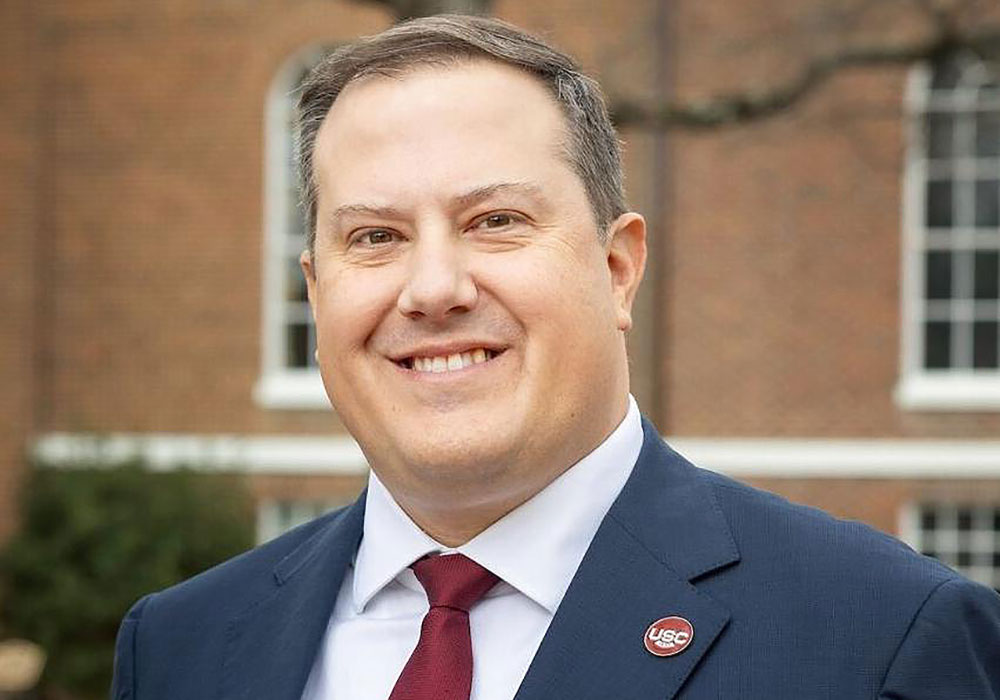
Thad H. Westbrook is chair emeritus of the Board of Trustees of the University of South Carolina. This op-ed first appeared on realcleareducation.com.