
The university’s Student Success Center is a comprehensive source for academic support services across campus. The College of Nursing partnered with the Center to develop the Program for Academic Support Services (PASS) to enhance academic performance by providing tailored resources, tutoring, and support services to nursing students.
Learn how senior nursing students AllanDave, Ryann, and Cassie empower their peers to grow, learn, and succeed through shared academic support at the college.
AllanDave Cabanayan, Capstone Scholar

What does it mean for you to serve as a Peer Coach? Being a first-generation student, it was challenging at first to learn to properly navigate many campus resources and find strategies to help me do well in my classes. As a Peer Coach, I hope to help others work towards their version of success by giving them the resources and guidance I wish that I had earlier on.
What is Peer Coaching? Peer Coaching aims to help students navigate different aspects of the college experience, including Academic Success, Money Management, and First-Generation coaching appointments. During the appointments, we focus on topics like positive academic habits, study strategies, budgeting, and identifying other university resources.
What’s your favorite part about the program? I really love seeing students become motivated to change and improve themselves! It really brightens my day to see them understand specific topics and figure out strategies that will help them the most. Guiding a student to reach that “aha” or “light bulb” moment is the goal as it helps Peer Coaches see students understand how they can take the skills from our appointments and implement them in the future.
Share some advice for students who might want to join. With a major as challenging as nursing, it can be easy to get overwhelmed and feel like you don’t know what you’re doing. Reaching out for help can definitely feel scary. However, Peer Coaches make sure it’s a comforting experience! As someone who has gone through coaching appointments myself, I can attest to the impact of being able to talk through academic struggles with someone and to really think about new learning strategies, whether that’s assessing my study skills to prepare for an exam or adjusting my time management to balance classes, work, studying and relaxation.
Ryann Rymarcsuk, Capstone Scholar
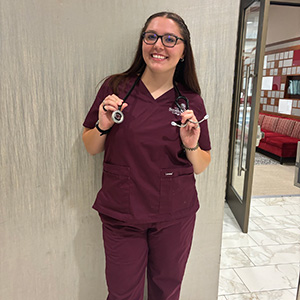
What inspired you to become a Peer Leader? As a nursing student, it can be very overwhelming to try to manage classes, work and more. I remember how much it helped when someone in the past encouraged me and kept me accountable. So, I wanted to give other students the same kind of support. I want to be that peer mentor I didn’t have when going through the first three years of the nursing program.
Tell us. What are Accountability Groups? They’re a combination of structure, encouragement and community. Students come together each week for an hour and a half to share their goals, talk through challenges, study together, and celebrate progress. It’s about knowing you don’t have to do it all on your own—there’s a group cheering you on and keeping you focused.
What would you tell a nursing student who’s thinking about joining? Don’t be nervous. These groups aren’t about judgment—they’re about growth. You’ll gain accountability partners, new friends, and the encouragement you need to keep moving forward.
What’s your favorite part about being a Peer Leader? A student had been struggling with cardiac functions in Anatomy. After the group meeting, we worked through the material together for about half an hour. The next week, the student came back with the exciting news that she got an A on her anatomy exam. It was so incredibly rewarding to see her succeed, and the entire group was so happy for her accomplishment.
Cassie Fallon, Smart Start Pathway
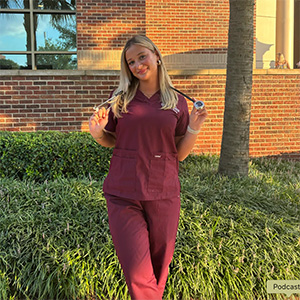
Why did you want to become a Supplemental Instruction Leader? As a student, I truly enjoyed taking Pathophysiology and wanted to help others enjoy the historically difficult course. Pathophysiology is the foundation of nursing care, so I knew supporting this course could provide a true advantage to students. Most importantly, I wish there was similar support when I was a NURS 216 student. Having a space to ask questions and organize large amounts of new information would have improved my experience while in the Pre-Nursing program.
What would you tell a Pre-Nursing student interested in supplemental instruction? Just come! Allow yourself to utilize the full range of resources available to you as a nursing student. And to any student considering becoming an SI—apply! With each session I host, I learn something new. Plus, there is nothing more rewarding than helping other students succeed.
Interested in peer leadership positions? Visit the Student Success Center to explore opportunities.