In health care science, numerical data unquestionably have their value. They are unemotional and straightforward tallies of outcomes such as mortality and morbidity. Numbers are also used to describe a more qualitative outcome: quality of life. In this, numbers are useful but limited.
For example, the data may calculate that 98 percent of, say, femur repairs are documented as “successful” (in binary fashion with a simple yes or no), meaning the fracture was appropriately mediated. But how many patients receiving this surgery today can walk without pain? Climb stairs? How many have post-surgical nerve pain? Are they experiencing depression? Patient-reported outcome measures try to answer these questions.
University of South Carolina philosophy professor Leah McClimans became interested in how health care professionals gauge the quality of patient outcomes more than two decades ago when she was an undergraduate student who took a year off to work in London at the Royal College of Surgeons. Technology has evolved somewhat since then.
“They were doing quality-of-life research at the time,” McClimans recalls. “I was placed in a windowless room with a scanner. We had all these paper questionnaires that needed to be scanned into a computer.”
One of the first things she noticed was that they needed a better instrument for this research. Patients were not answering the questionnaire the way researchers need them to do. For example, some might write in handwritten notes in the margins or they would color in two bubbles instead of one. The computer couldn’t accept those improperly completed forms.
The questions also were limited in what they could reveal. Patients understood the questions differently than the researchers understood them. They also understood the questions differently over time as their condition improved or progressed. When differences in understanding occur, miscommunication is rampant.
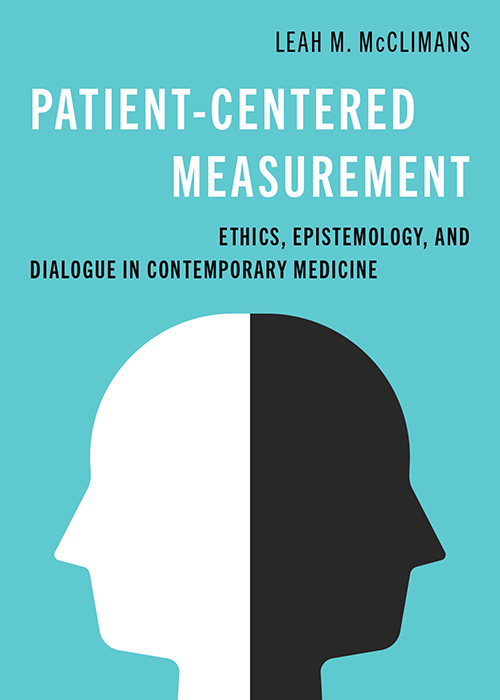
Fast forward 20+ years, and McClimans has authored a book sharing insights from her yearslong research on measuring patient quality of life, not just black-or-white outcomes. Published last year, Patient-Centered Measurement: Ethics, Epistemology and Dialogue in Contemporary Medicine establishes the value of patient-reported measures as an equal counterpart to traditional clinical metrics such as mortality and morbidity.
“Patient perspectives on physical functioning or quality of life should play an evidentiary role in determining how effective an administered medication is, the degree to which a hospital provides good quality of care or whether a particular intervention should be funded by an insurer,” she says.
Patients in focus groups generally express appreciation for being asked to complete patient-reported measures, but many are skeptical about why they should bother completing a survey, because they never heard anything back on past surveys they have completed.
“The information seems to go into a black hole,” McClimans says. “There needs to be a better feedback model so we can show patients how this measurement matters and how the information is used.”
The message about the importance of patient-reported experiences has resonated. McClimans presented her work at the International Quality of Life Conference the past few years to a standing-room-only audience. “I know my research has impacted how others do their research,” McClimans says. “I was invited to serve on a multidisciplinary team working to develop clinical guidelines by the National Cancer Control Programme in Ireland. There are clinical guidelines in Ireland that have my name on them!”
The most profound change in this type of research has been a shift in the research method and measurement models, she added, and how instruments are developed. Patient views matter in developing evidence-based practices.
“We’re not just measuring mortality and morbidity, though the point of those is noble,” McClimans says. “We want the information to be an integral part of health care decision-making.”