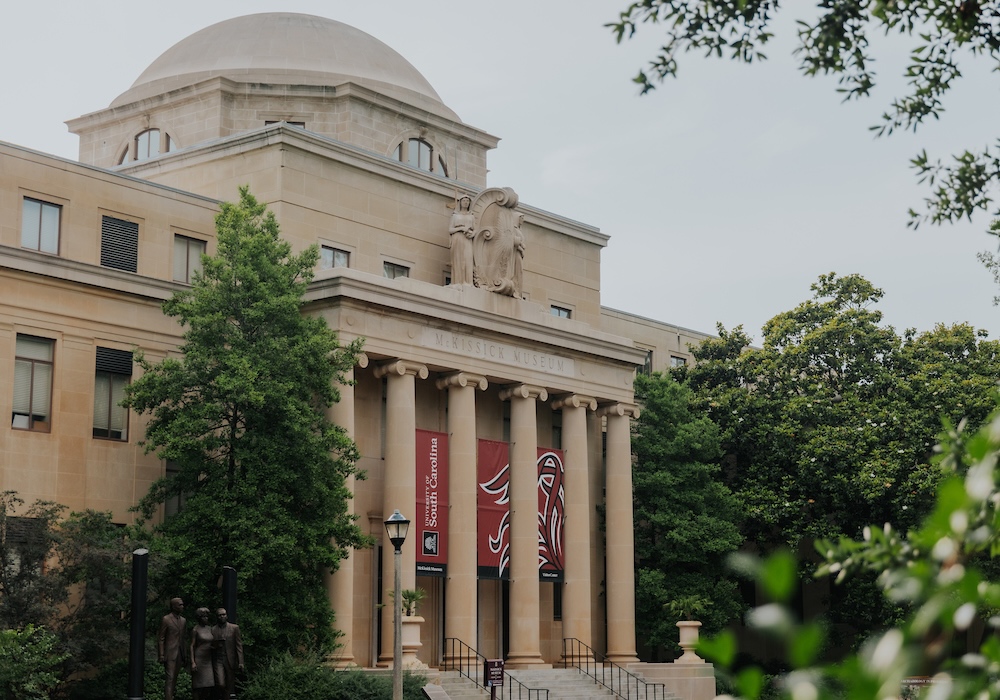
The University of South Carolina Board of Trustees gave final approval Tuesday (Dec. 16) to projects designed to reinvigorate several iconic buildings in the heart of the Columbia campus. The projects, part of the USC Next master plan, include:
- McKissick building renovation. McKissick, serving as a museum and USC’s visitor center, was constructed in 1940 and is situated prominently at the east corner of the historic Horseshoe. The neoclassical building has 60,524 square feet spread over four floors, a partial basement and a domed rotunda. The renovation project will replace aged building infrastructure, add a fire sprinkler system, reconfigure existing areas to include several new classrooms, common study areas featuring rotating art exhibits, a café, patio space, and an enhanced visitor center. The satellite visitors center at 1311 Pendleton Street will remain in operation during the renovation. The McKissick renovations are scheduled for completion in the summer of 2028.
- Thomas Cooper Library renovation. The renovation will modernize and reconfigure the library to prioritize innovative study spaces while concentrating books on the library’s lower levels. The project also includes security and accessibility enhancements and improvements to the HVAC system to reduce humidity. Construction will take place in phases over five years to allow the library to remain open while work is ongoing. The Thomas Cooper Library was initially constructed in 1959 and was designed by internationally renowned architect Edward Durell Stone. The seven-story structure includes more than 283,000 square feet of space.
- Barnwell College Renovation. Overlooking the Gibbes Green quadrangle, historic Barnwell College is home to the psychology department. Constructed in 1910, the five-story building contains 58,623 square feet of space. The planned renovation will expand and modernize classrooms, faculty labs and office spaces. It also will improve the building’s infrastructure with HVAC, fire sprinkler and restroom upgrades. The project is scheduled for completion in 2028.
“These important capital projects honor USC’s rich heritage while positioning us to better serve the needs of future students in modern spaces that facilitate optimal learning,” said Board Chair Thad Westbrook.
“As the iconic heart of USC's campus, the Horseshoe is a center point of student life and academics. These projects, along with increased student living spaces near the Horseshoe, are reenergizing our historic core and continuing our momentum to serve a 21st-century higher education community," said USC President Michael Amiridis.
USC Next was developed in collaboration with Sasaki Associates and provides a framework for construction and renovation projects designed to help the university meet the needs of students, faculty and staff for decades to come. The plan is anchored to four overarching goals: reinvigorating the historic campus core; improving the student life experience; reimagining the engineering/research district; and realizing a new health sciences campus.
College of Education establishes Bullying Prevention Center
The Board also approved Tuesday the establishment of the Bullying Prevention Center at the College of Education. The new Center will be dedicated to helping schools and communities identify, prevent, and respond to bullying among youth. Led by nationally recognized researcher and College of Education professor Chad Rose, the Center will partner with K–12 school districts across South Carolina to align policies and training with evidence-based approaches to bullying prevention.
Bullying is a persistent public health concern with significant negative impacts on mental health, academics and behavior for those who are bullied as well as those who perpetrate bullying. Unlike normal conflict or a one-time fight, bullying is defined by unwanted, aggressive physical or verbal behavior repeated over time by an individual or group.
The new Center also will provide hands-on research and applied learning opportunities for undergraduate and graduate students, preparing the next generation of educators, practitioners, and scholars while positioning the university as a state and national leader in bullying prevention.
“This new Center will give educators the skills they need to help to students who are struggling, improving their learning outcomes and emotional well-being. It’s one more example of how USC researchers and educators are addressing real-world problems and strengthening South Carolina communities,” said Provost Mary Anne Fitzpatrick.