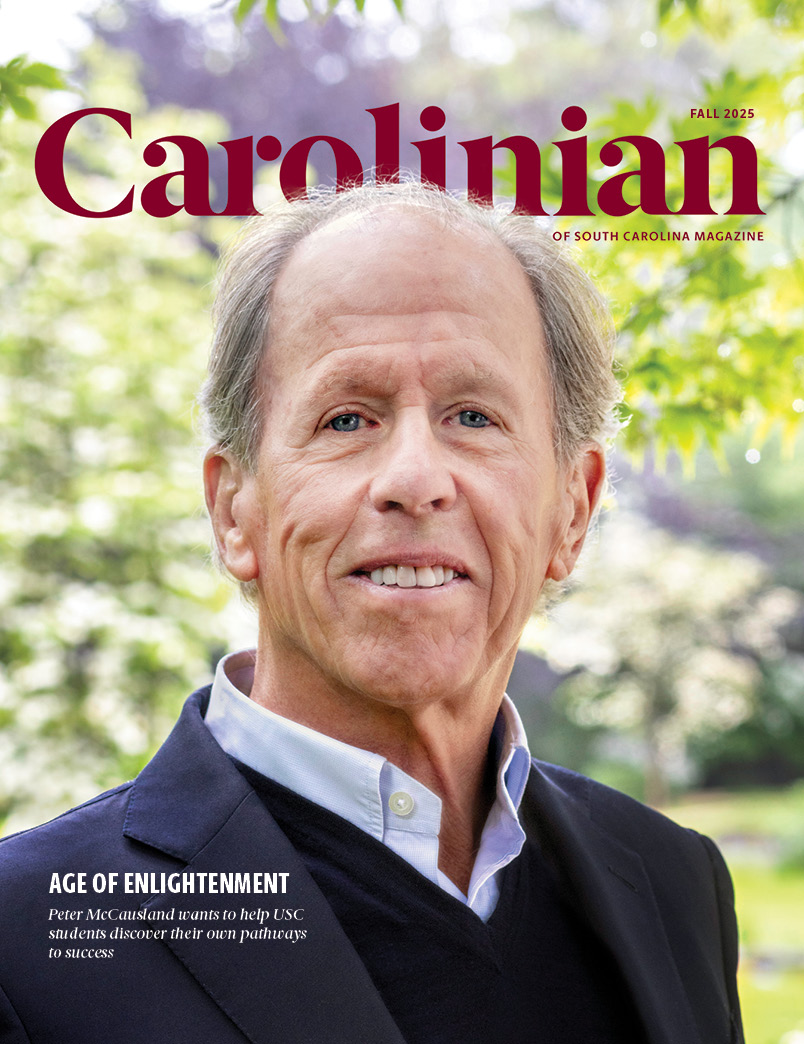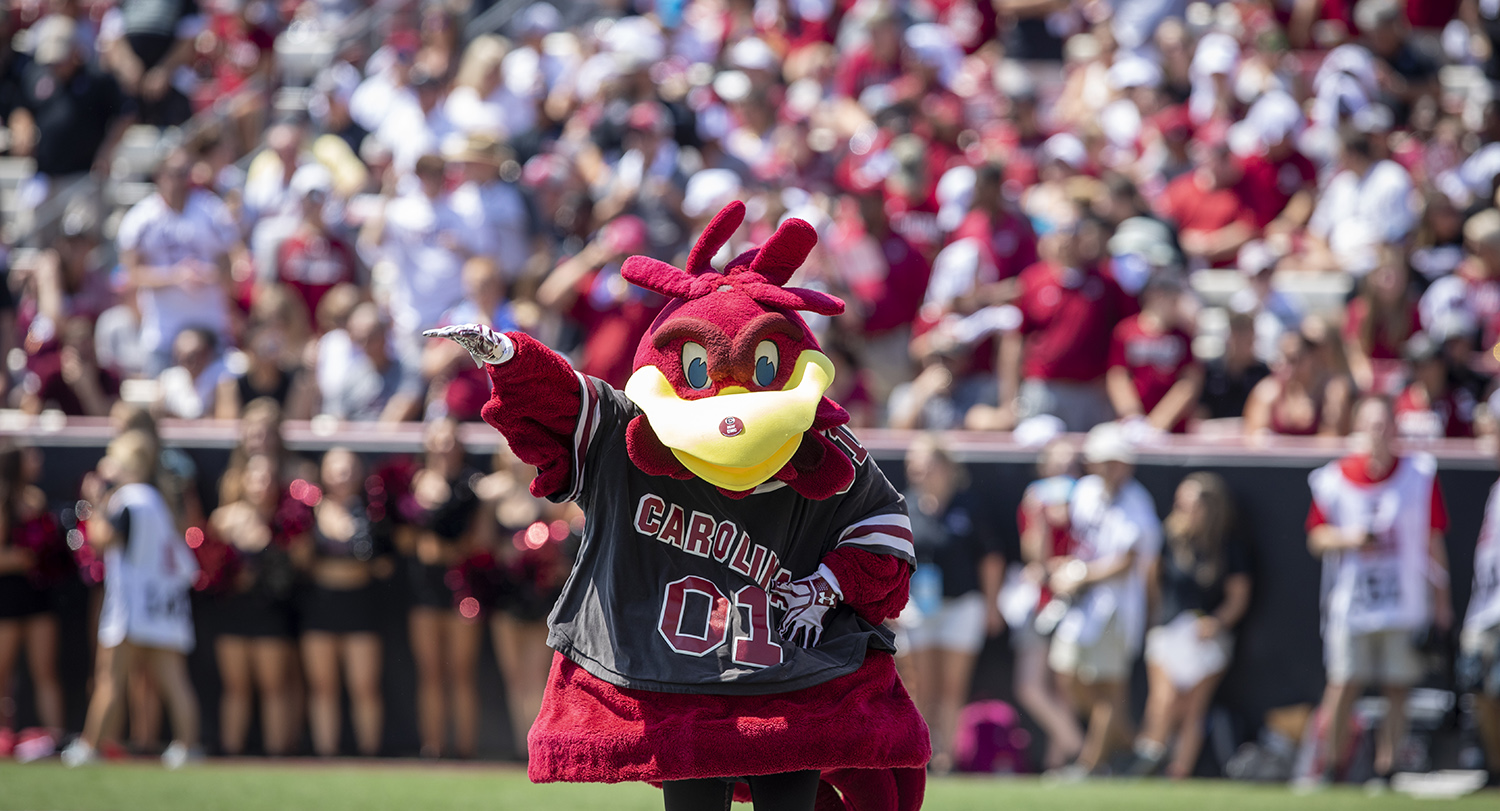
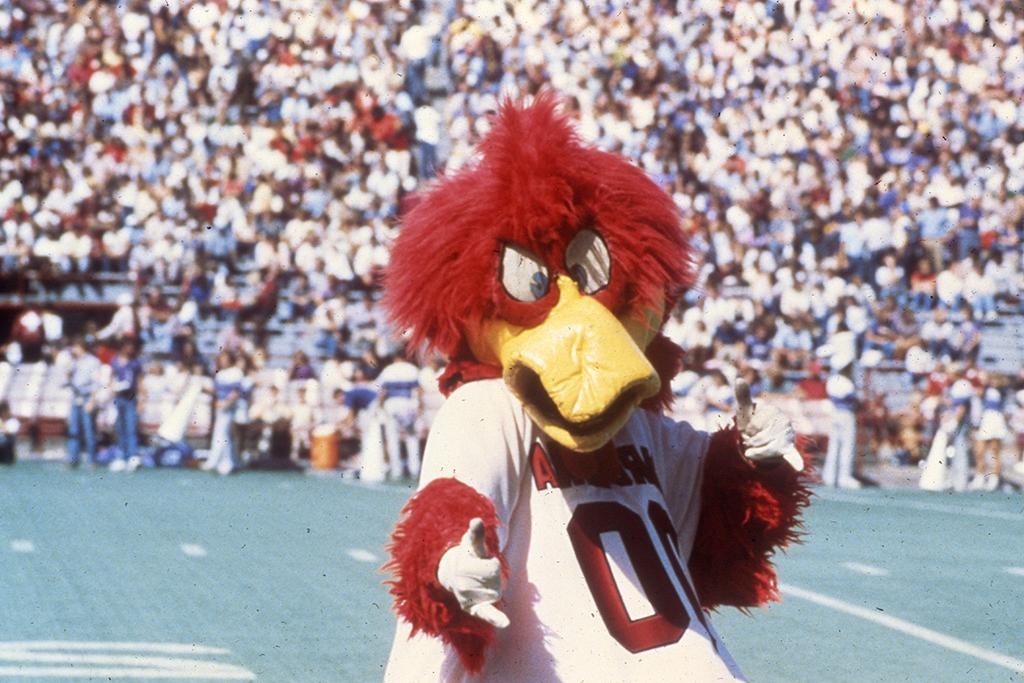
It was Homecoming weekend in 1980, and South Carolina was playing Cincinnati. That October day, the University of South Carolina debuted its mascot, Cocky, for the first time. Cocky would go on to be named one of the “Greatest Mascots in College Football History” by Sports Illustrated. He’s won high-profile national competitions and appeared at sporting events worldwide. But his first appearance was actually a bit of a flustercluck.
John Routh was sitting in the stands at the time. He and fellow student Bob Lane took turns performing as USC’s earlier mascot, Big Spur, and a coin flip had decided that Lane would play Cocky on that fateful day. They had planned an elaborate entry for the new mascot: A roost built under Williams-Brice Stadium’s stands would roll out at half time.
“I kept telling everybody, ‘Wait until you see Cocky come out! He’s great!’” Routh says. “But we built the roost too tall. It wouldn’t fit through the opening. The band played and the announcer said, ‘Please welcome your new mascot, Cocky!’ … but there was no Cocky.”
Technical difficulties aside, Cocky still didn’t make a great first impression. Big Spur was an imposing presence on the field, standing a foot or two taller than the players. Fans found this new fowl to be too silly-looking with his big grin, too fluffy with his plush body and entirely too wimpy to represent the Fighting Gamecocks. After much backlash, USC decided to bench Cocky.
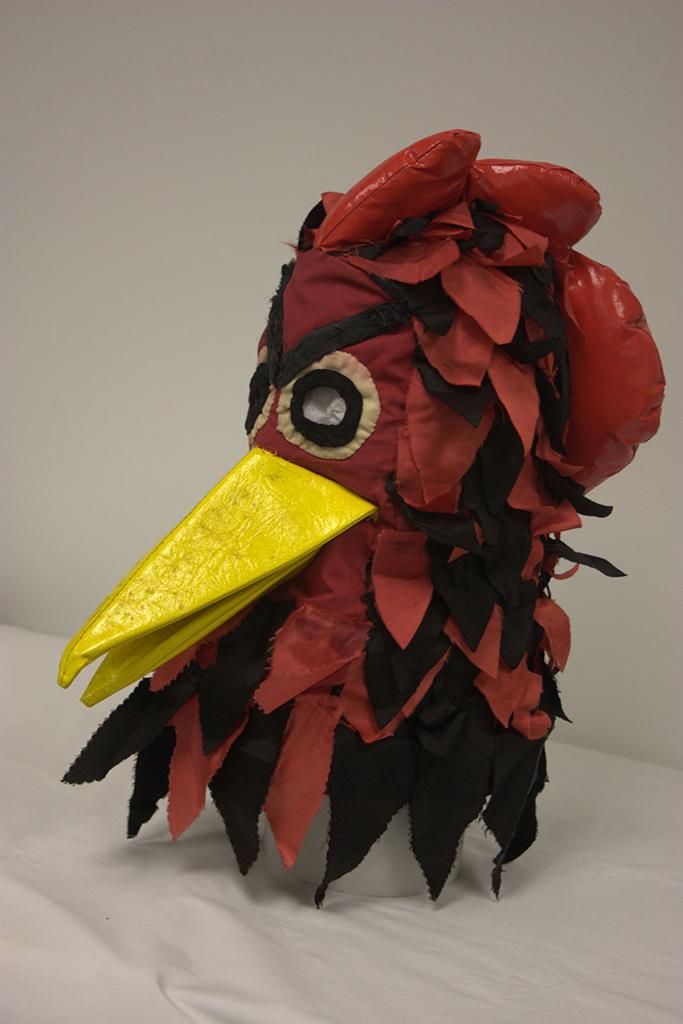
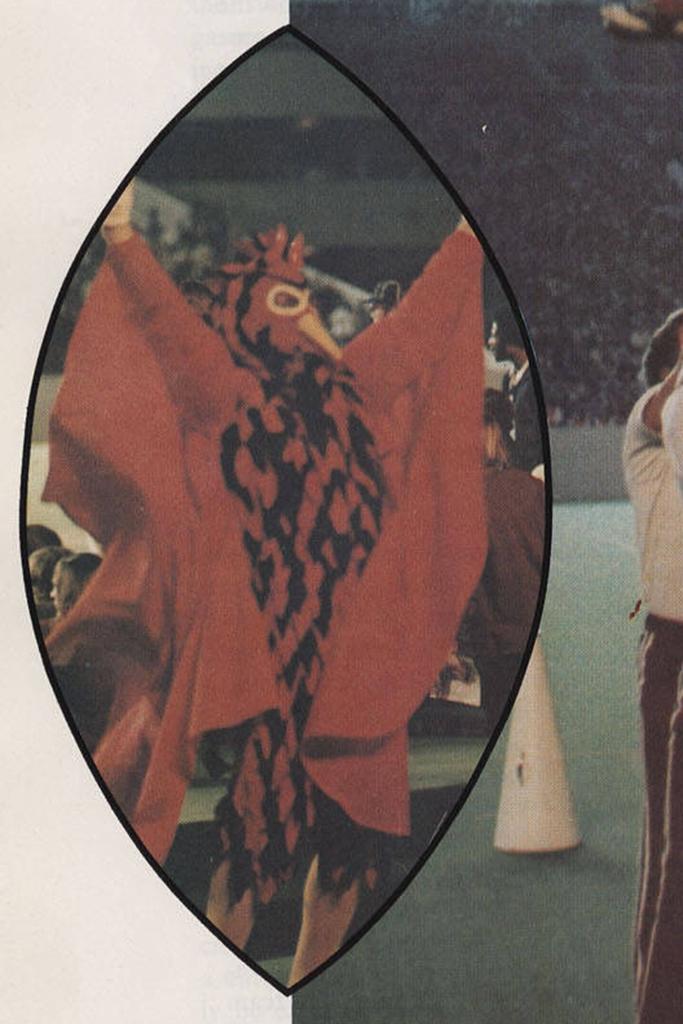
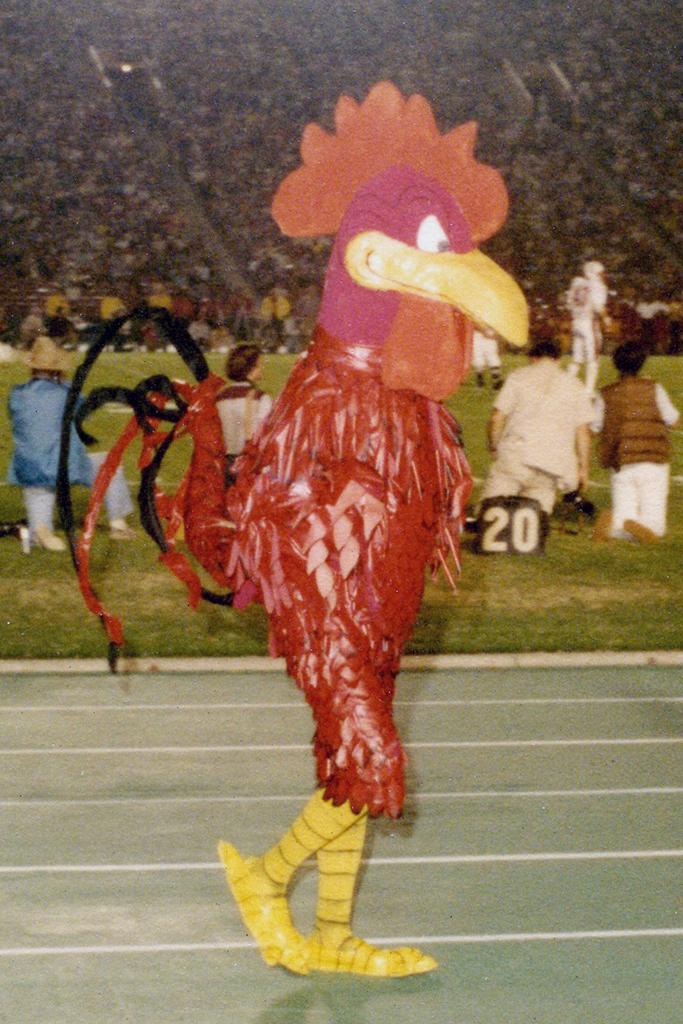
“There were hundreds of letters and phone calls that came in because the next game was supposed to be televised. It was an important game against Georgia, and so they brought Big Spur back for the rest of the season.”
Not wanting to let the new suit go to waste, the athletics department decided to have Routh perform at women’s basketball games. Except Routh wasn’t playing a rooster anymore.
“The women’s athletic director had the idea to put heart-shaped lipstick on the beak and add these silvery blue eyelashes to make the character female,” he says. “We called her Super Chick.”
Routh played the new mascot at the women’s games while Lane continued playing Big Spur for the men’s games. By spring, fans had warmed to Super Chick, so athletics agreed to let Cocky appear at baseball games, too.
The team made it all the way to the College World Series that year, which gave Cocky the national television debut he had originally been denied. The audience response was incredible, earning him an invitation to be the official mascot for the entire event in ’82.
By fall of ’81, Cocky was the one and only mascot of the University of South Carolina. It wasn’t without some pushback from fans, but Routh was unfazed. He was having too much fun being Cocky — so much so that he delayed his graduation by a year to continue. When graduation came, Routh started the tradition of wearing the big yellow feet to the ceremony for a big reveal.
“The president asked me to wear the whole suit, and I said, ‘My parents paid for my education. I think they might want to see my face! But how ’bout I wear the feet?’”
Cocky’s evolution
With each generation, Cocky performers taught those who came after them. Today, the role is reserved for USC students, coming under the wing of Gamecock Cheerleading. But in the late ’80s, USC hired a graduating student to continue in the role professionally for several years. Known only as “J.H.” because he never officially revealed his identity, this performer was instrumental in redesigning the suit to the version we know today.
During his seven years as Cocky, J.H. won the first ever United Cheerleading Association National Mascot Championship, became the official Goodwill Ambassador of the state of South Carolina and even met Pope John Paul II.
“There’s just one Cocky. It doesn’t matter who’s in the suit. There’s only one, and he is the best ambassador the university will ever have.”
After playing Cocky, J.H. continued as a professional mascot. So did Routh, who went on to play Billy the Marlin for the Miami Marlins. Several of USC’s student mascots have gone on to fulltime careers in the field, including Jamie Ballentine, who took Cocky all the way to the Capital One Bowl Mascot of the Year competition three times, winning in 2003. Ballentine now works as Columbia-based Olly the Otter, who visits sick children and their families. He says his time as Cocky showed him the impact a mascot can make.
“Being Cocky is more than just donning a suit and having a good time as a college student. It’s being a living part of what the Gamecock spirit really is,” Ballentine says. “We’re loyal, we’re passionate, we show up. Cocky embodies that spirit.”
When Ballentine was Cocky, he and co-performer Twyla Wofford (now Wofford Stowe) invented the character Caroline. Like Super Chick, she wears fake eyelashes and bright lipstick.
“Jamie and I had seen that other universities have duos, and we just thought how fun it would be to create essentially a sidekick, or girlfriend, for lack of a better word. But I always make sure to tell people they’re not married. Cocky loves everybody, so he cannot be tied down,” Wofford Stowe says.
While Caroline didn’t take off as a fulltime sidekick, she makes an appearance as Cocky’s date to the Homecoming game each year. Likewise for family weekend, Cocky is joined by his mom and dad, who are traditionally played by the lead Cocky’s own parents. It’s a special honor for the parents, who often provide a lot of support to their student mascot.
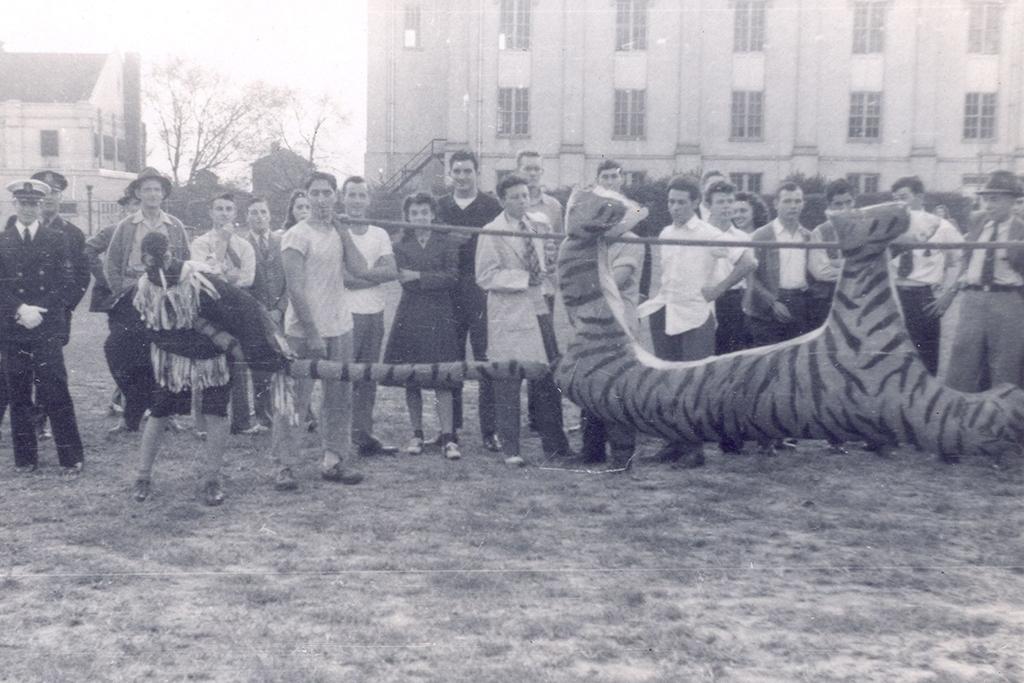
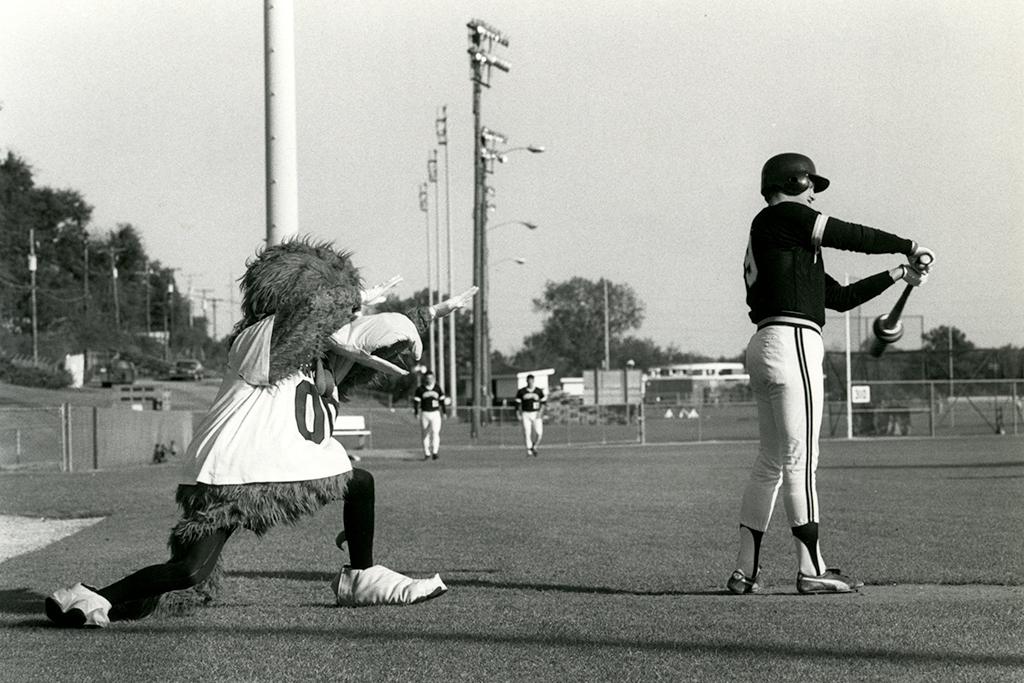
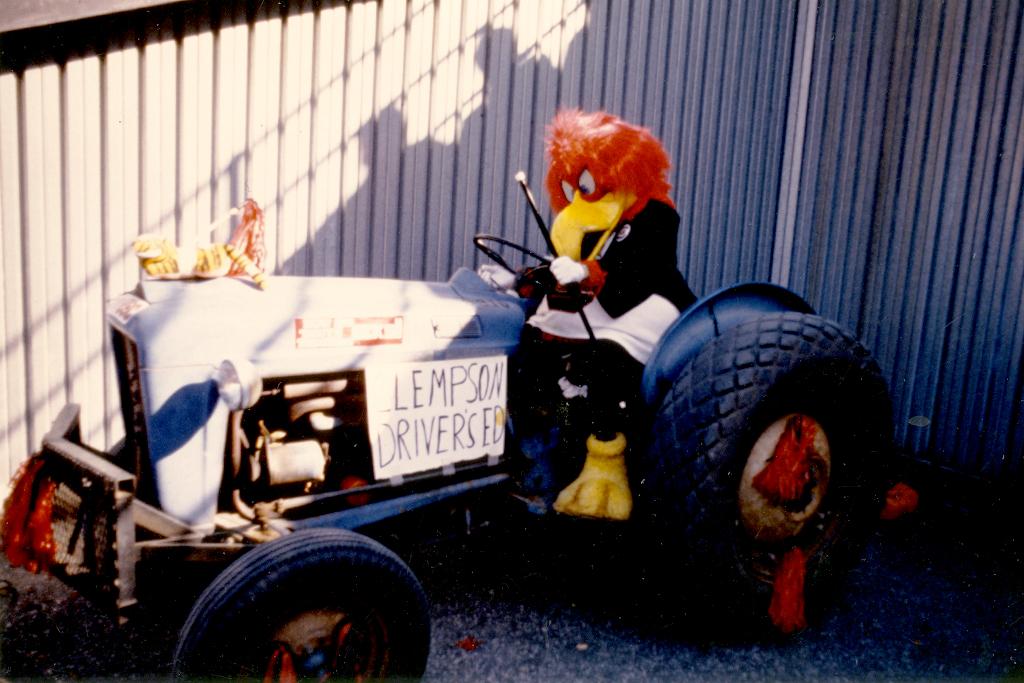
Cocky’s community
The community behind the bird is part of what makes him so magical. While he represents rivalry on the field and in the arena, the current lead Cocky has found that even opposing teams and their fans are happy to see him at games.
“He’s just this loveable rooster. He’s silly and fun, and people respond to that,” he says. “One of my favorite things about playing Cocky is being able to meet so many people, like other mascots and the teams and coaches. Many of my close friends are mascots from other schools. It’s like a crazy community that you get to be a part of once you’re a mascot.”
With Cocky’s schedule of appearances at games and events on campus and off, USC now has four students playing the role. It takes the whole flock to perform at football games.
“We each take a quarter,” the lead Cocky says. “Because I’m a senior and I’ve been here the longest, I get to the do the first quarter and come out of the magic box or the train. That’s an amazing feeling. Not many football stadiums are like Williams-Brice. It’s an electric environment. I feel so honored to represent USC as Cocky.”
While many performers have worn the suit in Cocky’s 45 years, Wofford Stowe says she wants fans to remember one thing: “There’s just one Cocky. It doesn’t matter who’s in the suit. There’s only one, and he is the best ambassador the university will ever have.”