Harry Lesesne: “Without any question, it was a fulcrum of history for the university, the turning point. Sets the stage for the university to really be a national caliber institution.”
Chris Horn: That’s Harry Lesesne, the author of a comprehensive history book on the University of South Carolina in the 20th century. What exactly was the fulcrum of history at USC that Harry is talking about, the turning point that would help USC join the ranks of other major universities?
I’m Chris Horn, and, on this episode of Remembering the Days, we’re going back to 1952 when USC’s 23rd president took office. His name was Donald Russell, and in five years he transformed the University of South Carolina.
Harry Lesesne: “Russell is definitely a breath of fresh air. He comes in with this stellar resume. Obviously, a distinguished alumnus. It’s like by acclamation — this is the perfect guy. And he really was. I’ve said it before, he was the right guy at the right time with the right skill set. The number of things that he was able to accomplish in such a short period of time is really remarkable.”
Chris Horn: Here's a quick biography of Donald Russell. He was born in Mississippi in 1906, moved to Chester, South Carolina, with his family at the age of 4 after his father died, and he started Carolina at age 15, putting himself through college by pumping gas. Russell graduated first in his class in 1925, then put himself through law school at USC by teaching undergraduate history courses. He graduated first in his law class in 1928.
But finishing first in college and law school was just the beginning. Russell started a law practice and soon joined an established law firm where he became a friend and protégé of James Byrnes. If you’re a South Carolina history buff, you might know that Byrnes was a Congressman and U.S. senator from South Carolina who also served in high positions in the Roosevelt and Truman administrations. Byrnes’ political connections opened the door for Donald Russell, who ended up in the federal government during World War II and also served in uniform in Gen. Dwight D. Eisenhower’s headquarters in Europe.
Now, let’s get back to what was happening at the University of South Carolina. From 1945 until 1952, the president at USC was a retired Navy rear admiral named Norman Smith. He was a very conservative guy, had no experience in higher education and expended little effort in connecting with the students. You can learn more about how he became president at USC by listening to episode 69, entitled “Move it on over: The plan to abandon the Horseshoe and build a new campus.”
Students at USC, particularly World War II veterans who were returning to campus, were less than enamored with President Smith, and to the relief of many, the retired admiral announced his intention to step down, effective June 1952.
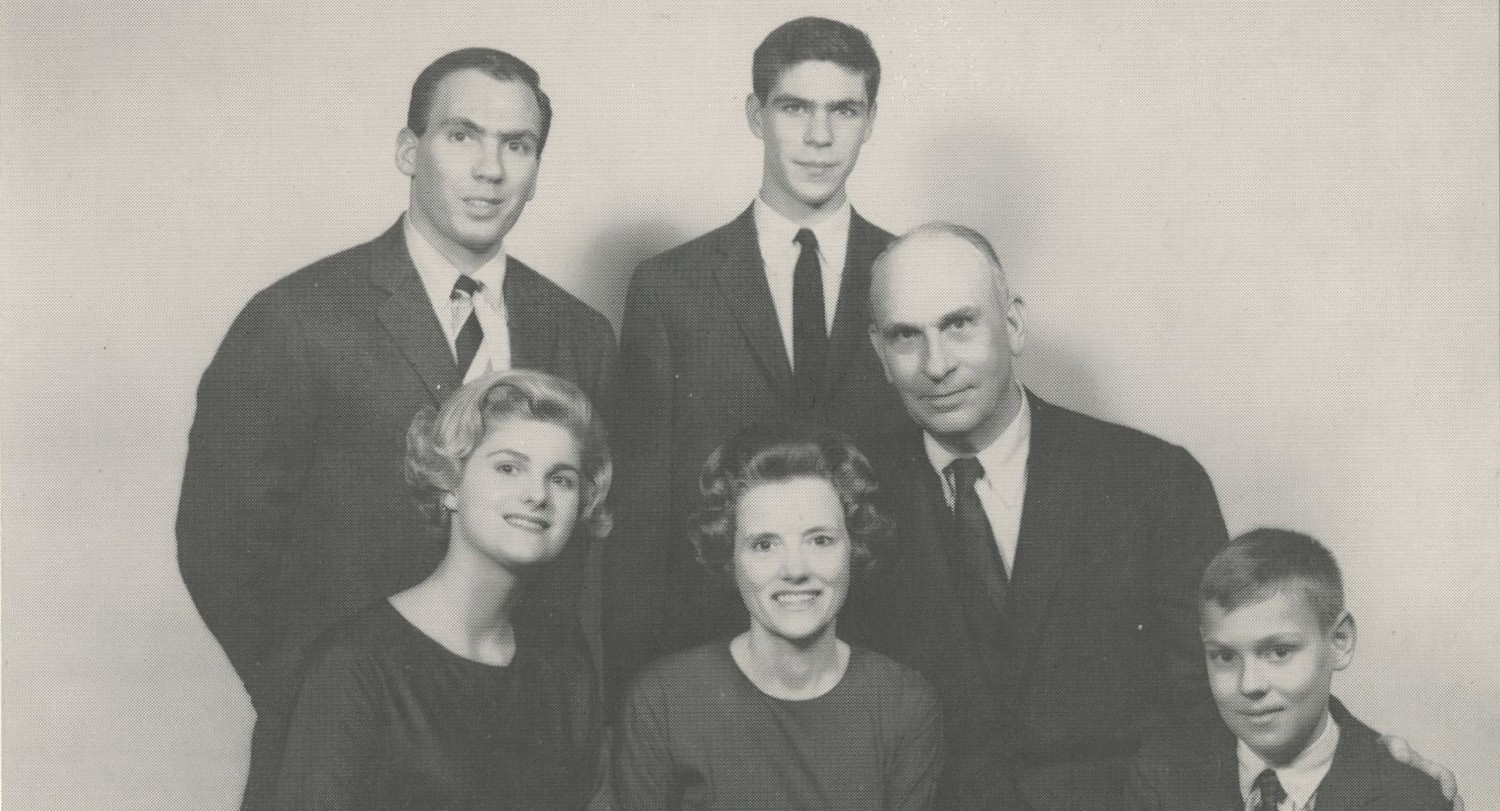
Enter Donald Russell, who at this point was serving as one of the university’s trustees. Russell was much admired by his fellow trustees, and he had the respect of the faculty, some of whom remembered his scholarly abilities as a student. He was extremely well read in literature and history; his wife, Virginia, had been a May queen at Carolina; and their four children brought a youthful image to the family.
Perhaps most importantly, Russell brought a level of energy and enthusiasm that had been lacking for seven years during Norman Smith’s presidency. It came as no surprise when the Board of Trustees announced Russell as USC’s new president.
“We’re going to build a great university,” Russell said, “one for which we’ll have to apologize to no one.” Russell believed USC should be “the capstone of the whole educational firmament of South Carolina. It should radiate leadership to the public educational system and to the other colleges.”
He was dedicated to building USC’s faculty ranks to a level he described as a “faculty adequate in numbers and soundly qualified in scholarship, professional competency and integrity.”
In Russell’s first year as president, USC added 28 new professors, increased faculty salaries and attracted several star professors, many of whom had earned Ph.D.s from prestigious universities.
He overhauled the physics department, the School of Education, the nursing and engineering schools and expanded the graduate school. Russell used the influence gained from his time in Washington to bring well-known speakers to campus, including the poet Carl Sandburg, historian Arthur Schlesinger Jr. and Secretary of State John Foster Dulles. He also brought then-U.S. Senator John F. Kennedy to campus to deliver the commencement speech in May 1957.
Under Russell’s leadership, USC acquired 211 acres along Rosewood Drive that became the footprint for a modern athletic complex, including a new baseball diamond, running track, football practice fields and the Roundhouse athletics administration building.
Enrollment at the university had been expected to taper off, but it kept growing instead. There was a tangible buzz at Carolina that Russell’s presidency had sparked, and students wanted to be part of it. One of Russell’s enduring accomplishments at USC had to do with finances, and it might sound a little wonky at first, but it was and still is a big deal. I’ll let Harry Lesesne explain.
Harry Lesesne: “He’s able to get a bond law passed to allow both tuition revenue bonds and housing revenue bonds. The university was required to remit all their income to the state, and then the state gave it back to them at some probably reduced level. So they were actually subsidizing the state government through tuition payments until Russell comes, and, like, that doesn’t make any sense at all. We’ve got to have this money to run the place and to grow and to prosper and all those things. So that’s a key thing that, it’s not sexy, but in terms of making the institution fiscally solvent and being able to grow based on the revenue it’s bringing in, I mean, that’s a sea change for the institution.”
Chris Horn: Just about every dormitory building at USC built since Donald Russell’s time in the 1950s, and many other building projects, have been financed through housing and tuition revenue bonds. Now, I know, talking about revenue bonds can make your eyes glaze over, but they really were an uber-important mechanism for building the campus over time, and every public college and university in South Carolina was able to take advantage of it.
The important thing to remember about Donald Russell and his wife, Virginia, is that they genuinely cared about the students. They would invite the freshman class to the President’s House on the Horseshoe for a party and every year held a series of dinners for all the graduating seniors. They purchased, then donated to the university, antique furnishings for the President’s House, some of which remain there to this day.
When he first became president, Russell donated $50,000 to the university, hoping to attract other private gifts for endowed professorships. His parting gift to USC was $26,000 in stock, which funded a professorship in honor of his mentor, James F. Byrnes, and the Russell Awards for teaching and research that continue to be given every year.
In short, the Russell presidency reinvigorated campus after a long period of dormancy under the previous administration. But — and there's always a “but” — all good things must come to an end. South Carolina’s gubernatorial election was set for 1958, and Donald Russell announced at the end of 1957 his intention to run. He was beaten in the primary by Ernest F. Hollings, and there was some speculation that Russell might be wooed back to Carolina, but it didn’t happen.
Russell was elected governor in 1962, then served briefly as a U.S. senator from South Carolina before being named a U.S. district judge in 1967. A few years later, he was named to the U. S. Court of Appeals and served in that capacity until his death in 1998 at the age of 92. It’s worth noting that Judge Russell was working full time to the very end of his life.
It’s fun to play the “what if?” game — in this case, what if Donald Russell had remained as president of USC and not pursued a career in politics. He was so productive at Carolina, and he and his wife were so beloved. Who knows what might have happened? Russell was succeeded by Robert Sumwalt as president, and Sumwalt turned out to be a solid leader. In 1962, the same year Russell was elected governor, Tom Jones became USC’s president, and he served 12 years, adroitly guiding the university through a period of enormous growth in enrollment and campus expansion.
What we do know is that Russell himself considered his five years as president as among the most cherished of his long career.
Harry Lesesne: “He really loved the university, and it suited him. I’ve heard a number of people say, you know, he should have never left, that it was the perfect job for him. And actually, my interview with him — I interviewed him right before his death, and he said the happiest time of his life was being the university’s president, that it was just, the stars kind of aligned, and he was in the right place at the right time with the right temperament, the right connections. And it went amazingly well.”
Chris Horn: Rutledge Osborne, who was a long-serving chairman of USC’s Board of Trustees at the time, put it like this: “No man ever accomplished so much in so short a time as Donald Russell.”
Well that’s all for this episode, but we’re not quite finished with Donald Russell. On the next episode of Remembering the Days, Evan Faulkenbury takes a closer look at USC’s student union building, which was constructed 70 years ago while Donald Russell was the university’s president. Hundreds of thousands of USC students have spent time in the building, which is called the Russell House. That’s next on Remembering the Days.