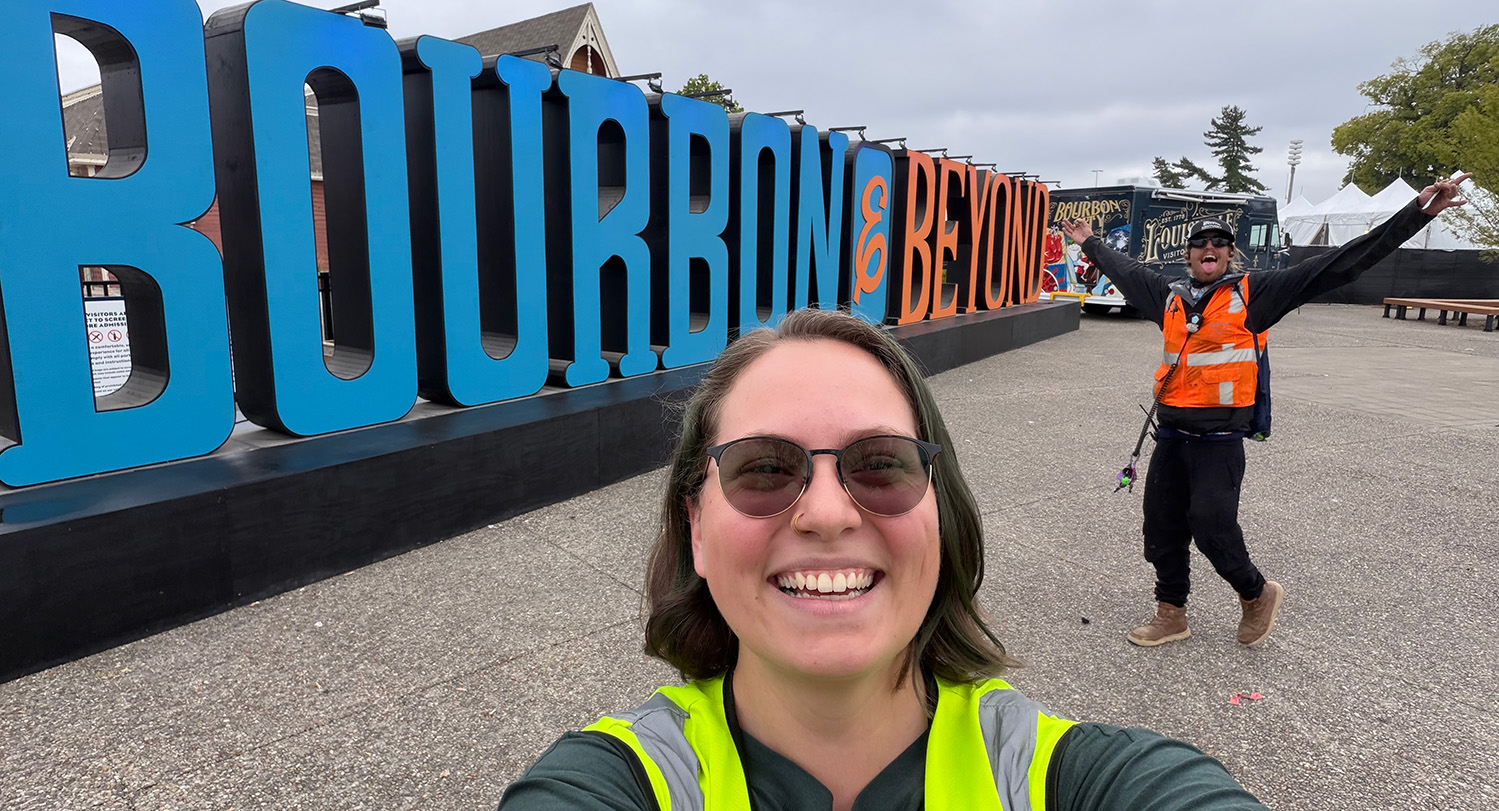
Over two back-to-back September weekends in Louisville, Kentucky, about a dozen University of South Carolina students witnessed the behind-the-scenes challenges and drama inherent in typical crowd-surfing outdoor rock music festivals. Make no mistake, though. Their presence there was strictly business.
The entourage of students, accompanied by Jeremy Polley, assistant professor of music industry studies, hit the ground running — running lights and sound, parsing logistics and production issues, managing volunteers and troubleshooting all manner of scenarios that can erupt in such environs. For credit.
That intensive, hands-on experiential learning through the multifaceted music industry studies program at USC tops a long list of reasons Billboard magazine on Oct. 6 named it one of the very best in the country.
“Just seeing how many people it takes to put on these gigantic festivals was amazing. There were easily about 1,000 employees,” senior Brianna Hale says of her time at the recent Louder Than Life and Bourbon & Beyond festivals. “I was part of the guest services team. We oversaw volunteers for the festival and accessibility, making sure there were spaces for everyone.”
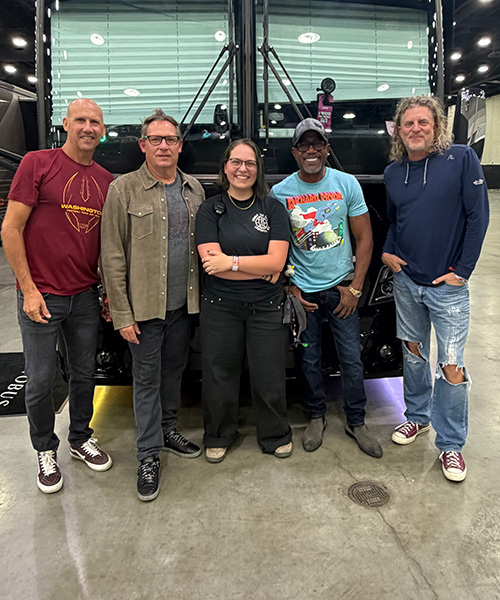
Polley says the number of music industry jobs is nearly infinite. Many people think of music majors primarily as performers, but the coordination of talent it takes to elevate those onstage and sustain their success is enormous.
“The students spent two weeks working side-by-side, networking, getting real-world experience at the festivals,” he says. “That’s thanks to a partnership we’ve had for five years with live music festival producer Danny Wimmer Presents (DWP). They have hired some of our students right out of the program.”
Paying dividends
The Billboard recognition comes while the young program is growing exponentially. Launched in 2021, the music industry studies program includes tracks in record label management, recording arts and live event production.
“To have national recognition shows that what we are doing here at USC is good work, and it’s paying dividends,” Polley says. “We are training musicians to understand the business side of the industry. They are not just learning songwriting, composition and performance, but they are taking business, management and financial courses. They are taking some recording courses. They are involved in live events.”
This is not like any music business program in America. We have built it so that you get instruction in a lot of different areas of the music industry ecosystem.
Music Dean Tayloe Harding is pleased with the program’s performance and how quickly it has adapted, enabling students to tailor their interests through different concentrations based on what part of the industry they want to pursue.
“This is not like any music business program in America. We have built it so that you get instruction in a lot of different areas of the music industry ecosystem, making you sort of a generalist,” Harding says, adding that the program’s versatility opens many pathways for music students. “We saw how incredibly talented and diverse the students were. That’s why we decided to build the tracks and make it a little more individualized.”
‘Impactful things’
Student Parker Craig likes that the program has evolved in lockstep with student needs. It stays fresh by augmenting requisite classroom time with offsite learning opportunities in authentic industry settings.
“The program is made to be built by students. They take our feedback, mold around it and continue to create new and innovative learning experiences for us as students,” Craig says. “I truly believe it to be one of the best decisions I ever could’ve made in my life, and I’m so proud it’s getting the recognition it deserves.”
Like Hale, Craig found working at the DWP events to be some of his most memorable immersions in the program.
The program is made to be built by students. They take our feedback, mold around it and continue to create new and innovative learning experiences for us as students. I truly believe it to be one of the best decisions I ever could’ve made in my life.
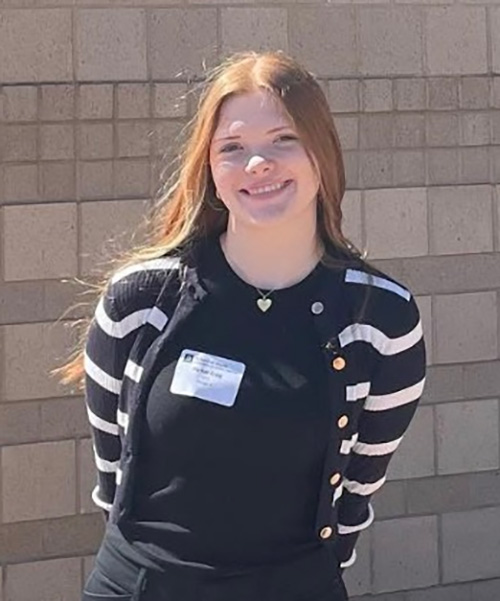
“I learned so much. I bumped between departments such as ticketing, marketing, experience and artist services,” she says. “My professor believed in my passion for this area of work and made sure that I was provided with this learning opportunity. … Now I have multiple connections not only within DWP but at different live event companies that I can reach out to and continue to work for.”
Tucker Mullinax says it was a no-brainer to apply for the program because of its wide range of appealing options. One of his favorite student excursions was traveling to Anaheim, California, for the National Association of Music Merchants (NAMM) convention while still only a freshman.
“Through this trip, I was able to not only learn from and network with industry professionals, but I was also able to get to know and become great friends with a lot of other students on that trip,” he says. “I still look back on that being one of the most important and impactful things I did in college.”
Beyond Performance
Polley says ideal music industry studies majors naturally embrace collaboration, are self-motivated and have a passion for music.
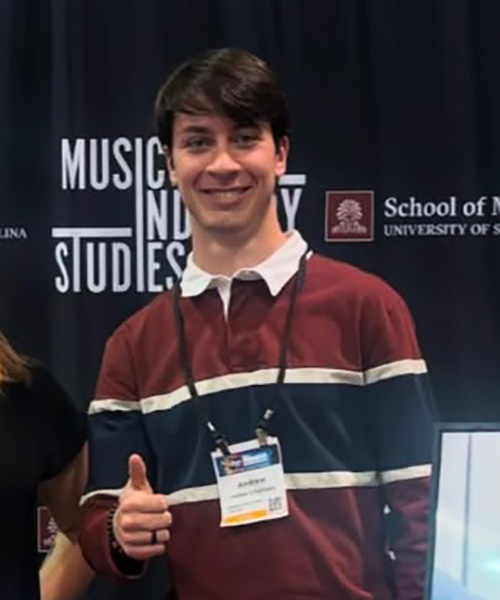
Andrew Scharnitzky says he chose the program because he wanted to explore career options beyond performance. He particularly enjoyed interning with DWP and working on its Inkcarceration Music and Tattoo Festival, held at the Ohio State Reformatory (prison) in Mansfield this past summer. Volunteering with Live at the Underground he says also garnered meaningful industry relationships.
“I knew I wanted to build a career in music. MIS’s focus on practical experience made it the right place to discover where I fit in the industry,” he says. “The most valuable skills I have gained are initiative, networking, collaboration and learning how to create opportunities for myself. MIS taught me that being present and willing to help can open doors.”
I knew I wanted to build a career in music. MIS’s focus on practical experience made it the right place to discover where I fit in the industry.
Dean Harding believes Billboard singled out USC’s MIS Program because of its impressive array of immersive opportunities in a variety of industry settings.
“Experiential learning is Jeremy Polley’s secret sauce,” he says. “You won’t believe what our alumni are doing after only five years.”
Based in Nashville, program alumna Bella Veal landed her artist & label strategy assistant position at Republic Records while she was still a student. She interned at Republic remotely throughout her senior year and was hired full-time immediately after graduating in May. She relishes the versatility of her job and how every day is different.
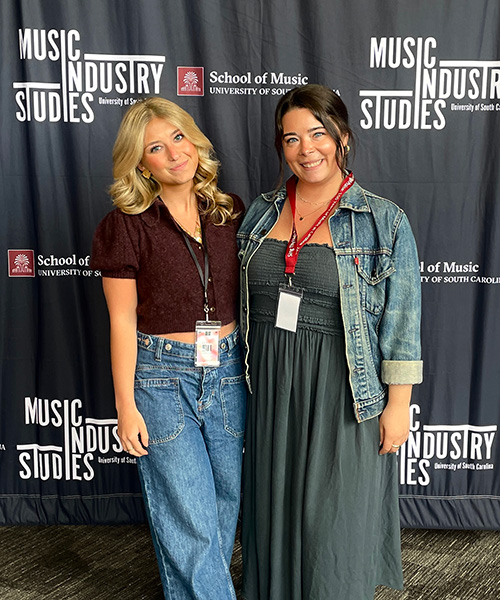
“My role spans artist development, campaign strategy, research, creative coordination and day-to-day project support,” she explains. “It allows me to work across both the creative and strategic sides of a major label, which is exactly the kind of role I always hoped to build toward.”
Republic’s talent lineup runs the gamut from Taylor Swift, Ariana Grande and Pearl Jam to Florence & The Machine, Stevie Wonder and Drake. Veal says the program gave her exposure to many different sides of the industry and made it easy to figure out where her interests were strongest.
“I always knew I wanted to work closely with artists, but through hands-on experience in live events, content, branding, artist development and project coordination, I became especially drawn to A&R (artist and repertoire) and artist marketing,” she says. “Not every experience was glamorous, but every one taught me something about problem-solving, collaboration, resilience and being willing to step in wherever I was needed.”