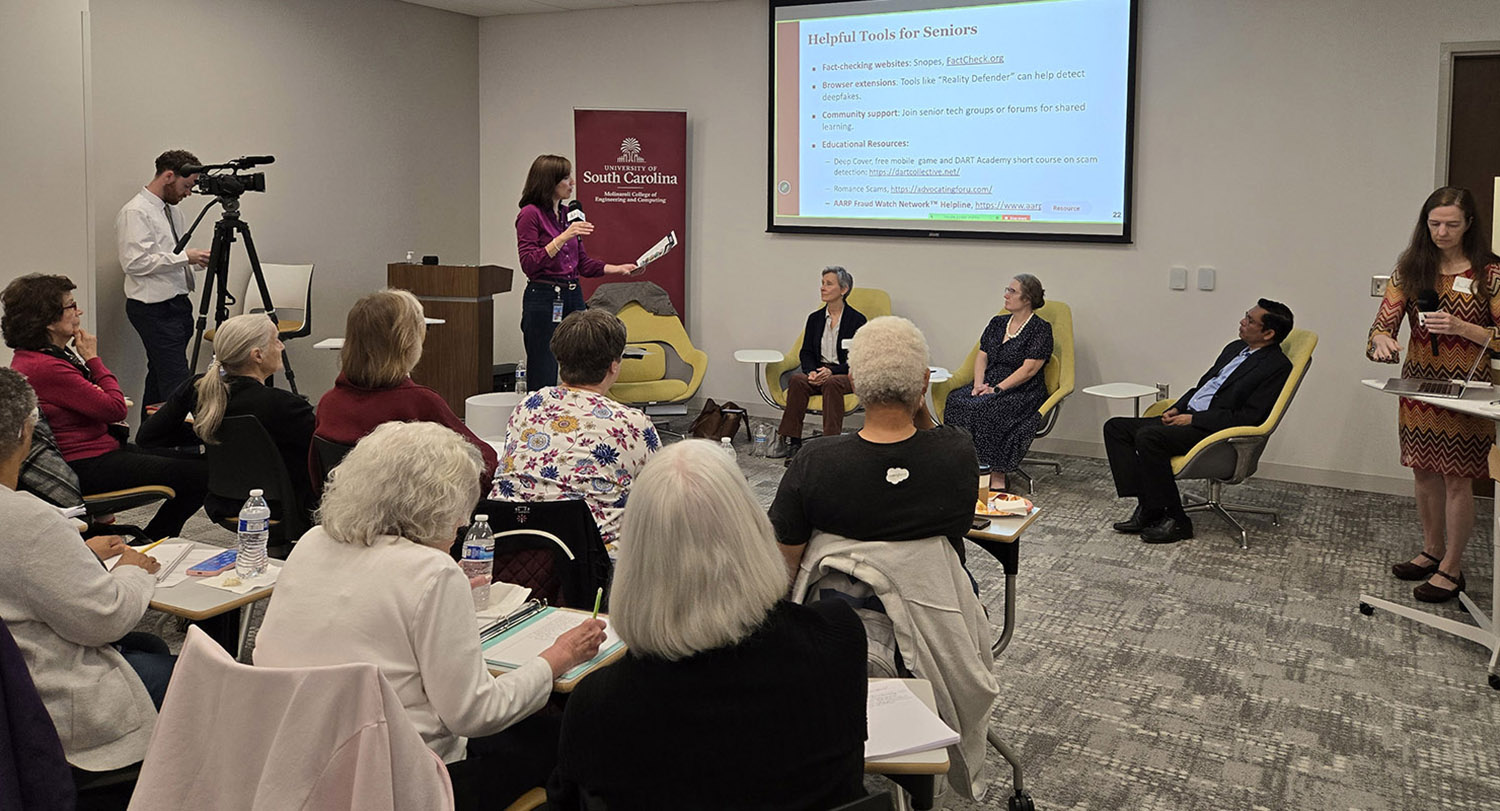
Artificial Intelligence is rapidly becoming part of daily life. For many older adults, it brings real questions about scams, misinformation, privacy and how to tell useful technology from a potential risk.
The University of South Carolina’s AI Institute hosted Safe AI for Seniors 2026 on Oct. 23. The free, full-day workshop was designed to help adults 55 and older better understand what’s in store.
Computer Science and Engineering Professor Biplav Srivastava of the AI Institute organized this initiative for the second consecutive year as researchers made sure seniors are included in conversations about the future.
“We want to make AI education accessible to people of all ages, not just younger generations,” says Srivastava.
“It’s so important for us to hear from the community about their thoughts, ideas and questions around artificial intelligence.”
Along with USC faculty experts, several nationally recognized AI researchers and leaders from technical, business and legal fields engaged in practical discussions, demonstrations and interactive activities. Sessions focused on cybersecurity, mental health, transportation and other ways AI intersects with South Carolina communities.
For more than 80 attendees, some of the day’s key takeaways included:
- AI can support independence and everyday needs. Demonstrations explored applications in nutrition, healthcare and daily activities.
- Recognizing deception is an essential skill. Experts offered practical guidance on spotting scams, verifying suspicious requests and protecting personal information as AI makes fraudulent communications more convincing.
- Using AI well means understanding its limits. Sessions explored when to use AI, when to consult a person and why chatbots require caution when discussing health or seeking emotional support.
“The audience had great questions and were clearly thinking carefully about the benefits and cautions of using AI,” says Zoe Niesel, a professor in the Joseph F. Rice School of Law, who was a panelist on a session that addressed mental health. “It’s so important for us to hear from the community about their thoughts, ideas and questions around artificial intelligence.”
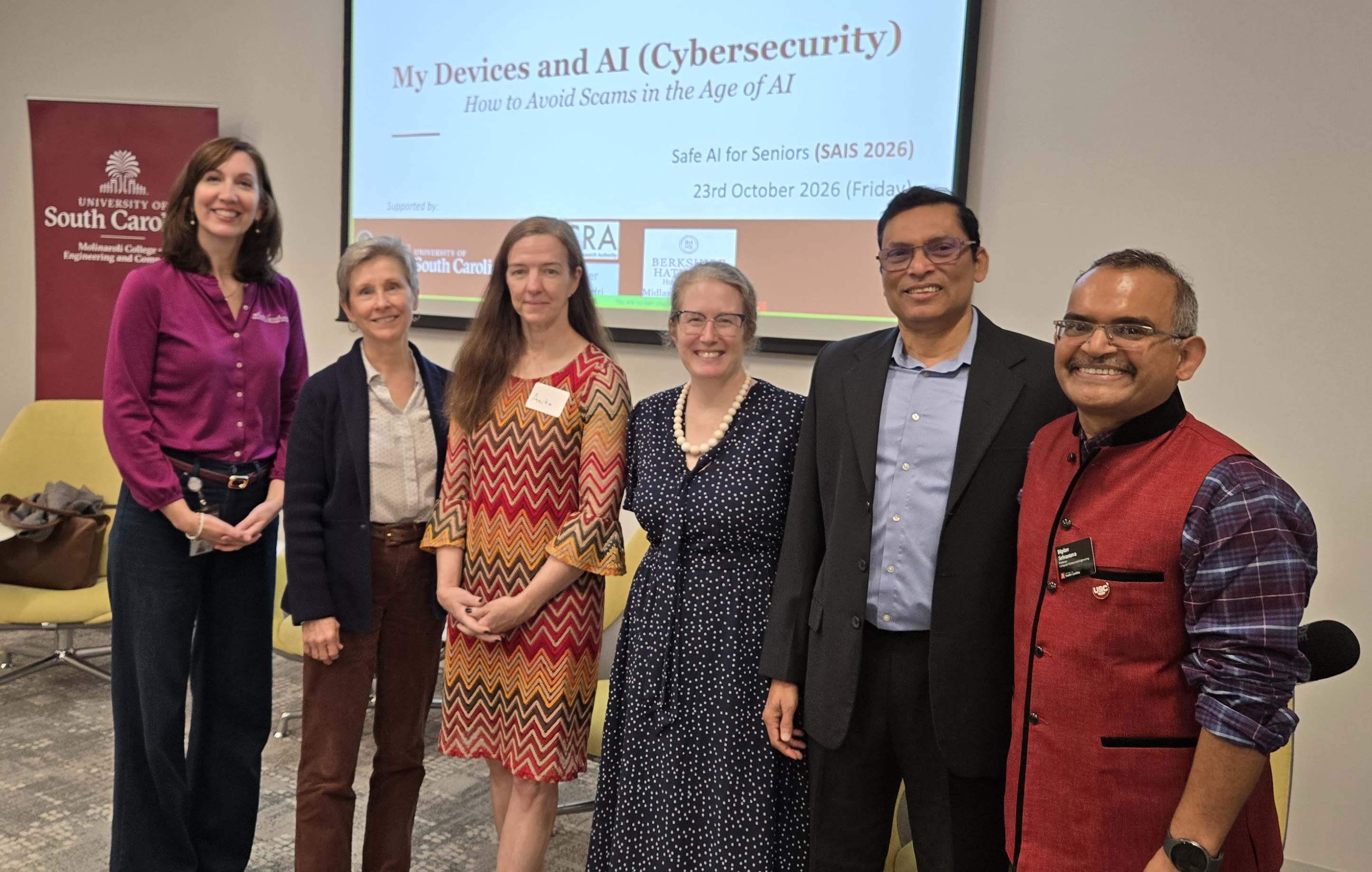
Computer Science and Engineering professor Csilla Farkas was a panelist in a session on cybersecurity, and she urged attendees to “Stop, Think and Verify,” especially before responding to requests for urgent actions, such as a medical emergency or news of imprisonment of a loved one.
“Fraudsters aim to invoke emotions. It is often difficult to behave rationally when emotions are running high,” Farkas says. “Talk to family members and trusted friends about your online activities. They can help identifying suspicious circumstances."
Demonstration sessions of AI research included a system for personalized nutrition recommendations that adapts to different daily goals and food preferences, along with exercises on AI prompting techniques comparing ChatGPT with Google search, which showed the importance of proper context and calibration when using technology.
Attendee feedback included, “The event was well thought out with relevant topics. I enjoyed the student demonstrations of technologies they’re pursuing.”
Srivastava compared AI’s learning process to a toddler’s: It learns by recognizing patterns, but still needs human guidance and oversight. He encouraged participants to think critically about its answers and check them against trusted sources.
“AI has much to offer in keeping seniors safe and independent,” he says.